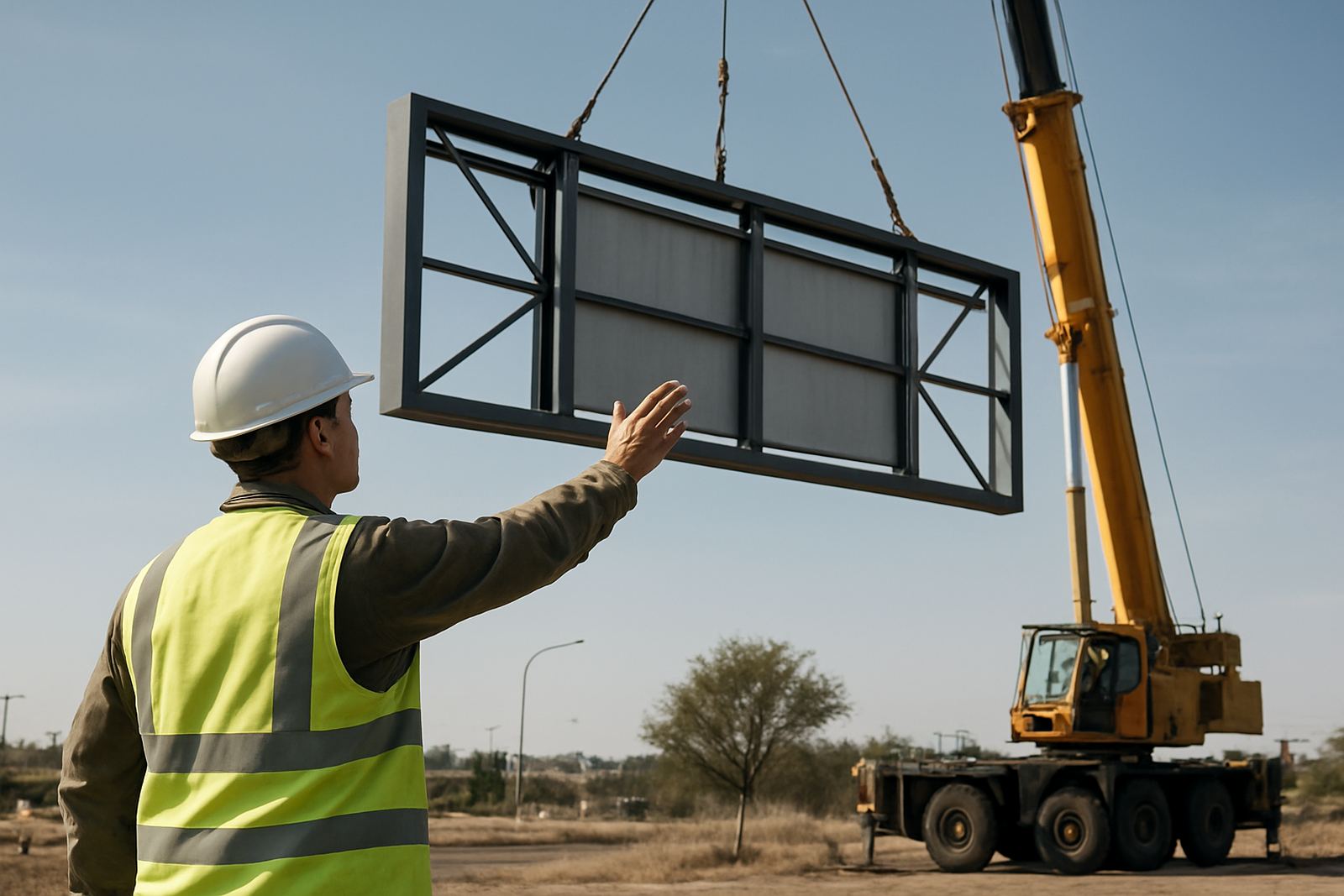
What installation management covers on site
Installation management is the practical control layer between fabrication and the finished sign. On a typical project we manage the site programme, contractor interface, access planning, lifting method, safety controls and the order in which items are installed. That includes printed vinyl, Perspex panels, aluminium and brass letters, light boxes, pylons, road signs, billboards and LED video screens.
We also coordinate with landlords, developers, municipal officials and building management where approvals, traffic control or working hours are needed. In busy areas like Sandton, Midrand or Pretoria CBD, a clean plan saves time and avoids stoppages at the gate. On industrial sites in Germiston or Modderfontein, the main focus is often plant access, crane positioning and safe working around live operations.
- Site attendance and daily coordination with all trades on the programme
- Access control, induction checks and escorting where required
- Lifting plans for crane, cherry picker, telehandler or manual rigging
- Sequencing for multiple signs, phased handovers and overnight works
- Snag listing, final alignment checks and close-out support
How we prepare the install before anyone arrives
Good installation work starts before the truck leaves the yard. We confirm site dimensions, anchoring points, power availability, weather exposure and any restrictions on drilling, loading or road occupancy. For coastal work we plan for corrosion protection, stainless fasteners and sealants suitable for humid air. For high-rise or roadside sites we check wind loading, fall protection and whether lifting can happen in one shift or needs a staged approach.
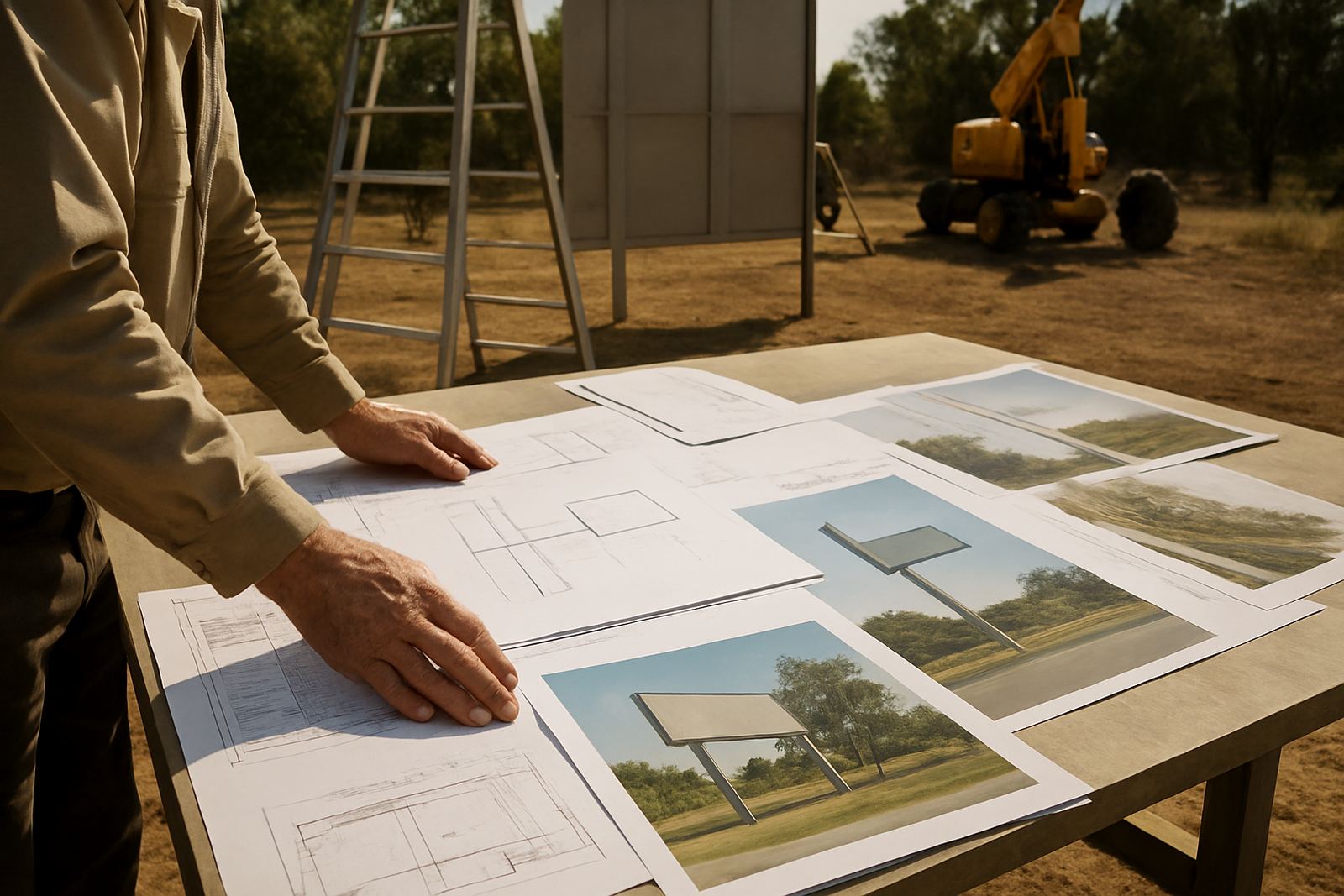
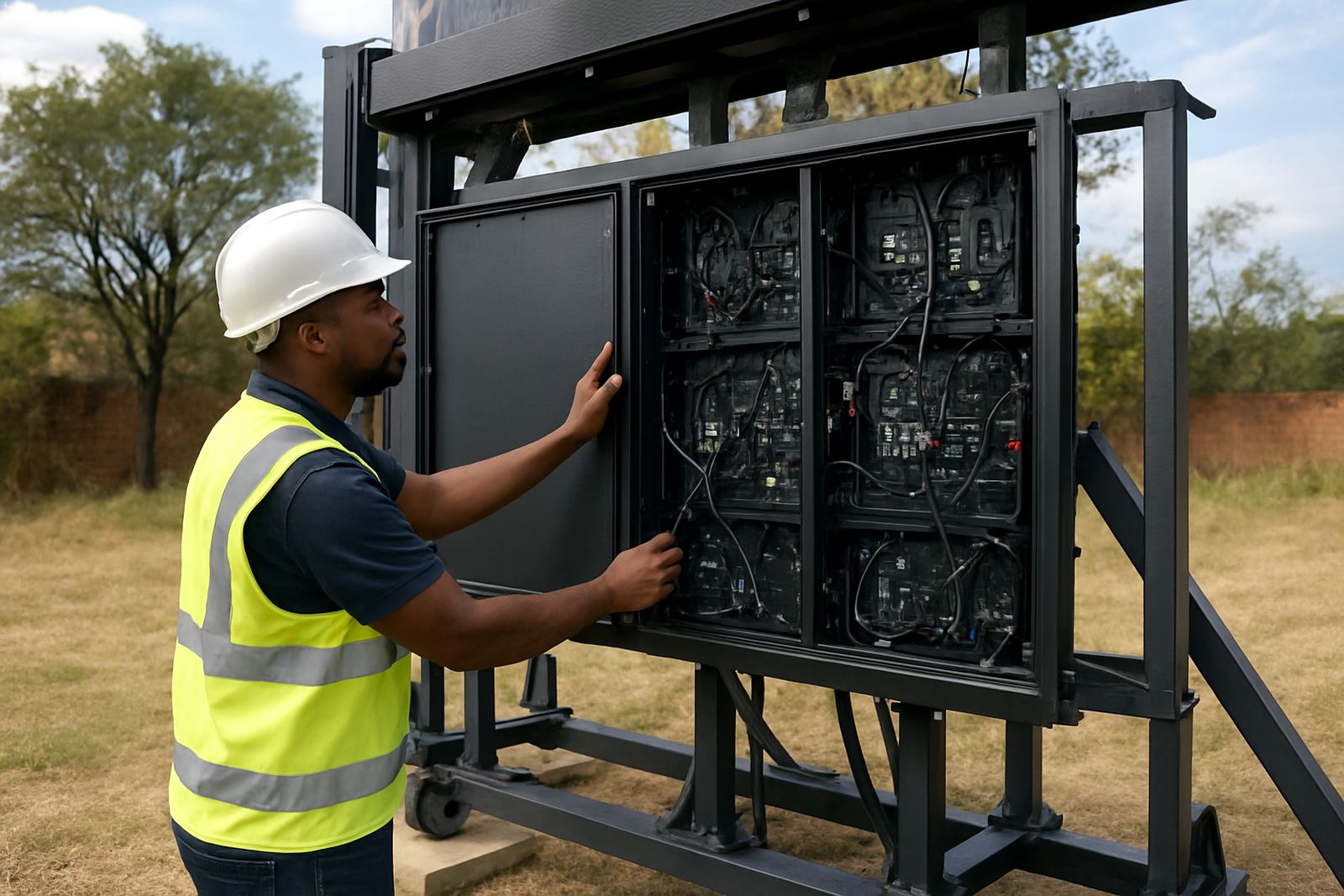
Our team prepares a site plan that shows where materials will land, where plant can stand, and how each item moves from the vehicle to its final position. That helps avoid double handling and reduces risk to glass, cladding and freshly finished surfaces. If a project involves LED screens, we also plan data cabling, ventilation clearances, power isolation and the order of commissioning so the display is not powered up before the structure and fixings are ready.
- Pre-install survey and measured setting-out marks
- Method statement and lift sequence for heavier items
- Access notes for after-hours, rooftop or mall environments
- Power and comms checks for illuminated signs and screens
The rigging sequence from delivery to sign-off
Once fabrication is complete, we run the site sequence in a controlled order. Deliveries are booked for the correct time, and the crew knows which items go up first. Large pylons and billboards may need foundation checks, bolt torque verification and a dedicated lifting window. Wall signs usually need substrate inspection, fixing point confirmation and final level checks before permanent fastening.
For 3D lettering and fabricated signage, we check spacing, plumb, face alignment and lighting reveal if applicable. For road signs and wayfinding structures, legibility and orientation matter as much as the fixing. We pay attention to the practical details that often get missed, like sealant cure times, weather cover during rain and whether the site needs temporary barriers around the work zone. That keeps the installation tidy and reduces call-backs after handover.
- Delivery and offloading in the approved sequence
- Primary fixing, alignment and intermediate inspection
- Electrical tie-in by the relevant competent team where needed
- Final snagging, cleaning and client walk-through
Safety controls, access and municipal requirements
Signage work can involve height, moving plant, live traffic and public spaces, so safety is not an add-on. We coordinate the site rules from the start, including PPE, fall arrest, barricading, spotters and working hours. Where a municipality requires road occupancy, traffic accommodation or specific sign placement conditions, we align the installation programme with those requirements. For projects in central Johannesburg, Pretoria or Durban, this can be the difference between a same-day fit and a delayed return visit.
We also manage practical risk on wet days, windy rooftops and sites with limited laydown space. If the weather turns or the ground is too soft for plant, the sequence is adjusted rather than forced. That may sound simple, but it avoids damaged finishes, unsafe access and poor results. A proper install is one that is completed without shortcuts, and the site is left clear enough for normal operations to continue.
- Access permits and site induction coordination
- Work-at-height controls and lift exclusion zones
- Traffic management for roadside and forecourt signage
- Weather and power contingency planning for outdoor works
Typical turnaround times and how pricing works
Turnaround depends on sign size, access, number of install points and whether lifting equipment or night work is needed. A small internal sign package may be completed in a day once the site is ready. A multi-site rollout or a large LED screen installation can run over several days, especially if civil works, structural checks or municipal approvals are still being finalised. We will give you a realistic programme rather than an optimistic one.
Pricing is based on the actual scope of work. That includes site visits, crew size, travel, lifting plant, working at height, after-hours allowance, traffic control and any coordination needed with other contractors. For recurring clients, we can structure pricing across rollout phases or maintenance periods. If a project is simple and the access is clean, the cost stays lean. If a site is difficult, on a slope, or has restricted access, the price reflects the extra time and plant required.
We keep the pricing approach practical: clear scope, no vague line items and no surprises when the crew arrives. If the installation changes on site, we document the variation and agree the next step before extra work is done.
Maintenance intervals after handover
Installation management does not stop the moment the sign goes live. We recommend a follow-up schedule based on the type of signage and exposure. Coastal signage and illuminated signs need more frequent inspection than indoor reception pieces. Dust, vibration, UV and wind all have an impact, especially on roadside pylons, billboards and LED screens.
As a guide, we suggest a first post-install inspection within 30 days, then routine checks every 6 months for most external signage. For LED screens or high-exposure installations, quarterly inspections may be more suitable. During these visits we check fixings, sealants, corrosion, lighting performance, cable condition and any movement caused by wind or vehicle vibration. If a sign is in a high-traffic area or near the coast, the service interval should be tightened, not stretched.
- 30-day post-install review for settling and early adjustments
- 6-monthly checks for standard external signs
- 3-monthly checks for LED screens, high-traffic and coastal sites
- Annual structural review for large pylons, billboards and rooftop work
That regular attention helps protect the finish, keeps the sign readable and reduces the chance of emergency call-outs later on.
Key facts
| Service scope | Access, lifting, safety, sequencing and handover coordination |
|---|---|
| Project types | Wall signs, pylons, road signs, billboards, light boxes and LED screens |
| Working areas | Modderfontein, Johannesburg, Gauteng and selected sites across Africa |
| Typical install crew | Scaled to scope, from small teams to multi-trade site coordination |
| Weather considerations | Wind, rain, coastal humidity and heat are factored into the programme |
| Maintenance cadence | 30 days after handover, then 3 to 12 monthly depending on exposure |