What Material Specification Covers
Material specification is where a signage job becomes practical. We match the design intent to the right substrate, finish, fixing method and lighting detail so the sign performs in the real world, not just on paper. That means thinking about sun exposure in Johannesburg, dust and pollution in industrial areas, humidity in Durban, and the wind loading that comes with rooftop and pylon work.
For each project we assess where the sign will sit, how close it is to traffic or pedestrians, whether it will be backlit or front-lit, and how often it can be cleaned or serviced. The right choice can reduce call-outs, slow fading and prevent premature corrosion. The wrong choice can crack, warp, delaminate or rust long before the warranty period is over.
Materials We Specify For Local Conditions
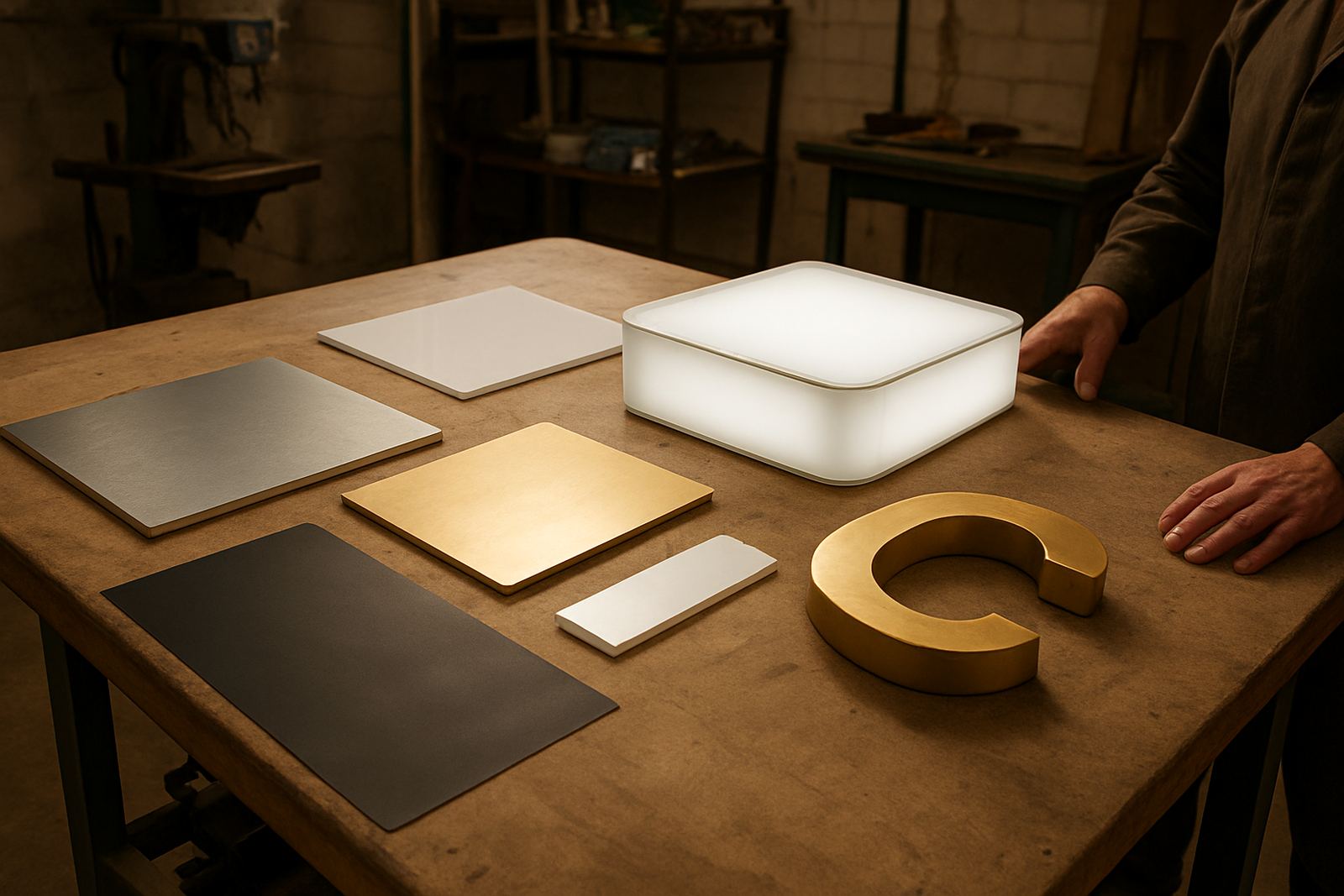
We prepare material schedules for printed vinyl, translucent films, solid and cast Perspex, aluminium composite, flat sheet aluminium, mild steel, stainless steel, brass and powder coated finishes. For illuminated work we also specify diffusion layers, opal panels, access panels, LED modules, transformers and cable routes so the sign can be serviced without tearing the face apart.
- Vinyl: monomeric, polymeric or cast grades depending on lifespan, curvature and sun exposure.
- Perspex: 3 mm to 10 mm cut or routered panels for letters, faces and inserts.
- Metals: 1.6 mm to 3 mm aluminium or steel, with corrosion protection matched to the site.
- Finishes: brushed, polished, painted, powder coated or laminated surfaces for indoor and outdoor use.
- Lighting: LED modules, edge-lit panels, front-lit or halo-lit details with suitable heat management.
On coastal projects we are careful with stainless grades, sealants and edge protection. Inland, UV resistance and heat build-up are usually the bigger issues. For route signage and municipal work, reflectivity, legibility and standardised colour matching matter just as much as the board itself.
How We Decide What To Use
We start with the brief, then assess the site. A wall sign in Sandton needs different specification to a roadside pylon in Midrand or a retail canopy in Germiston. We check the viewing distance, mounting surface, available power, access for installation and the likely maintenance route. If a sign is exposed to vibration, dust or direct rain, we specify accordingly.
Our team also considers fabrication method. A routered Perspex letter set may need a different fixing depth from a folded aluminium box sign. A printed vinyl graphic on a vehicle wrap needs flexibility, while a billboard skin needs strength, dimensional stability and the right adhesive system. Small details matter, such as using UV-stable inks and the correct sealant at joints so the finish does not fail early.
- Viewing distance and required letter height
- Indoor or outdoor exposure
- Wind load and structural support
- Cleaning access and service intervals
- Electrical supply, backup and load-shedding risk
- Compliance with landlord, municipal or road authority rules
The Specification Process, Step By Step
Material specification usually follows a clear sequence. First, we review the design intent and the site photos or site survey results. Then we prepare options that balance appearance, life span and budget. Where necessary, we coordinate with structural or electrical consultants so the sign can be built safely and installed properly.
After the options are tested against the brief, we issue a specification pack that covers materials, thicknesses, finish types, fixing details and lighting notes. This pack supports fabrication, pricing and approvals. If the project has multiple sites across Gauteng or further afield, we can standardise materials so replacement parts and maintenance are easier to manage.
- Brief review and site assessment
- Material comparison and recommendation
- Specification notes and finish schedule
- Coordination with fabrication and installation teams
- Approval support where required
- Handover notes for maintenance and spares
Turnaround Times And What Affects Them
For straightforward internal signs, we can make a material recommendation once we have the brief and site details. More complex work such as illuminated pylons, road signs, billboards or LED screen integration needs structural, electrical and approval matters to be settled before procurement starts.
Lead times also depend on supply availability and the finish requested. Special colours, custom acrylic thicknesses, brushed metals or large format print laminates may add time. If the project is urgent, we will say where the schedule is tight and what can be substituted without damaging the final result. It is better to adjust the spec early than to discover a shortage on site when the crew is already booked.
Pricing, Maintenance And Handover
Pricing for material specification depends on the number of sign types, the level of technical detail required and whether structural or electrical coordination is included. We quote based on the actual scope rather than a one-size-fits-all rate. For multi-site programmes in Johannesburg, Pretoria, Durban or other areas, we can group specifications to reduce repeat work and keep the same material standard across the network.
Maintenance planning is part of the spec because every material ages differently. Vinyl faces may need inspection every 12 to 24 months. External painted or powder coated metalwork should be checked for chips, corrosion or seal failure at least once a year, and coastal sites may need more frequent attention. LED components should be reviewed on a 6 to 12 month cycle for heat, dust and output levels. We include handover notes so the client knows what to clean, what to inspect and when to schedule repairs.
- Annual visual inspection for outdoor metalwork and fixings
- 6 to 12 month LED service checks
- 12 to 24 month review of vinyl and printed panels
- More frequent checks in coastal, high-dust or high-vibration locations
- Replacement planning for consumable parts and diffusers
Deep3 Signage Consultants is based in Modderfontein and supports projects across Gauteng and the rest of Africa. Whether the job is for a developer, municipality or brand network, we specify materials that suit the site, the budget and the maintenance reality, not just the drawing.
Key facts
| Service area | Modderfontein, Johannesburg and across Gauteng, South Africa and Africa |
|---|---|
| Typical vinyl options | Monomeric, polymeric and cast grades with UV-stable print and laminate choices |
| Perspex thickness | 3 mm to 10 mm depending on letter form, face size and lighting |
| Metal specification | 1.6 mm to 3 mm aluminium or steel, plus stainless or brass where required |
| Lighting options | Front-lit, halo-lit, edge-lit and internal LED systems with service access |
| Maintenance interval | 6 to 24 months depending on exposure, material type and access |