
Signage that helps patients find the right place first time
In a clinic or hospital, signage is not just a branding item. It has to move patients, visitors, staff and suppliers through reception, admissions, consulting rooms, wards, pharmacies, parking areas and loading zones without confusion. In busy Gauteng sites, a missed turn can mean late appointments, congestion at reception and extra pressure on security and nursing staff.
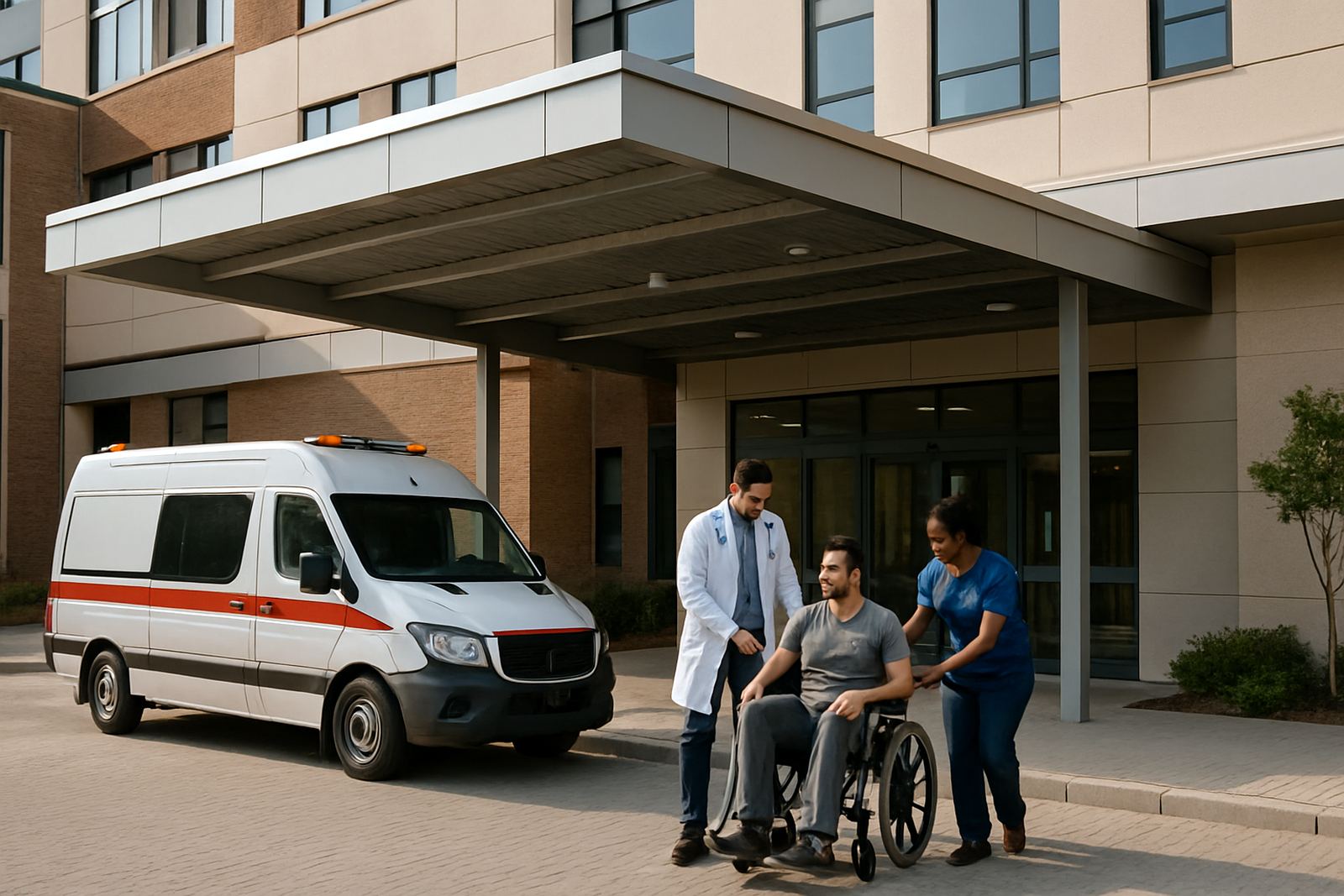
We start by understanding how people actually move through the site. That means looking at public entrances, emergency access, lifts, stair cores, ramps, covered walkways and after-hours access. In many healthcare environments, the first priority is plain, legible identification signage that can be read quickly from a wheelchair, a vehicle or while walking with a child or carrying files.
- Reception and admissions identification
- Department and room numbering
- Parking, drop-off and ambulance direction signs
- Ward, theatre and service-area identification
- Visitor, staff and restricted-access notices
For campuses with multiple buildings, we also map the sequence of signs so visitors get a consistent path from the boundary wall to the final destination. That planning step is often what keeps a site calm on a Monday morning, when the parking area is full and the line at reception is already moving.
Typical equipment used on hospitals and clinics
Healthcare sites usually need a mix of durable external signs and clear internal identification. The exact set depends on the size of the facility, the number of departments and whether the site runs 24 hours. We commonly specify printed vinyl, routered Perspex, aluminium panels, brass detail pieces, fabricated 3D lettering, light boxes, pylons, directional signs and LED screens for public messaging or live information.
On the outside, weather resistance matters. In Johannesburg and Pretoria, UV exposure can be harsh, while coastal humidity in Durban can affect fixings and finishes if the material selection is too light. For that reason we look carefully at substrates, edge sealing, mounting methods and the type of lettering used on each face of the building.
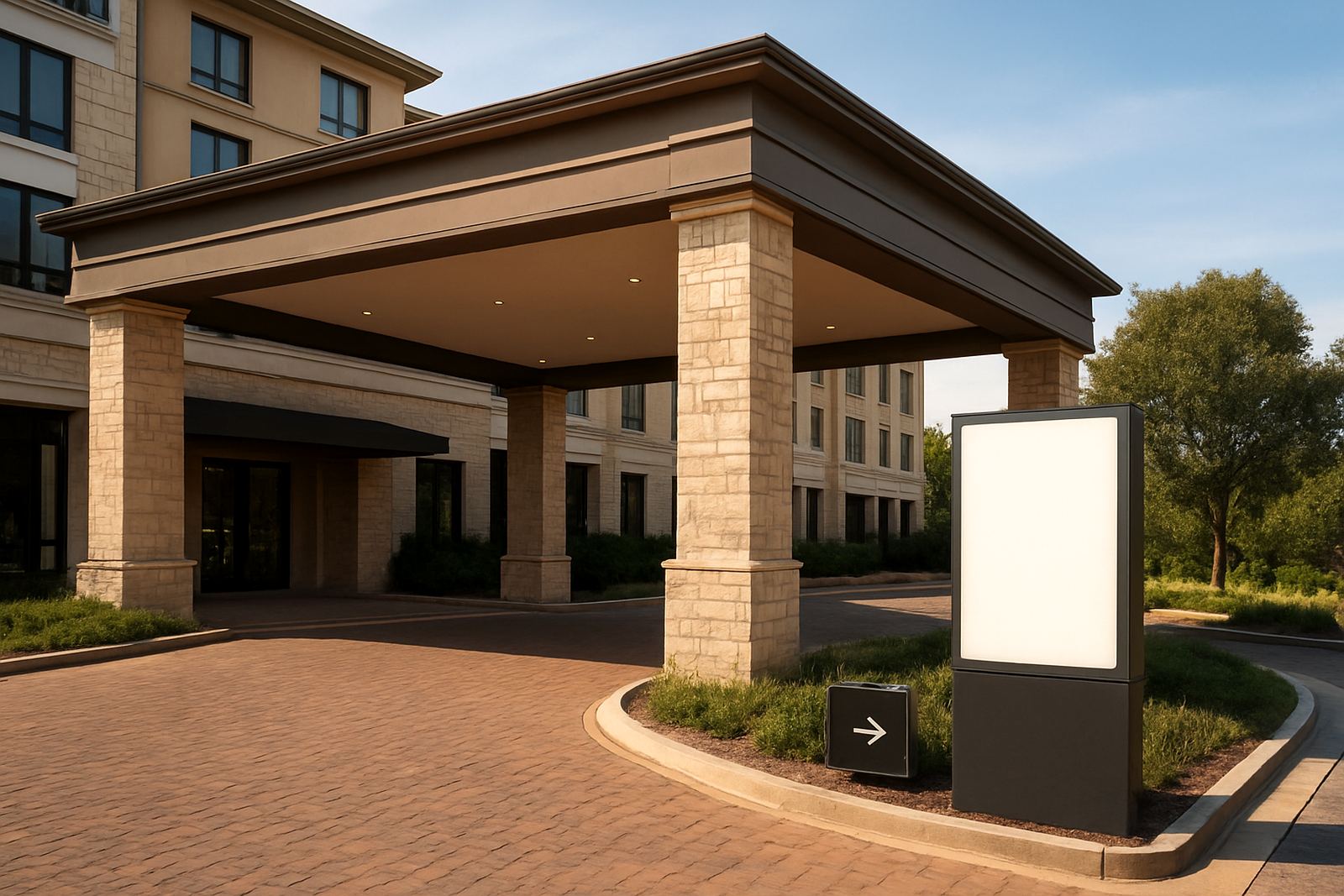
- Entrance pylon signs and driveway identification
- Blade signs and wall-mounted department markers
- Reception countersigns and donor or sponsor boards
- Parking, pharmacy and emergency route signs
- LED video screens for alerts, notices and campus information
For larger facilities, we also coordinate structural and electrical requirements early, so the sign can be installed safely without last-minute rework. That saves time during handover and reduces disruption to patients and staff.
Planning for flow, compliance and clear visibility
Good healthcare signage starts with a site survey and a proper sign schedule. We look at visibility distances, mounting heights, line of sight, daylight and night-time use. In a hospital, a sign that looks fine in a boardroom can fail badly at the parking boom, under a canopy, or at a corridor junction where people are already making quick decisions.
Wayfinding has to be consistent. If one department is called by a code in one area and by a full name in another, visitors get lost. The same goes for room numbers, waiting rooms and emergency zones. We help clients standardise naming, colours and arrow logic so the entire campus feels more orderly.
- Keep department names short and consistent
- Use strong contrast for text and background colours
- Plan for night visibility and load-shedding conditions
- Place signs before decision points, not after them
- Allow for future extensions, new wings and temporary wards
For municipalities and private operators alike, approvals and internal sign control matter. We coordinate structural details, material specification and layout decisions so the system can be approved, fabricated and installed with fewer changes later on. A little more planning upfront usually means fewer arguments on site.
Common mistakes that cause confusion and maintenance issues
Healthcare sites often grow in phases, and the signage follows those phases one by one. That is where mistakes happen. A temporary board stays up for years, a new wing gets a different naming format, or a corridor gets signs that are too small to read from the lift lobby. Once the site gets busy, those errors become expensive to fix.
Another common issue is choosing finishes that look good on day one but do not suit the environment. High-touch public areas need surfaces that are easy to clean. Outdoor signs need fixings that hold in wind and heat. In some cases, the wrong light box or screen position creates glare at the exact time patients need to read it most. It is a practical problem, not a decorative one.
- Mixed naming systems across old and new buildings
- Signs installed too low, too high or behind glass glare
- Materials that discolour or corrode in wet weather
- Too much text, too many arrows and no clear hierarchy
- No plan for maintenance or replacement after impact damage
We also see sites where the signage is designed in isolation from the security gates, parking layout or reception queue. That creates bottlenecks. The better approach is to treat the sign system as part of the patient journey and the operational plan, not as an afterthought.
Budget ranges for healthcare signage in Rand
Budget depends on the size of the campus, the number of departments, the finish level and whether LED screens or major pylons are included. A small clinic in Gauteng may only need a few key signs and directional boards, while a regional hospital can require a full wayfinding package with external monuments, internal room markers and emergency identification.
As a guide, a compact clinic signage package may start from about R35 000 to R120 000. A medium hospital or multi-building health centre often sits between R180 000 and R650 000, depending on the scope. Larger campuses, specialist hospitals and sites with pylons, large illuminated signs or LED video screens can move from R750 000 into several million Rand.
Typical cost drivers include fabrication complexity, access equipment, structural steel, electrical provision, approvals and after-hours installation. If work has to happen around live patient services, security controls and limited delivery windows, the programme can also affect price. We try to sequence work so the site stays operational, because many healthcare clients cannot afford long interruptions.
- Small clinic: R35 000 to R120 000
- Medium hospital or health centre: R180 000 to R650 000
- Large campus or specialist facility: R750 000 plus
For clients comparing options, it helps to separate the signage strategy from the fabrication cost. A good plan can prevent waste, and that usually saves money over the life of the facility.
How Deep3 manages healthcare signage projects
For healthcare projects, support is provided from Modderfontein, Johannesburg across Sandton, Midrand, Randburg, Germiston, Pretoria, Centurion and Durban. The scope covers signage strategy, site surveys, wayfinding planning, design development, material specification, structural coordination, approval support, fabrication management, installation management, LED screen integration, maintenance planning and project handover.
Our team includes Sibusiso Mthembu, Leanne van Wyk, Sakhile Motsepe, Thandiwe Ndlovu, Riaan Smit and Omolemo Msiza, so the work is managed from first survey to final fit-off. On healthcare sites, that matters because there are usually many moving parts: clinical operations, security, facilities, engineering and sometimes a developer or landlord as well.
- Survey the site and confirm naming, access points and sign positions
- Develop a clear sign schedule and approval path
- Specify materials for cleaning, weather and long-term use
- Manage fabrication, delivery and installation around live operations
- Hand over the system with maintenance guidance and replacement notes
If your clinic, hospital or health campus needs clearer navigation, we can help shape a sign system that is practical from the first day and still readable years later. The aim is simple: fewer wrong turns, less stress at reception and better flow through the site.