
What schools and training campuses usually need
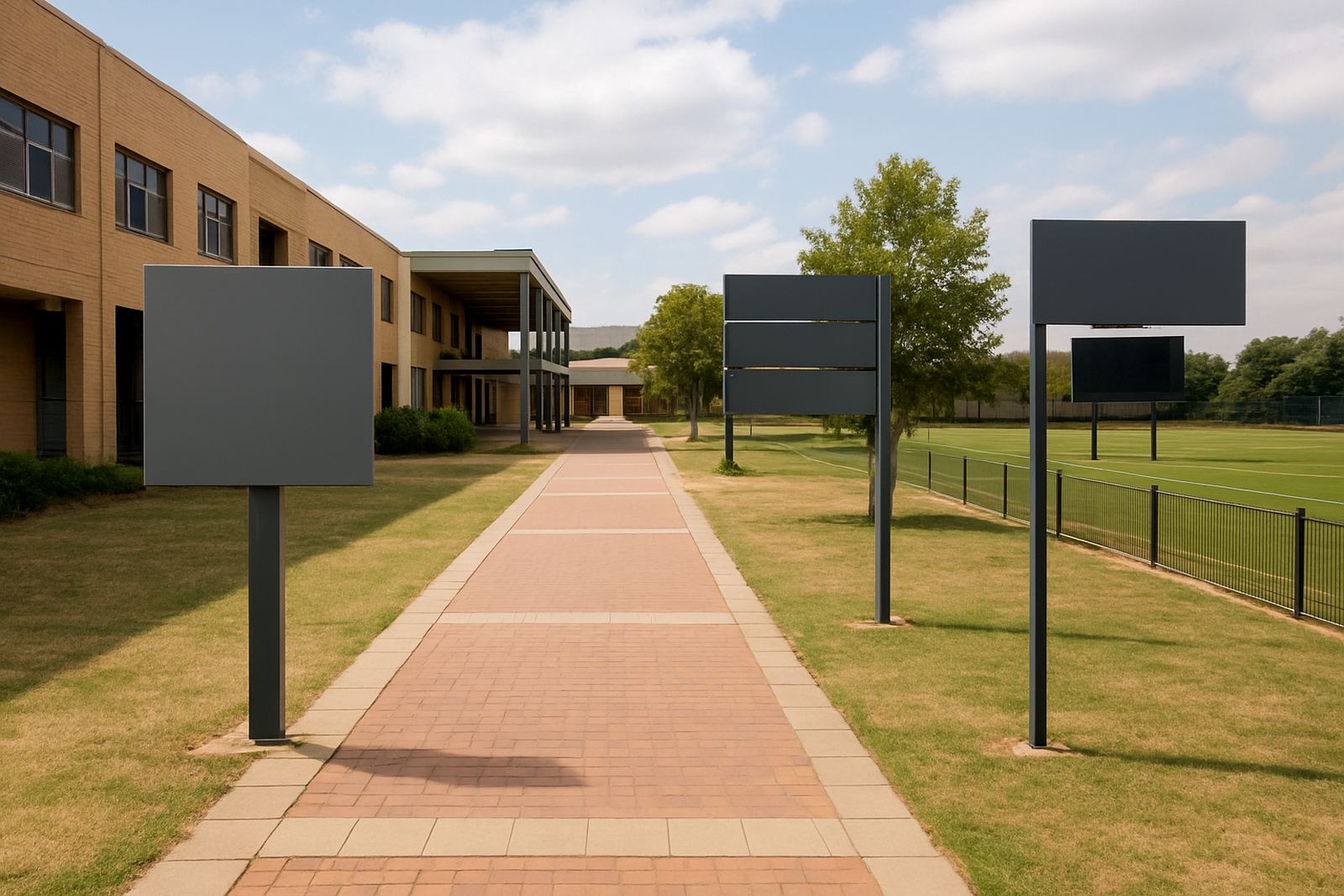
A campus sign system has to do more than carry a name at the gate. It needs to guide traffic, help emergency access, mark departments, and make the site feel ordered from the first visit onward. On larger school and college grounds that often means a mix of external signs, internal directionals, building identifiers and safety notices that can be read from a moving vehicle or by a learner walking between classes.
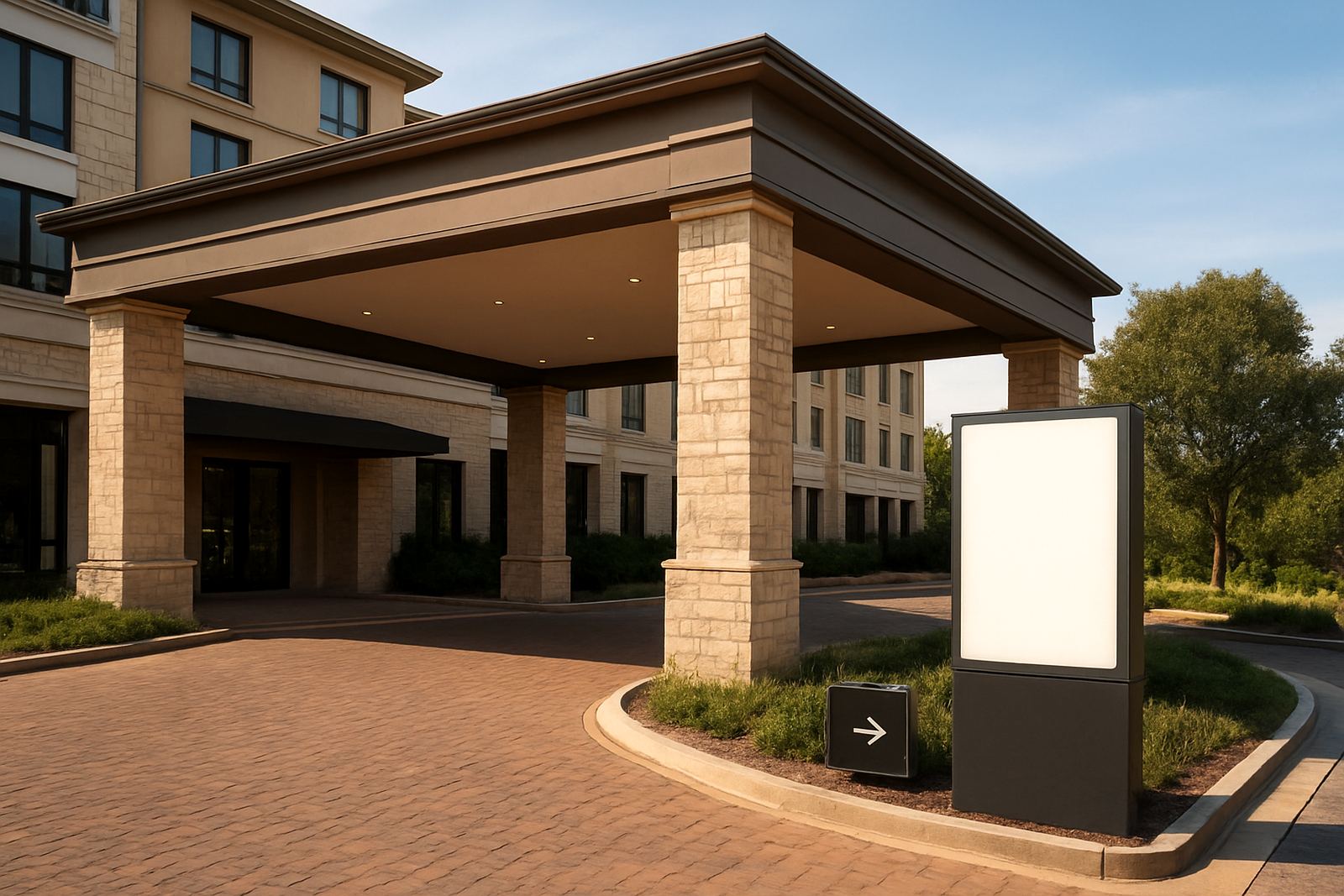
For education sites in Johannesburg, Pretoria, Midrand, Durban and other busy areas, we usually start with the points people see first: entrance identity signs, directional pylons, parking signs, reception markers and classroom or block labels. If the campus has multiple gates, sports fields, hostel blocks or a separate technical workshop, each zone should be signed clearly so visitors do not wander through the wrong entrance. That saves time and reduces pressure on security staff too.
- Main entrance and boundary branding
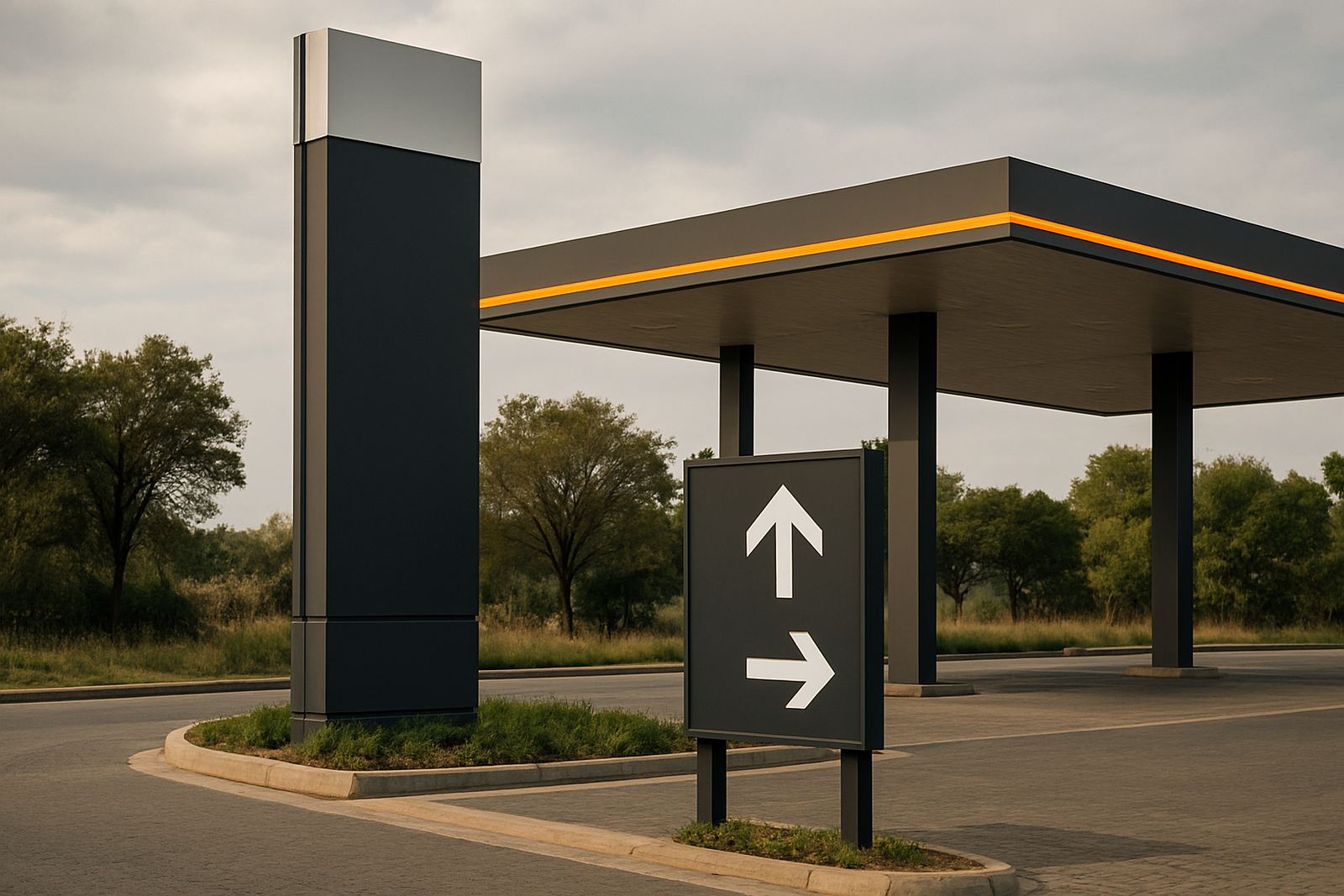
- Directional signs for gates, parking and pedestrian routes
- Building names, room numbering and block identification
- Safety, emergency and fire route signs
- Notice boards, donor boards and heritage or achievement walls
Planning a layout that works at busy times
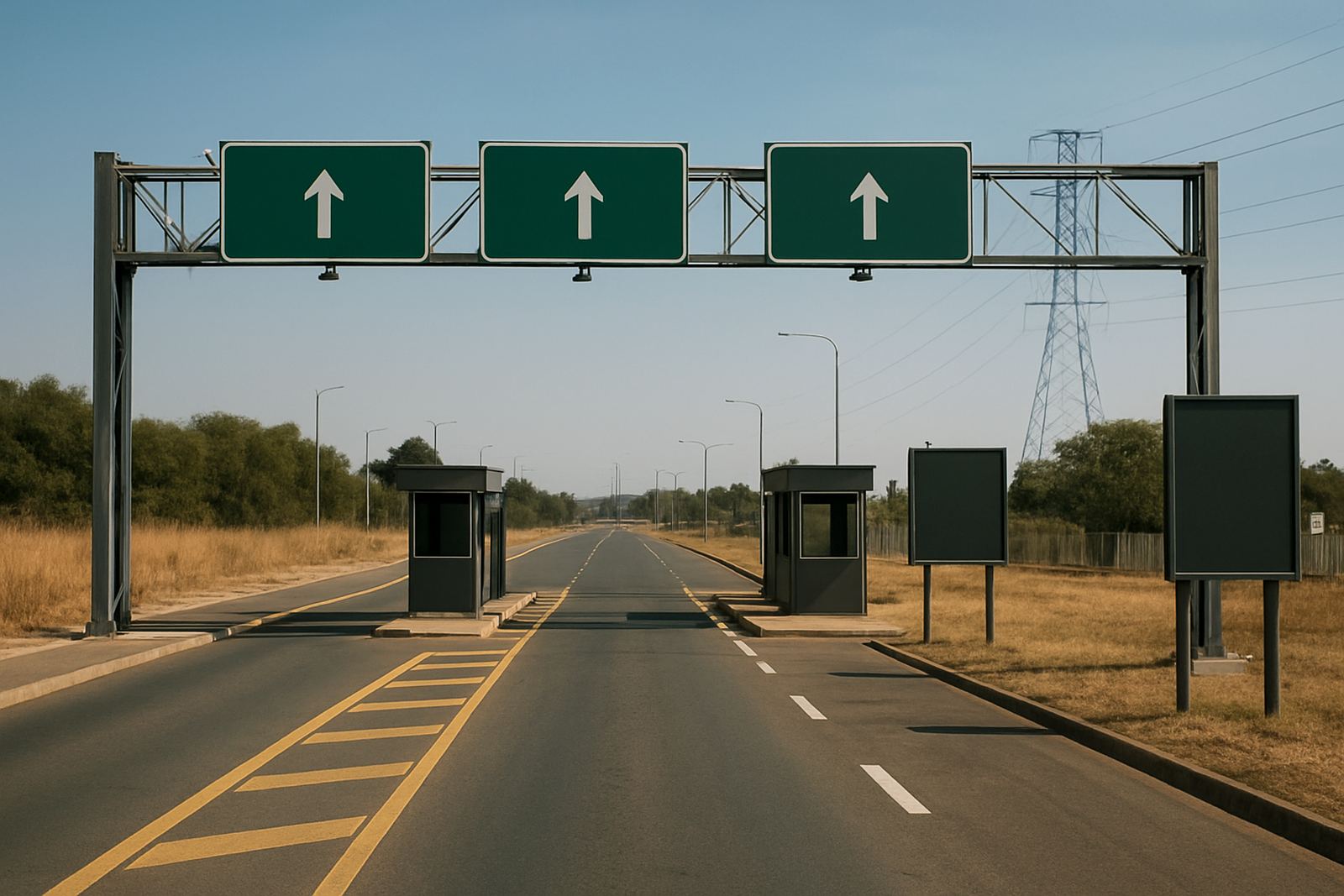
Campus wayfinding should be planned from the road inward. We look at where cars queue in the morning, where learners enter on foot, where deliveries happen, and which paths become crowded between periods. A good layout reduces confusion at the taxi drop-off, keeps parents from blocking service roads and makes it easier to direct visitors to the admin office without stopping security at the gate for every question.
We usually recommend a simple hierarchy. The first layer is gate and road-facing identification. The second layer is directional signs for turn points, parking and reception. The third layer is detailed naming for faculties, hostels, halls, laboratories and sport facilities. If a campus has several buildings with similar fronts, clear colour coding or numbering helps a lot. It is also worth checking sight lines at night, especially where load-shedding affects security lighting and the signs need to stay readable in low light.
- Keep messages short and repeat the same naming across the site
- Use one font family and a limited colour set for consistency
- Check visibility from a vehicle at 20 to 40 km/h
- Allow for future buildings so the system can expand later
Material choices for daily wear, sun and cleaning
Education sites take a beating. Signs get touched, bumped by trolleys, marked by sports equipment and exposed to sun, dust and rain. Coastal towns like Durban need extra care for corrosion resistance, while inland campuses often deal with strong UV and dry wind. For that reason we specify materials based on location and use, not just on appearance.
Typical equipment for campus work includes printed vinyl on rigid panels, routered Perspex letters, powder-coated aluminium trays, fabricated 3D lettering, post-mounted pylons, aluminium composite boards and internally lit light boxes where visibility matters after hours. For larger entrance features or donor boards, brass or stainless details can add a more formal look. If an LED video screen is part of the brief, it should be placed where it can be managed safely, with proper structural coordination, cable routes and maintenance access. A screen that is hard to reach becomes a problem very quickly.
- Aluminium and aluminium composite for low maintenance use
- Perspex or acrylic lettering for crisp department names
- Vinyl graphics for temporary notices or seasonal messaging
- Protected steel frames for pylons and larger free-standing signs
- LED screens only where viewing distance and power supply are suitable
Approval, compliance and safety on campus sites
Most campuses have more than one decision-maker. School management, governing bodies, facilities teams, municipalities and sometimes property owners all want a say. We help keep the process organised so the project does not stall halfway through. That includes site surveys, material specification, structural coordination and support with approvals where required.
Safety matters as much as appearance. Signs near roads or drop-off zones must not block drivers' views. Directional boards should not create confusion at pedestrian crossings. Fire and emergency signs must stay legible in poor light and be positioned where staff and learners can find them fast. If the campus is near a municipal road or requires a pylon close to the boundary, the size, footing and placement need to suit local rules. Getting that right from the start is cheaper than redoing the steelwork later.
We also plan for maintenance access. A sign mounted too high or a screen fixed with no safe working space will cost more every year. Simple access details, like lockable panels and sensible cable runs, make a big difference once the site is in use.
Common mistakes that cause confusion and extra cost
Campus projects often go wrong when signs are treated as an afterthought. The usual result is a patchwork of different sizes, colours and fixing methods that look untidy and confuse visitors. Another common problem is ordering signs before the final room names, faculty names or gate numbers are confirmed. That leads to reprints, extra fabrication and delays on site.
We also see campuses that use too many small signs where one clear directional board would do the job better. A crowded wall of arrows does not help anyone. Likewise, glossy finishes can look neat in photos but become hard to read in bright sun. For outdoor education sites, readability and strength matter more than decoration, especially where learners move between blocks during a short break.
- Using different names for the same building on separate signs
- Choosing materials without checking wind, rain or coastal exposure
- Placing signs where trees, gates or parked vehicles block them
- Leaving no allowance for future expansion or new blocks
- Skipping a maintenance plan for cleaning, tightening and replacement
Budget ranges for campus signage in Rand
Budget depends on the number of buildings, the size of the site, the materials chosen and whether structural steel or lighting is needed. Small campus refreshes can start at about R45 000 to R120 000 for entrance identifiers, a few directionals and basic internal room signage. A mid-sized school or college system with multiple buildings, parking signs and branded wall elements often sits between R120 000 and R350 000.
Larger campuses, especially those needing pylons, several fabricated features or LED screen integration, can move from R350 000 upwards. If the project includes site surveys, approvals, fabrication management and installation management, it is worth budgeting for those services from the start instead of trying to add them later. That usually keeps the programme steadier and avoids surprise costs from rework or rushed installation.
For schools, colleges and training facilities, the best value usually comes from a phased approach. Start with the entrance, the main routes and the most confusing areas, then expand once the core system is in place. That keeps the site usable and helps you spread the spend over more than one term or financial year.
How we handle campus projects from Modderfontein
From our Modderfontein base, we work on campus projects across Gauteng and beyond, including Sandton, Randburg, Midrand, Germiston, Pretoria, Centurion and Durban. We also specify, build and rig signage for sites further afield where the brief requires it. Our team includes project, design, fabrication and rigging support, so the handover stays coordinated from first survey to final fixing.
Typical services for education campuses include signage strategy, site surveys, wayfinding planning, design development, material specification, structural coordination, approval support, fabrication management, installation management, LED screen integration, maintenance planning and project handover. If you are planning a new campus or refreshing an older one, the best starting point is a clear walk-through of the site and a practical list of what must be seen first, what can wait, and what needs to survive the next five to ten years.