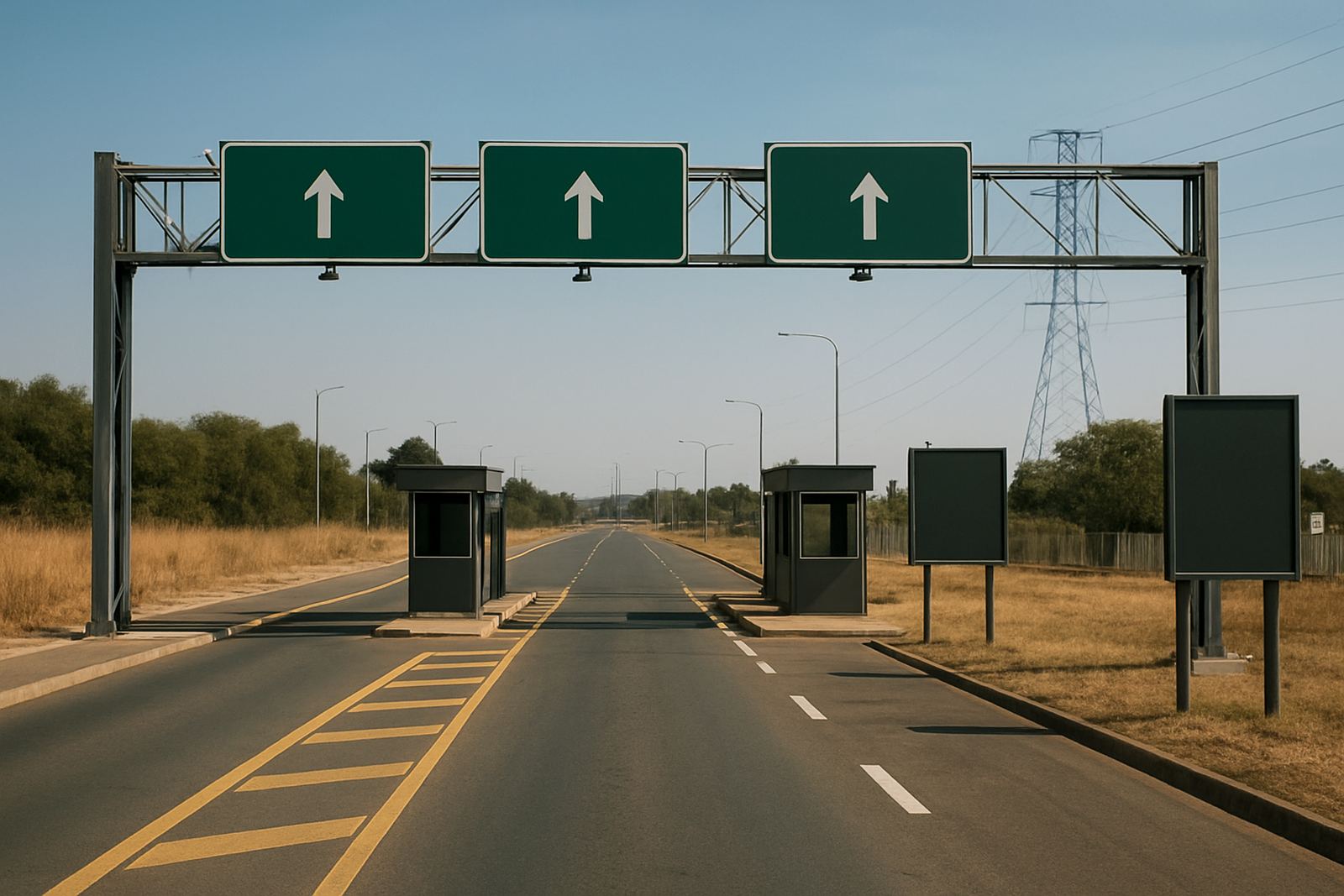
What border post signage has to do on day one
A border post is not a normal traffic environment. Drivers need to see where to queue, where to report, which lane is for freight, which is for private vehicles, and where pedestrians or service vehicles must go. The signage has to work at speed, in poor weather and often after dark, with no room for confusion.
For these projects we look at the whole movement pattern, not only the sign faces. That includes approach roads, arrival zones, inspection points, holding areas, pedestrian routes and exit control. In many cases the sign plan also needs to fit municipal rules, road authority conditions and site security requirements, especially where there are multiple agencies on one property.
At border posts near busy freight corridors, the wrong sign position can cause queuing back onto the road. That creates safety problems, delays and unnecessary strain on the control team.
Typical sign types used at crossings and control points
The equipment set depends on the size of the crossing and the type of traffic, but the following is common on South African and regional sites:
- Directional panels for arrivals, departures, inspection lanes and parking
- Large identification signs at entry and exit points
- Road signs for speed control, stop points, one way movement and restricted access
- Variable message or LED screens for live instructions, closures and lane changes
- Wayfinding boards for admin offices, customs, health, security and goods inspection
- Fabricated 3D lettering or route markers on buildings and gates
- Reflective panels and night-visible marking for low light and load-shedding conditions
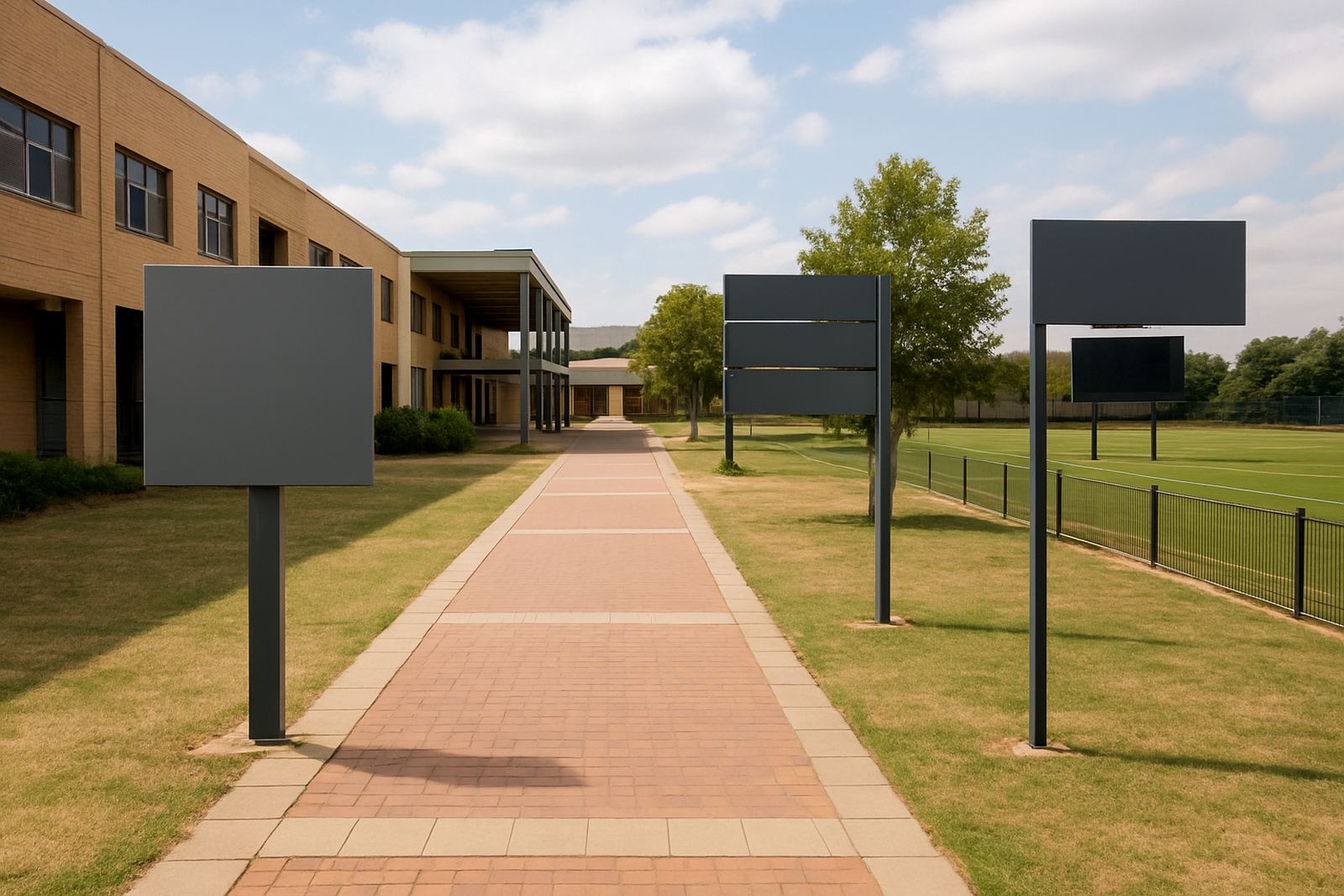
- Pylons and freestanding boards for long-distance approach visibility
For coastal crossings, we usually allow for higher corrosion resistance. On inland sites, UV and dust are often the main issue. In both cases, fixings and posts matter as much as the face material.
Planning the layout so traffic keeps moving
Good border post signage starts with a site survey and a movement study. We want to know where the queues form, where drivers first slow down, which turn is missed most often, and how visibility changes at night or in rain. On narrow access roads, a sign can be technically correct but still useless if it is hidden by trucks, poles or fencing.
Our planning work normally covers sign size, placement height, legibility distance, mounting type, maintenance access and whether the message should be fixed or changeable. In some cases a sign needs to be read from 80 to 120 metres away, in others the message is only useful at 10 to 20 metres. That changes the type of board, letter height and lighting requirement.
We also check what can be installed without causing bottlenecks during the works. Border sites often cannot stop operating, so the staging plan must fit live traffic and security rules.
- Start with the busiest movement, not the easiest wall
- Allow for night reading and glare from headlights
- Keep sign messages short and direct
- Leave access for cleaning, repairs and future updates
Material and structure choices for harsh conditions
Border posts take punishment from sun, wind, dust, rain, security washdowns and in some regions coastal humidity. We specify materials with that in mind. Printed vinyl can work for shorter term messages, while aluminium composite, galvanised steel, brass detail and routed Perspex are better for more durable identification and wayfinding. Where the site needs long-term visibility, fabricated frames and properly anchored posts matter just as much as the graphic finish.
For illuminated work, LED lighting or LED screens may be suitable, but only where the power supply, mounting position and maintenance access are properly planned. In some areas, load-shedding means the sign system must still communicate when power is off, so reflective faces, static boards and backup planning are important.
We pay close attention to fixings, foundations and anti-corrosion treatment. A sign that looks good on installation day but starts rusting after one rainy season becomes an expensive problem.
Approvals, coordination and installation at controlled sites
Border post projects usually involve more than one decision-maker. There may be roads teams, security, customs, municipal officials, developers, operators and contractors all needing a say. That is why approval support and structural coordination are part of the service, not an afterthought.
We manage the process from specification through fabrication and site installation. That includes drawings, structural notes, sign schedules, mounting details and handover information for maintenance teams. On active sites, the rigging plan must be clear and practical, because work windows are often short and access can change without much notice.
- Confirm the responsible authority for each sign zone early
- Match the sign schedule to the traffic control plan
- Agree on power, trenching and mounting routes before fabrication
- Document final positions for future maintenance and replacement
When everything is coordinated properly, the site reads clearly and there is less pressure on staff to redirect vehicles manually all day.
Common mistakes that slow vehicles and create risk
The most common mistake is too much information on one sign. Drivers at a crossing need the essentials first, not a paragraph. Another problem is inconsistent wording across different boards, which causes hesitation and repeat questions at the gate. Poor placement is also common, especially where signs are mounted too high, too low, or hidden behind other infrastructure.
We also see projects where lighting is treated as optional. At border posts, visibility after dark is not a nice-to-have. If the sign cannot be read in rain, glare or during a power interruption, it is not doing its job. Finally, many sites forget about maintenance access. A board that cannot be reached safely for cleaning or repairs will deteriorate quickly.
Good planning avoids these issues before steel is cut or graphics are printed.
Budget ranges for border post signage in Rand
Costs depend on the number of signs, size, height, lighting, structural work and the complexity of approvals. As a practical guide, smaller wayfinding and identification packages can start from about R75 000 to R250 000 for a limited set of boards and mounted signs. Mid-size border layouts with multiple directional points, structural supports and some illuminated elements often fall between R250 000 and R900 000.
Larger crossing packages, including tall pylons, multiple freestanding signs, fabricated 3D elements, lighting, and LED integration, can run from R900 000 to several million Rand depending on the site. If there are foundation works, trenching, traffic accommodation, or phased installation around live operations, the budget rises further.
The best way to control cost is to finalise the sign schedule early. Late changes usually add fabrication waste, extra call-outs and delays to installation.