
What retail centres usually need from day one
A shopping centre has different signage jobs in one place. Visitors need to find parking, entrances, lifts, toilets and tenants without asking security every few minutes. Tenants need front-of-house signs that fit the centre rules, while the landlord needs a clean look that still allows for seasonal promos, trading hour changes and new occupiers.
For malls in Johannesburg, Sandton, Midrand and Pretoria, we normally start with a package that covers the full customer journey. That includes external identification, internal wayfinding, tenant shopfront branding, promotional zones and safety signage. In larger centres, especially where there are multiple levels or basement parking, the layout has to be simple enough to read at walking pace and from a moving vehicle.
Load shedding also matters. If digital screens, light boxes or illuminated directories are part of the brief, they need the right backup and control strategy. In coastal centres later in the project life, corrosion resistance becomes a real issue too, so material choice cannot be left until the end.
A typical signage set for malls and shopping centres
Most retail centre programmes use a mix of printed, fabricated and illuminated items. The right combination depends on traffic flow, tenancy size and how often the centre changes promotions. We often specify a mix that balances cost, visibility and maintenance, rather than pushing one system everywhere.
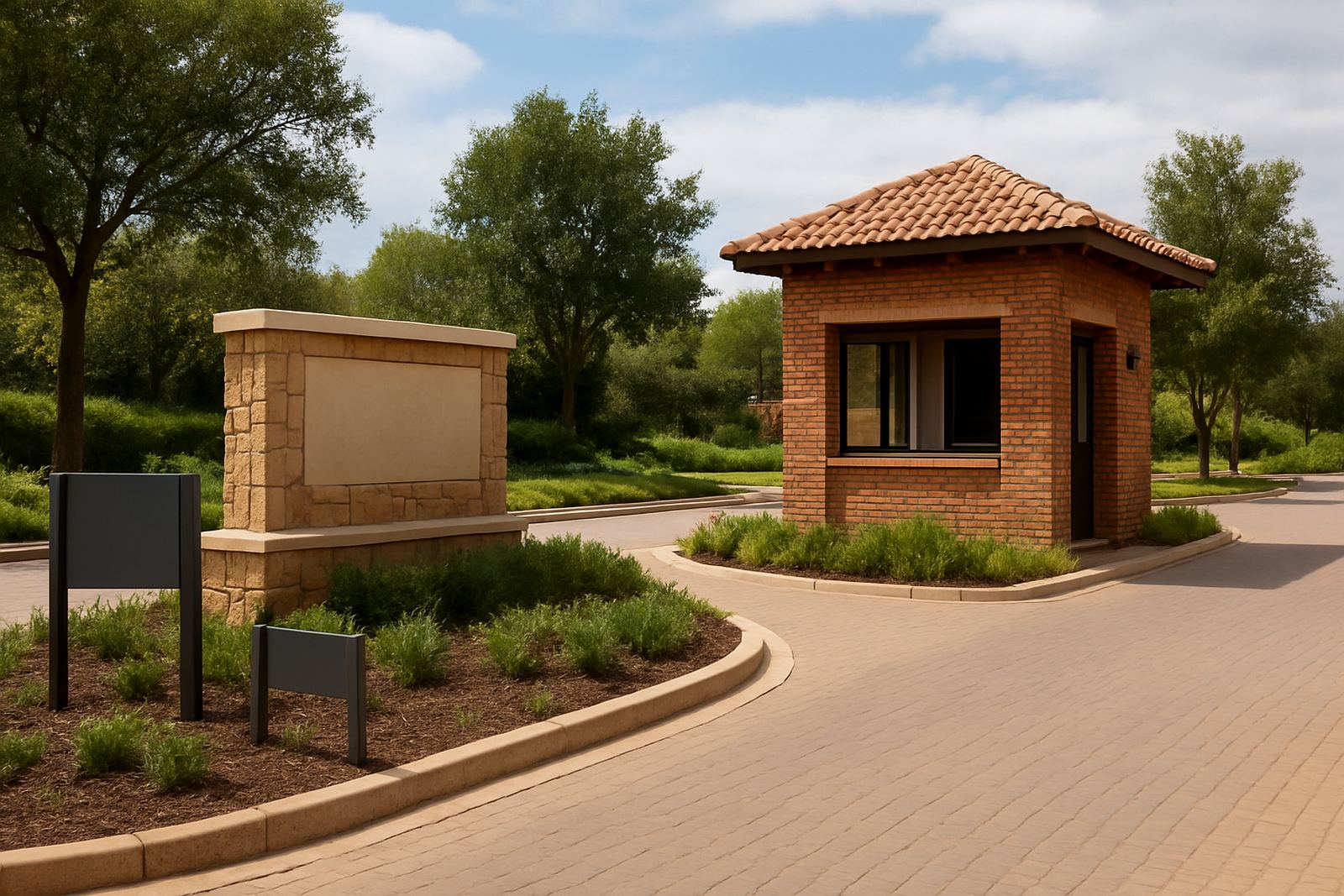
- Centre identity signs at entrances and main road frontages
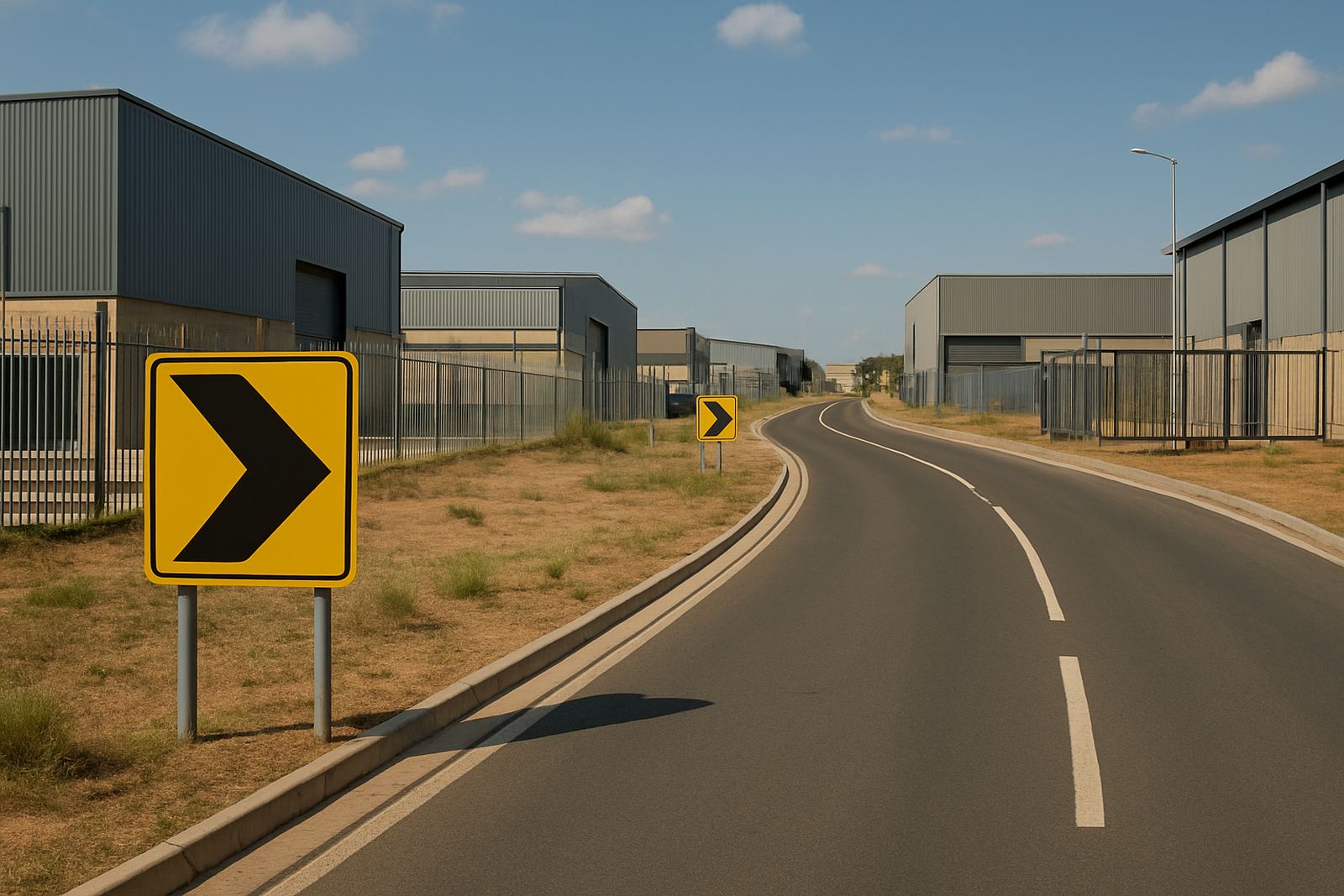
- Directional pylons for access roads, parking and loading bays
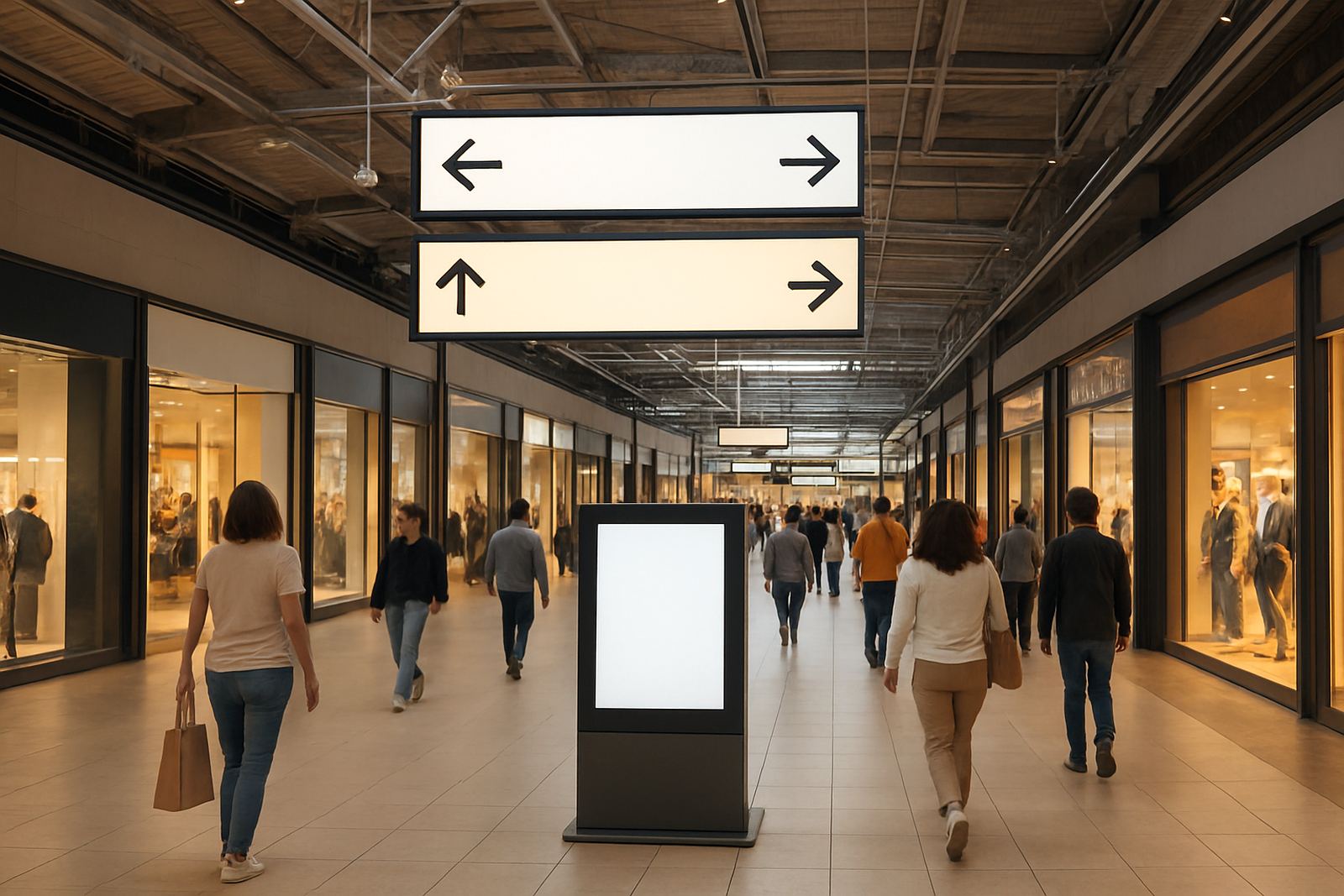
- Suspended or wall mounted directory boards for internal routes
- Shopfront fascia lettering for anchor tenants and line shops
- Light boxes for corridors, food courts and anchor tenants
- Routered Perspex lettering, aluminium panels and brass detail where a more premium finish is needed
- Promotional poster frames, vinyl graphics and temporary event signage
- Safety, fire route and statutory signs for compliance and circulation
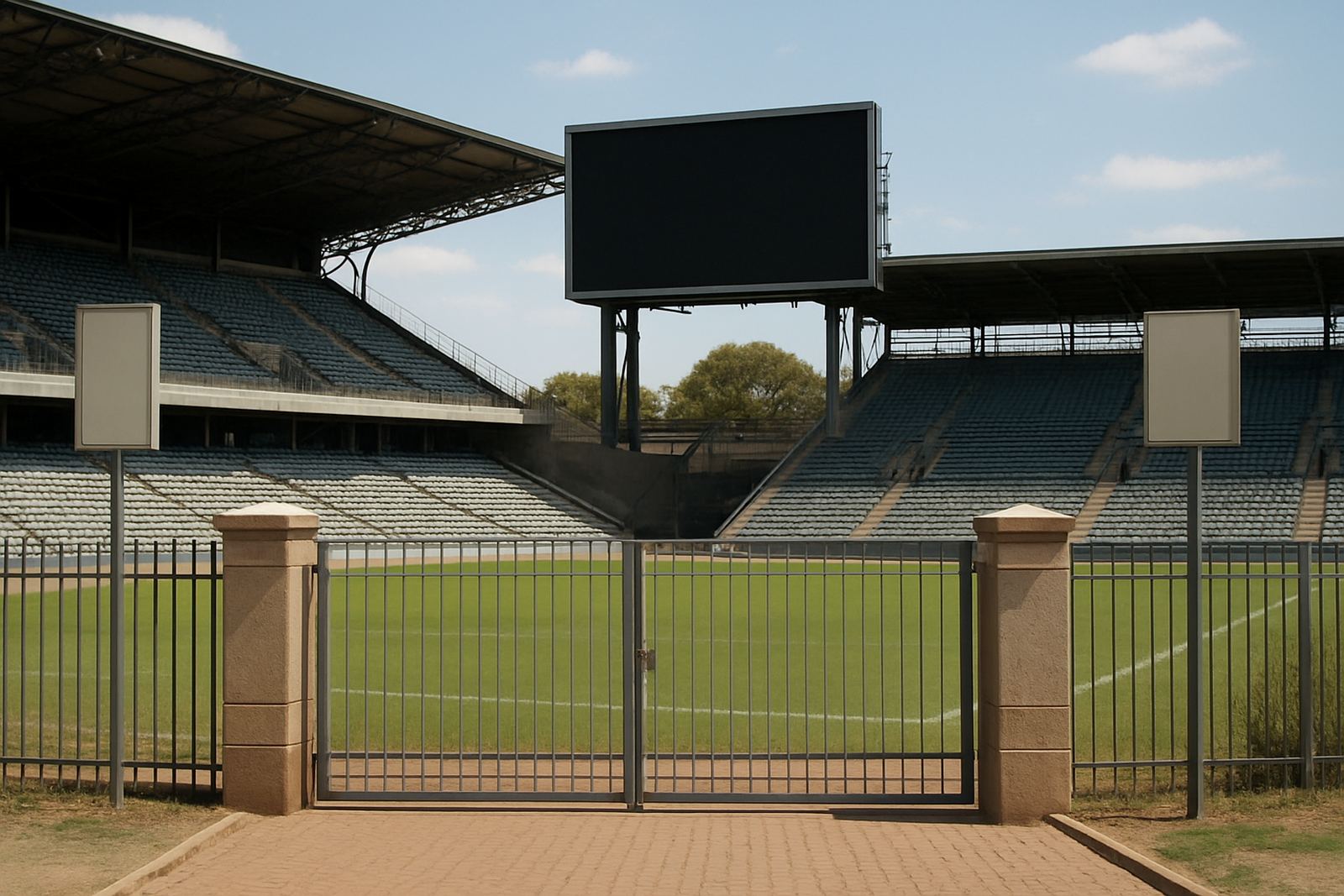
For larger developments, LED screens can work well near entrances or food courts if they are controlled properly and do not create glare at night. In centres with lower ceilings, a shallower fabricated sign can often look better than a bulky box sign and still give enough punch.
Planning the layout so people do not get lost
Good centre signage is mostly about planning, not decoration. If a visitor cannot understand the route in a few seconds, the sign has failed. We look at sight lines from the vehicle drop off points, escalators, lift cores, parking exits and main walkway intersections, then map where people actually hesitate.
A common mistake is putting too much information on one board. Another is using the same font size for every tenant, even where a sign needs to be read from 20 metres away in a basement bay. The best directories use clear zoning, consistent naming and a sensible hierarchy. If a centre calls the same area by two different names, shoppers will keep missing it.
For retail centres in Gauteng, we also factor in traffic dust, cleaning schedules and the reality of seasonal footfall spikes. A sign that looks fine on a weekday morning can fail on Black Friday if it is too small, too reflective or mounted where shoppers are constantly stopping and turning.
- Keep tenant names consistent with lease schedules and centre maps
- Place directories where people naturally pause, not where they are already moving fast
- Use colour coding only if it is repeated across maps and physical signage
- Allow space for future tenants and rebrands, because tenant churn is normal
Materials that cope with traffic, cleaning and weather
Retail centres take a beating. High touch zones get bumped by trolleys, cleaning chemicals dull poor finishes, and outdoor signs face sun, rain and wind. For that reason, material specification is a major part of the job, especially on centres that trade seven days a week and cannot afford frequent repair cycles.
Printed vinyl works well for temporary campaigns and internal graphics, but it must be installed on a proper substrate with clean edges. Routered Perspex gives crisp tenant lettering and can be backed for illumination. Aluminium is useful for durable panels, fascia details and directional signs. Brass is often reserved for premium branding or feature elements where a centre wants a more settled, upmarket feel.
For coastal centres or sites with strong morning sun, we often suggest powder coated metalwork, sealed joints and fixings that are suited to long term exposure. If a board is going above a food court, the surface finish also needs to be easy to clean without leaving streaks or staining.
Approvals, tenants and project coordination
Shopping centre signage sits between landlord rules, tenant needs and municipal requirements. That means approval support is not a side task, it is part of the job. We coordinate drawings, structural input, material schedules and mounting details so that everyone is looking at the same information before fabrication starts.
When a tenant changes trading name, opens late or needs a rebrand under pressure, the programme can move fast. That is why the project team needs a clear sequence for surveys, design development, fabrication management and installation management. Without that sequence, one missed measurement can delay several shop fronts at once.
We also plan for access. In busy centres, installations may need to happen before opening, after trading hours or over weekend windows. Rigging for high facades, pylons and upper level signs must be set out in advance, especially where cranes, lifts or traffic control are involved.
- Confirm centre rules before any artwork is approved
- Check mounting points and wall conditions on site, not from old drawings alone
- Agree who signs off tenant branding, landlord branding and statutory information
- Build a maintenance route into the handover, so cleaning and lamp replacement do not become guesswork
Budget ranges for retail centre signage
Budget depends on size, materials, illumination and how many touchpoints the centre needs. A small tenant branding refresh can be handled quite differently from a full mall wayfinding programme. In practice, it helps to break the budget into visible elements and back-end work, so the landlord can see where money is going.
As a broad guide, directory boards and basic internal wayfinding packages can start from about R45 000 for a compact site. A mixed retail centre package with fascia signs, directionals and a few illuminated items often sits in the R180 000 to R650 000 range. Larger centres with multiple entrances, pylons, fabricated feature signs and LED screen integration can move from R750 000 into several million rand, depending on scope and structural demands.
We usually recommend allowing a contingency for approvals, structural changes and late tenant additions. It is cheaper to plan for future bays at the start than to cut and patch a system later. If the centre trades through winter and summer peaks, it is also wise to budget for maintenance planning from day one, not after the first failure.
Early signage planning for retail centres
The centres that run smoothly usually bring in signage support before the first tender pack goes out. That allows the route names, hierarchy and fixing points to be set properly before any fabrication starts. It also reduces the number of revisions when tenants change or municipal comments come back.
Our work in Gauteng and across Africa covers signage strategy, site surveys, wayfinding planning, design development, material specification, structural coordination, approval support, fabrication management, installation management, LED screen integration, maintenance planning and project handover. For retail centres, that means one team can keep the full programme moving from concept to final fit off, even when the site is busy and the timeline is tight.
Whether the brief is a new mall in Centurion, an upgrade in Sandton or a mixed-use centre in Durban, the aim is the same: make the place easy to read, easy to trade in and easy to maintain.