
Start with the job the sign has to do
A light box is not only a glowing panel. It has to carry a message clearly, day and night, in traffic, from a distance, and sometimes in harsh weather. The first decision is therefore not the size of the box, but what the sign must achieve. Is it a shopfront marker, a forecourt identifier, a route-finding sign in a parkade, or a branded feature on a building corner?
The answer affects every other choice, from face material to mounting height. A sign on a busy Johannesburg arterial needs stronger contrast and larger letterforms than the same message inside a mall corridor. In coastal towns like Durban, you also need to think about corrosion and moisture at the earliest stage. A good brief saves rework later and keeps the sign readable for longer.
- Define the viewing distance first, then set the box size.
- Decide whether the sign must be seen by pedestrians, drivers or both.
- Check if the location has wind, salt air, dust or reflected glare.
- Allow for night use, not only daytime branding.
Choose the face material for the right level of brightness
The face of a light box does most of the work. It needs to diffuse the light evenly, keep the colours true and hold up under sun and cleaning. For most retail and commercial signs, a properly specified translucent face gives the best balance between clarity and service life. If the face is too thin, the illumination can show hot spots. If it is too opaque, the box will look dull and underpowered.
For longer spans, pay attention to panel flex. A face that bows in the heat can change the look of the sign and create shadows around the edges. On larger boxes, the face should be planned together with the internal support structure so it stays flat. For outdoor sites, UV exposure matters more than many owners expect. In Gauteng the sun can be unforgiving, and a face that starts off clean can yellow or fade if it is not correctly specified.
- Use translucent faces where light output must be even across the full panel.
- Ask for UV resistance where the sign will face full sun for most of the day.
- For large formats, check panel thickness and support spacing.
- Match the face finish to the viewing angle to reduce glare.
Lighting choice affects maintenance more than most people think
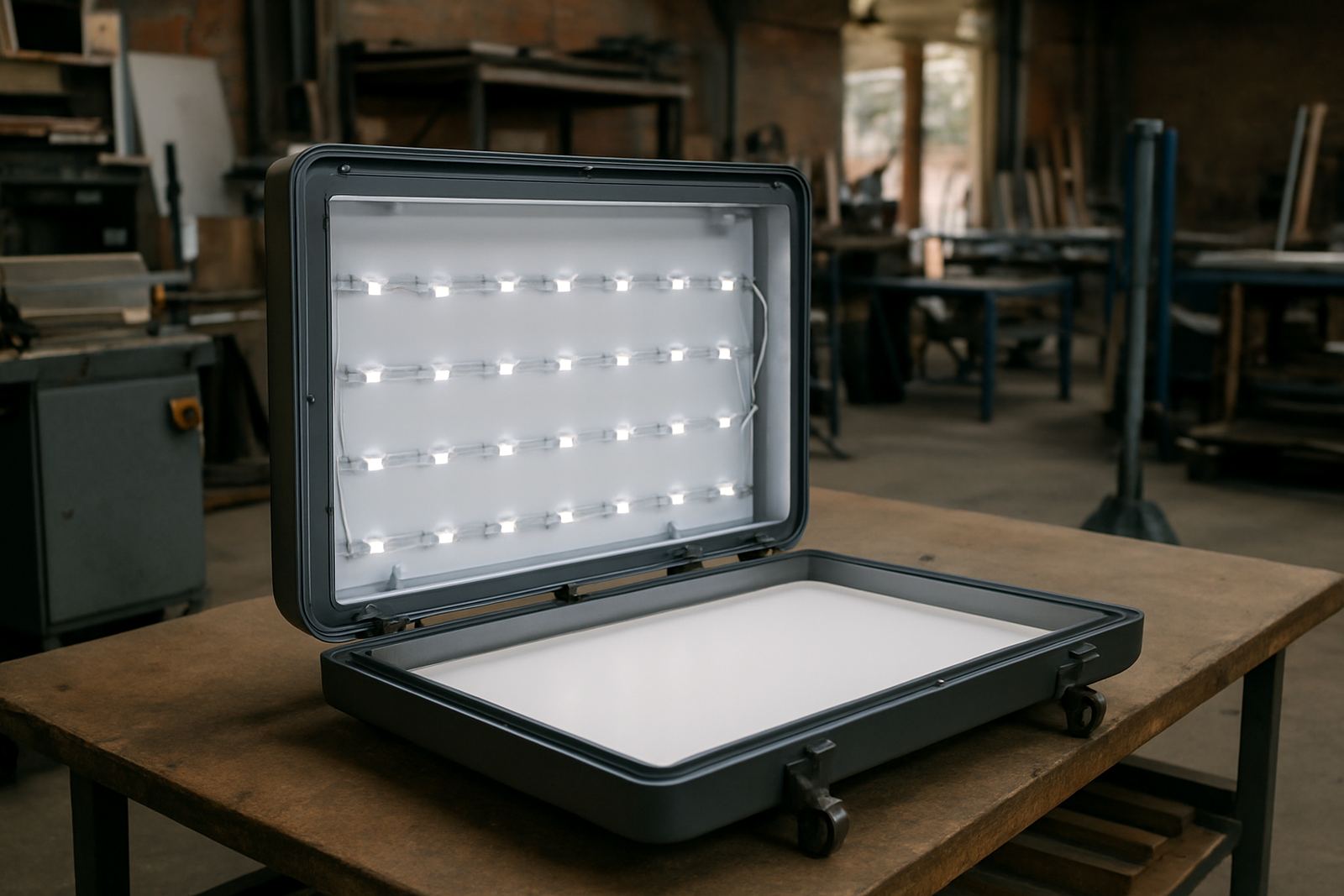
The light source inside the box should suit the sign depth, the image density and the hours it will run. Modern illuminated signage often uses low energy lighting because it draws less power and produces less heat than older systems. That matters in South Africa where power interruptions are common and every watt counts on larger installations. Lower heat also helps protect the face and internal components.
Spacing is important. If the internal lighting is poorly distributed, the edges can look darker than the centre or some sections may show bright spots. Good internal layout makes the sign look even from near and far. Maintenance access must also be planned at the same time, because a sealed box that cannot be opened properly becomes expensive to keep in service. If a component fails, the sign should be serviceable without dismantling the full unit.
For sites with regular load-shedding, consider how the sign will behave when supply is interrupted. Some clients need the sign only on commercial hours, while others need continuity for security or roadside visibility. That decision affects wiring, controls and any back-up supply arrangements.
Placement can help or ruin the sign
Even a well made light box can fail if it is placed badly. Height, angle and nearby obstacles matter. A sign mounted too high may lose impact at street level. One mounted too low can be blocked by trees, parked cars, awnings or traffic. Before fabrication, the site should be checked for sightlines in the real world, not just on a drawing.
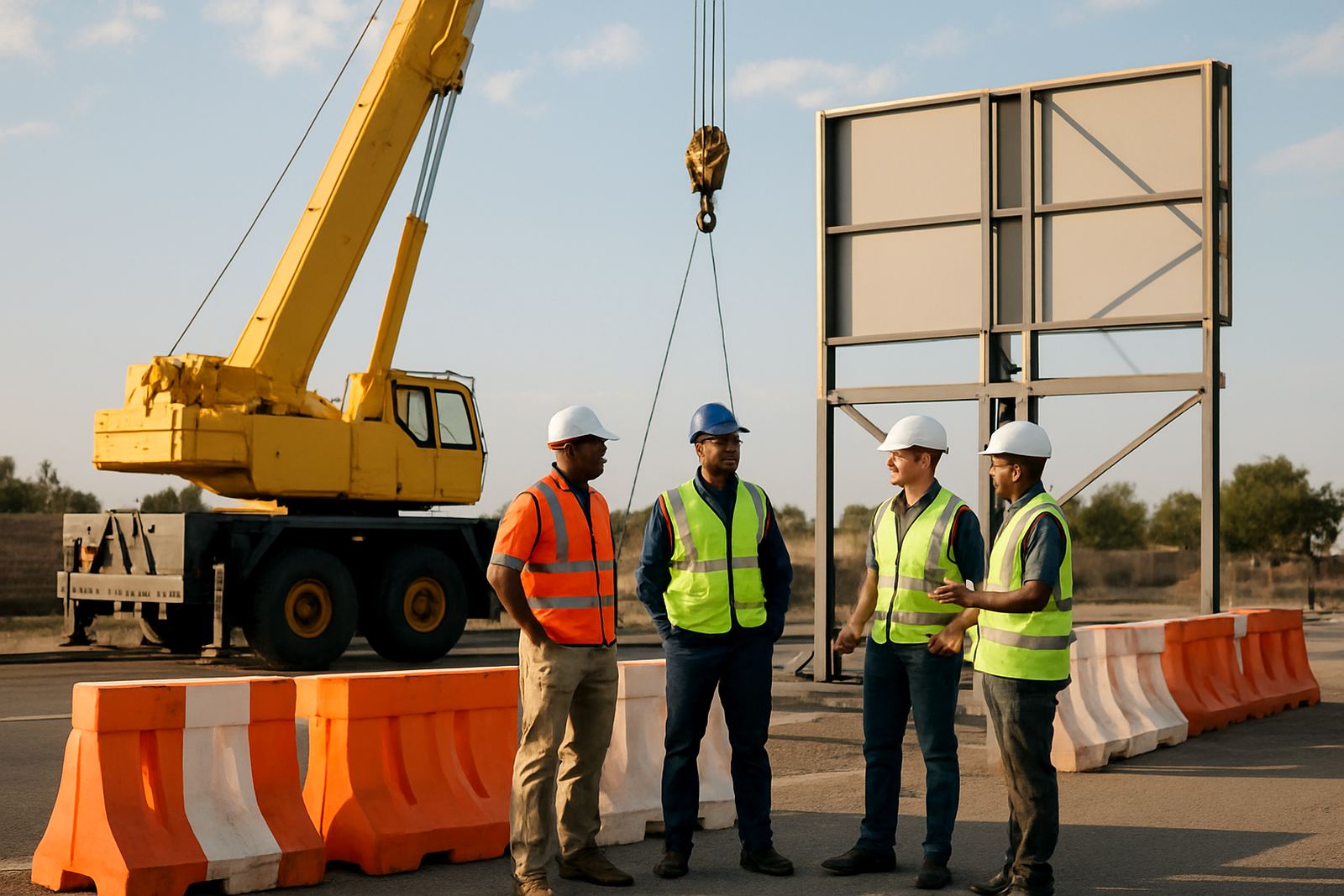
In sandton-type commercial streets, glass façades, reflective finishes and night traffic can create glare. In mixed-use developments, the sign may need to work with pedestrian movement, guard house positions and parking access. On municipal sites, the placement must also respect road reserves, sight distance and approval conditions. If the sign is for a frontage near a main road, coordinate early with the relevant authority and with the structural team so there are no last-minute changes.
- Confirm viewing angles from the main approach road and pedestrian path.
- Check for obstructions such as trees, balustrades, lighting poles and canopies.
- Verify that the mount point can take wind and vibration loads.
- Allow safe access for servicing, especially on upper floors or over entrances.
Detail the casing and fixings for local conditions
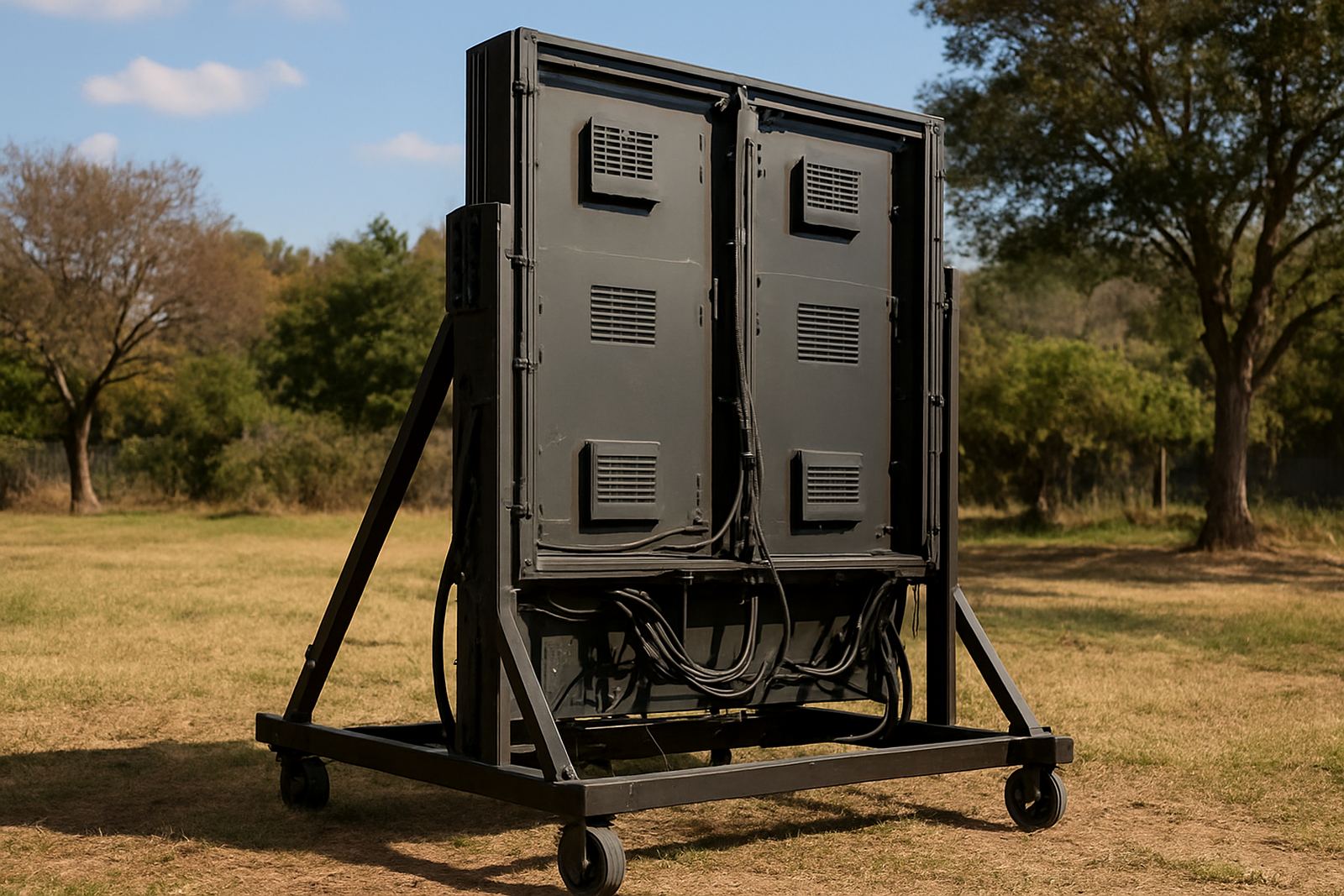
The casing is what keeps the face square, the electrics protected and the sign secure. Aluminium is often a practical choice for many illuminated boxes because it is light and resists corrosion better than mild steel in exposed conditions. Where a stronger architectural finish is needed, other metals may be used, but the finish must be suitable for the environment. In coastal areas, salt air can attack poor detailing very quickly.
Fixings should be selected for the substrate and for the weather. A neat box with the wrong anchors is still a problem. Joints need to be sealed against rain and dust, but not so sealed that maintenance becomes awkward. Drainage and cable entry must be planned properly, especially where the sign will face heavy downpours or water spray. The same applies to rooftop or parapet installations, where wind loading and movement can be significant.
Good detailing also helps the sign age evenly. When brackets, returns and trims are consistent, the box looks intentional rather than patched together. That matters for developers, municipalities and brands that need a clean finish across multiple sites.
Plan servicing before the first panel is cut
A light box should be simple to maintain. That means allowing for safe access, replaceable parts and clear labelling from day one. If the sign is installed high up or over an entrance, maintenance planning is not optional. Someone will eventually need to clean the face, check the wiring or replace a failed component and that task should not require major disruption.
A practical maintenance plan should cover the whole life of the sign, not only the handover date. It should say how often to inspect the casing, how to clean the face without scratching it, and what to do if illumination becomes patchy. Where a site is dusty, windy or close to a road, inspections may need to happen more often. Where the sign is part of a larger development, maintenance access should be tied into the building's safety procedures.
- Keep access points clear for future repairs.
- Document the lighting layout and power routes.
- Set a cleaning method that will not damage the face or graphics.
- Plan inspections after storms or power events.
A Johannesburg example: a retail frontage that had to work after dark
A recent project for a retail frontage in Modderfontein needed a sign that could pull attention from the street without looking harsh at night. The client wanted visibility for drivers, but also a softer finish for people walking in from the parking area. The solution combined a translucent face with controlled internal illumination, a casing sized for easy servicing and a mounting position that cleared both the canopy and the parked vehicles below.
The site sat in a busy commercial zone with dust, heat and occasional power interruptions, so the detailing had to be practical. The face was specified for even output, the enclosure was prepared for weather exposure and the layout allowed straightforward access for future maintenance. The result was a sign that stayed legible after dark and did not become a recurring service headache. That is the real value of getting the basics right.
For anyone planning a light box in Johannesburg, Pretoria, Durban or along a national route, the same rule applies: decide on the face, lighting, servicing and placement together. If those four pieces work as one, the sign will do its job for years instead of months.