Begin with what the sign needs to achieve
The first mistake is choosing a material before the programme is clear. A launch banner, a sales office fascia and a municipal road sign are not the same job, even if they all sit on the same site. If the message will change in a few weeks, a temporary build is usually the sensible call. If the sign needs to carry a location name, tenant identity or safety instruction for years, then the spend should move into a longer-life asset.
At the planning stage we look at visibility, duration, wind load, access for fixing, and how the sign will be used once the campaign ends. A sign that has to survive Gauteng sun, summer storms and dust from nearby roads needs a different spec from a weekend promo panel in Sandton or a short-run retail promotion in Midrand. On coastal sites such as Durban, humidity and salt air change the material discussion again.
- Short term messages: openings, promotions, event branding, site hoardings, leasing drives
- Long term messages: tenant identifiers, wayfinding, road direction, safety and compliance signage
- Mixed use: developments where the same site must support both campaign art and permanent naming
Temporary signage should be light, fast and easy to remove
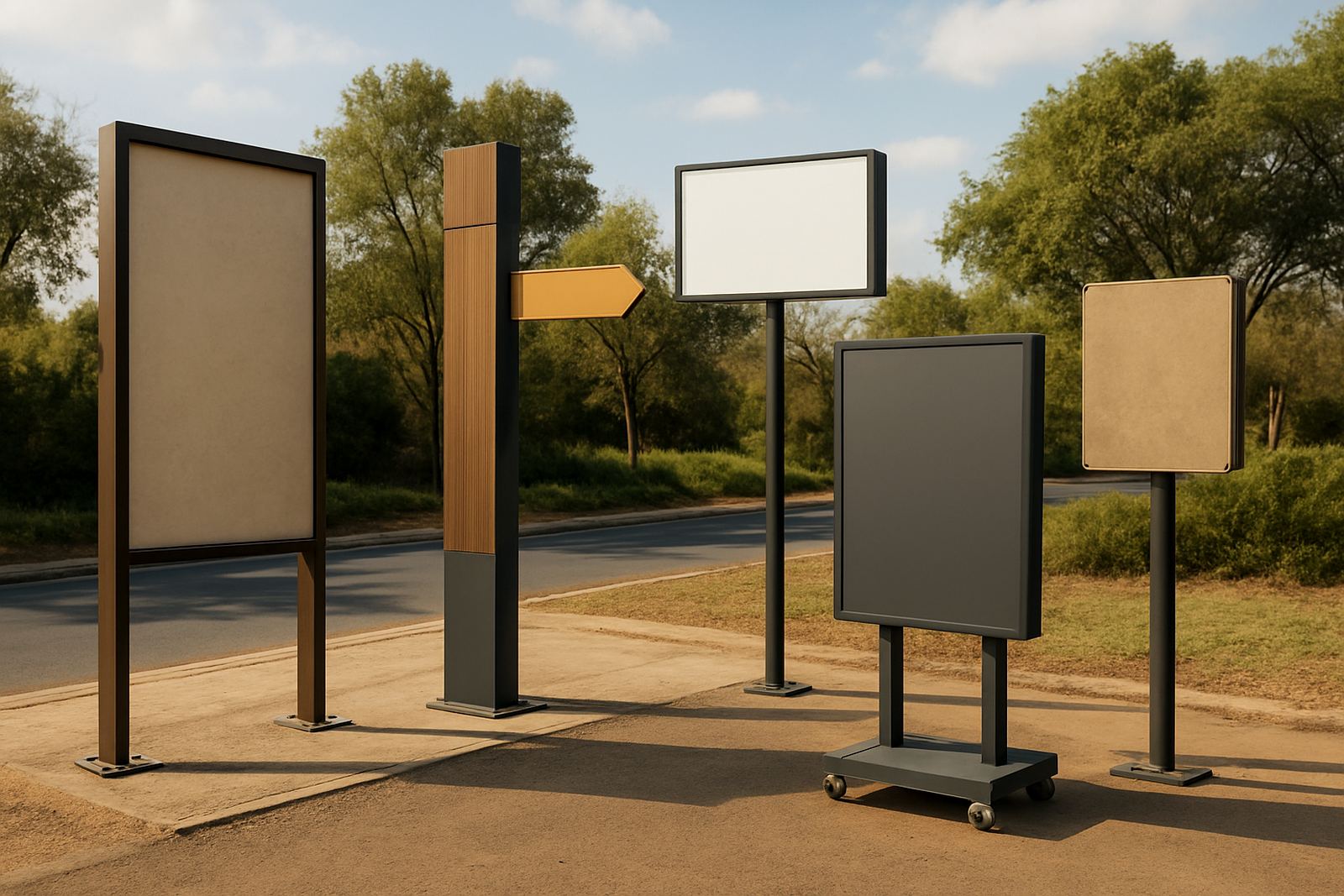
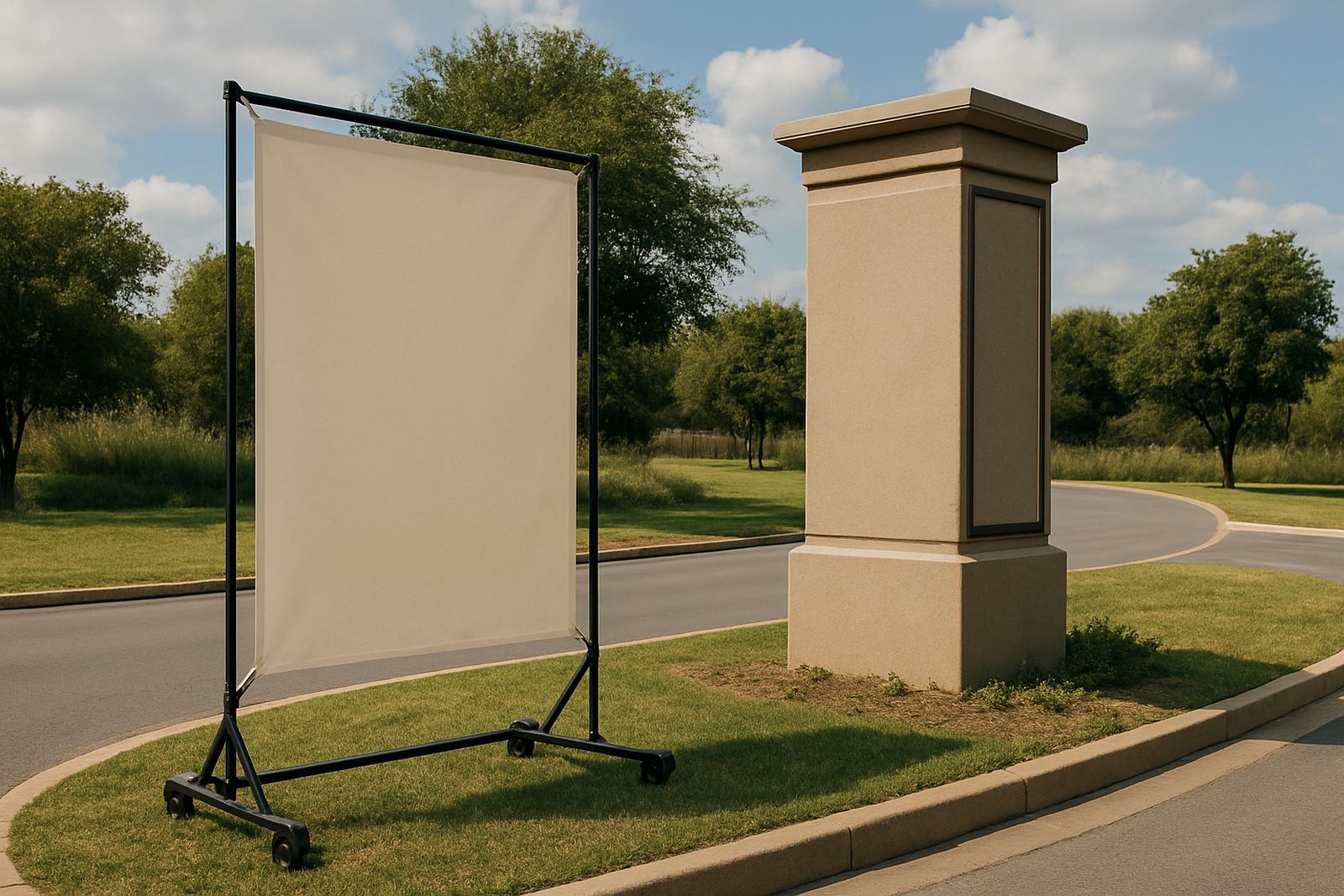
Temporary signage works best when the structure is simple and the message is clear. Printed vinyl, corflute panels, mesh banners and removable mounted panels all have their place, but each one needs the right fixing method. On a construction site in Modderfontein, for example, a light panel system may be suitable for a sales launch, while the same boundary line later needs a more permanent hoarding face or branded fascia.
The key is to avoid paying for over-engineering where the sign will only be up for a few months. That does not mean poor quality. It means using enough strength for the site conditions without locking money into materials that will be scrapped at the end of the campaign. We also allow for clean removal, because adhesive residue, torn faces and damaged substrates create extra cost after the campaign is done.
- Printed vinyl on a stable substrate for short campaigns
- Mesh for windy exposed sites where airflow matters
- Replaceable panel systems where artwork changes often
- Temporary fixings that protect walls, cladding and glazing
Permanent signage should be built for weather and maintenance
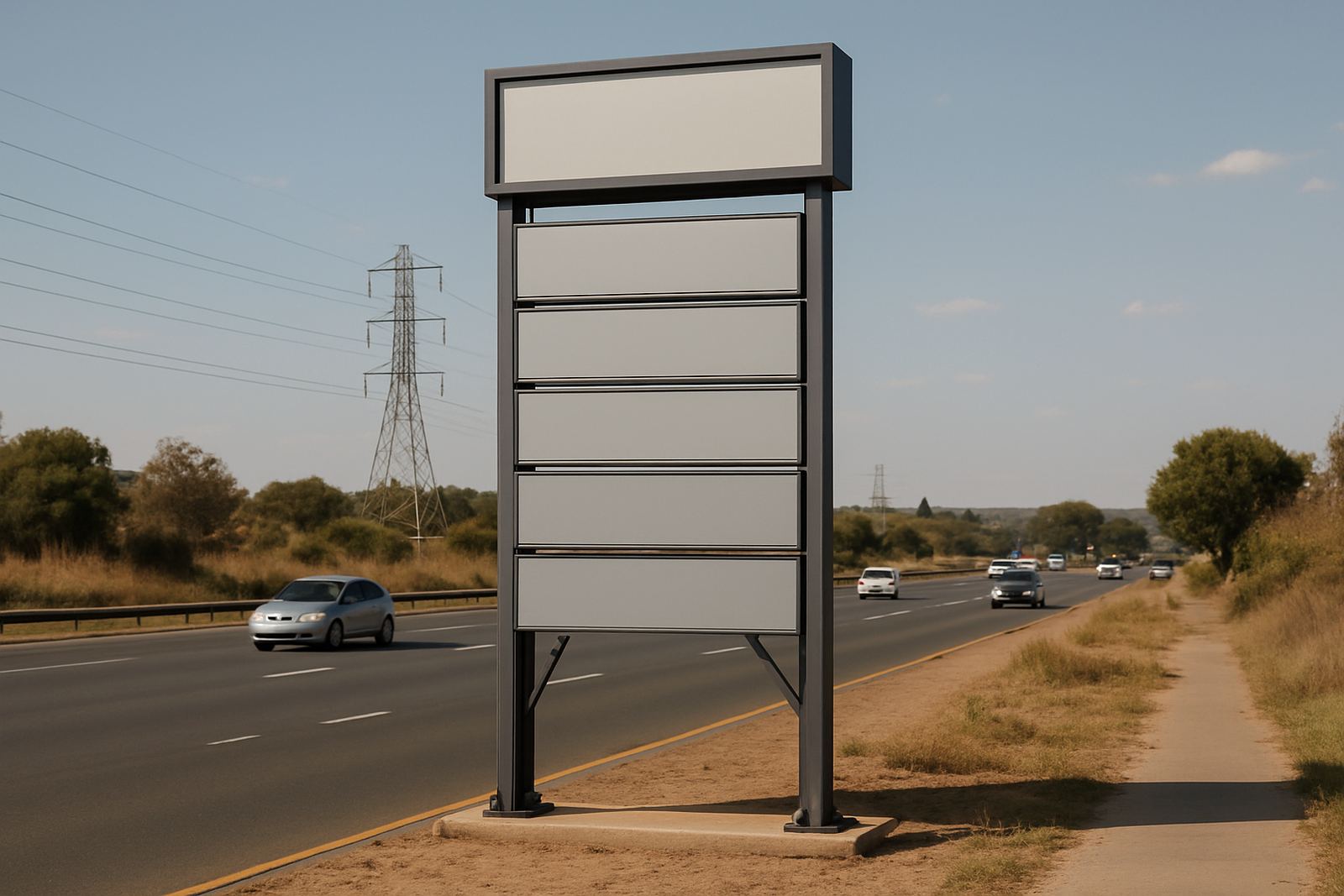
Permanent assets need a different mindset. A sign that forms part of the property for five to ten years should be designed as part of the building and the site. That means checking structural support, drainage, access for cleaning, replacement parts and how the sign looks at night. Fabricated 3D lettering, light boxes, aluminium panels, routered Perspex and pylons all need proper coordination before fabrication starts.
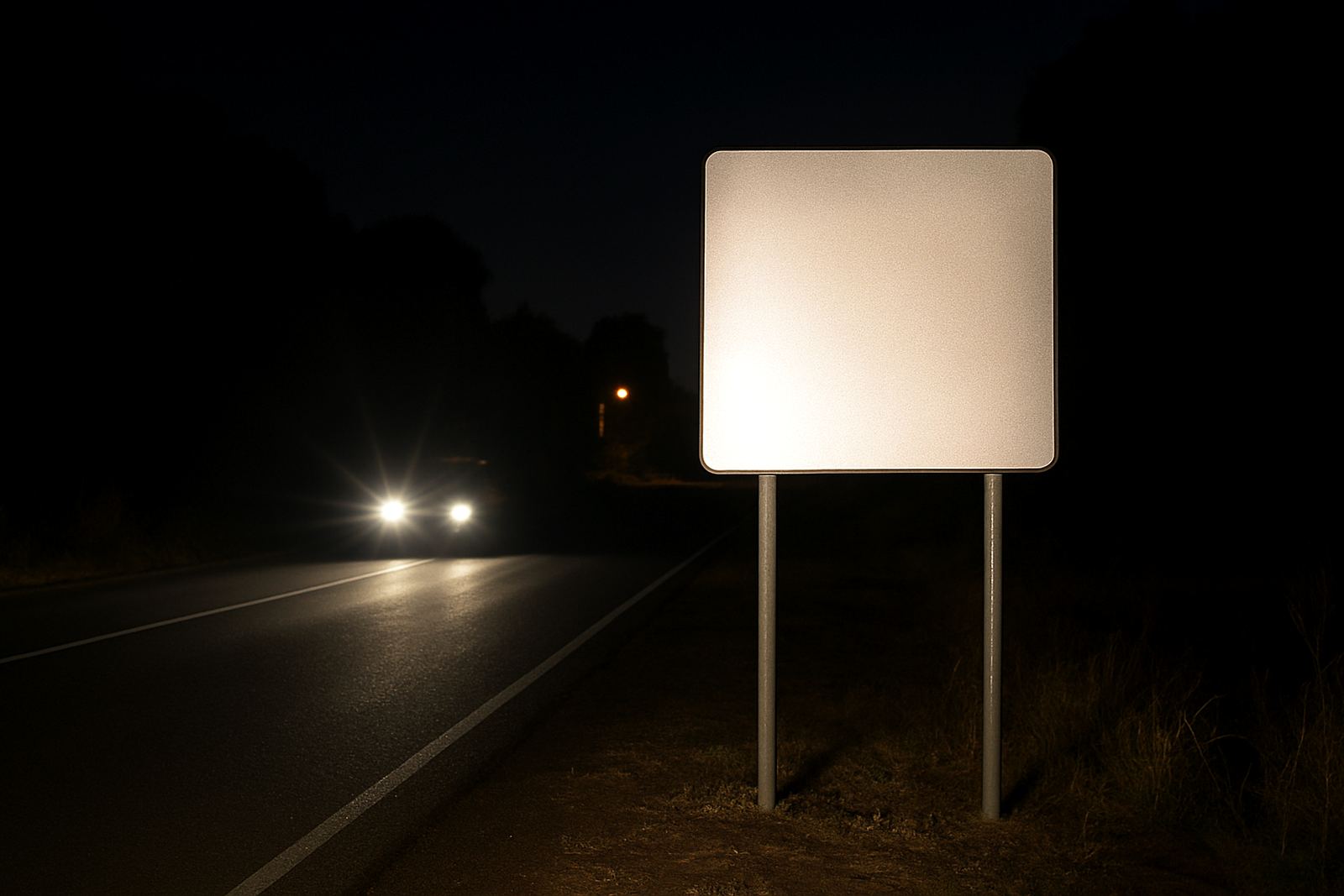
In Gauteng, UV exposure can fade poorly specified graphics faster than people expect. At the same time, load-shedding means illumination strategy matters. If a sign depends on light after dark, the electrical design and backup approach must be planned early, especially for retail parks, developer sites and municipal facilities where night visibility cannot be left to chance. A permanent sign should still look correct after repeated rain, dust and power interruptions.
Maintenance planning is part of the original decision, not an afterthought. If a sign cannot be reached safely for cleaning or lamp replacement, it becomes expensive to own. That is why we check access equipment, mounting height and future servicing before anyone signs off a final design.
Approvals and site rules can decide the material choice
Sometimes the best sign is the one that gets approved without delay. Municipal rules, landlord conditions, traffic sightlines and building restrictions can all affect whether a temporary or permanent option makes sense. A billboard edge near a busy route in Pretoria, a pylon at a retail entrance in Centurion, or a directional sign on a subdivision road in Germiston may each trigger different approval steps.
Approval support matters because it saves time later. If a temporary campaign is placed where a permanent sign would normally need engineering or permitting, the project can stall. If the site is in a controlled precinct, the wrong face finish, brightness level or fixing detail may be rejected. We compare the intended use against the site requirements before material is finalised.
- Check whether the sign is considered temporary, semi permanent or permanent on the specific site
- Confirm line of sight, verge limits, and any traffic or pedestrian clearance rules
- Allow for landlord, municipal and engineering sign off where needed
- Keep a record of dimensions, fixing method and artwork revision for handover
Choose a programme, not just a product
The cleanest signage programmes often mix temporary and permanent elements. A development launch may need vinyl wraps and site boards for six months, then permanent tenant naming, wayfinding and a pylon once the site opens. A brand refresh may start with campaign graphics and later settle into long-life aluminium or fabricated lettering. The decision should follow the programme, not the other way round.
This is where site strategy helps. If the message will evolve in phases, the sign system should be planned in phases too. That can mean designing one frame that accepts changeable graphics, or separating the visible campaign area from the permanent identity area. It is far cheaper to think that through at the beginning than to rework a finished frontage later. Even a small typo in a tenant panel can cause a return visit, so the artwork route and sign list need proper control.
For brands, developers and municipalities across Gauteng and beyond, the real question is not temporary or permanent in isolation. It is what the site needs now, what it must do next, and what it should cost to keep doing that job after the first month has passed.
A Modderfontein example: one site, two timelines
Consider a mixed-use development in Modderfontein preparing for an opening quarter. The leasing team needs immediate exposure for the launch, while the body corporate wants permanent wayfinding and entrance identity that will remain in place for years. If both needs are treated as one sign order, the project usually gets muddled. If they are separated correctly, the temporary campaign can move fast while the permanent elements are measured, approved and fabricated with care.
In practice, that often means printed site boards, directional arrows and promotional wraps in the early stage, followed by 3D lettering, a pylon at the entrance and internal wayfinding once the buildings are occupied. The temporary items are kept light and removable. The permanent items are built to handle weather, servicing and repeat use. The result is a site that looks active now and still feels ordered later.
That approach also helps with budget control. You avoid sinking long-life spend into graphics that will change, and you avoid replacing cheap temporary items too often because they were used where a permanent solution was needed.
How Deep3 plans the split between short term and long life
Our process starts with the site survey and the use case, then moves into material specification, structural coordination and installation planning. We look at whether a sign is part of a campaign, part of the permanent environment, or part of both. From there we match the build to the programme, whether that means printed vinyl, aluminium, brass, fabricated lettering, a light box, a pylon or an LED screen integration.
We also plan for handover and maintenance so the client knows what was installed, where it sits and how it should be looked after. That is especially useful for multi-site brands and public-facing projects where signage is handled by different teams over time. A clear schedule prevents confusion later, and it keeps the site looking right after the launch team has moved on.
If your project is in Sandton, Randburg, Midrand, Pretoria, Centurion, Germiston, Durban or elsewhere in Africa, the same principle applies: choose the sign type that suits the job, not just the first look you like. Temporary should mean practical. Permanent should mean properly built. The value is in matching the two to the way the site will actually be used.