
What an estate entry sign does at the gate
An estate entry sign does more than carry a name. It helps visitors find the correct gate, gives security a clear point of reference, and sets the tone for the property from the roadside. For residential estates, that usually means a clean, legible name plate with unit or precinct details. For logistics parks and secure business nodes, it may also include access rules, vehicle classes, boom gate instructions and directional information for trucks.
We design entry signs for visibility at low speed and from a moving vehicle. Face sizes, letter heights and reflectivity are selected around the approach distance, the road speed, and whether the sign is read in daylight only or after dark. In busy areas such as Modderfontein, Sandton, Midrand and Pretoria, the sign must stay readable through glare, dust and stop-start traffic.
Typical sizes, formats and lighting options
Estate entry signs are usually built as a single monument, a pair of gate piers, or a wall-mounted name panel above the guardhouse opening. Smaller residential entries often start at about 1.2 m wide x 600 mm high, while large mixed-use developments can run to 6 m wide or more depending on the frontage and street setback. Depth can be kept slim for a neat architectural look, or built out where internal framing, lighting and cladding are needed.
Common options include flat aluminium panels, routed Perspex faceplates, fabricated 3D lettering, backlit cabinets, stone cladding surrounds and powder coated steel frames. Where night visibility matters, we use LED illumination, halo-lit lettering or edge-lit panels. For coastal or high-humidity areas such as Durban, stainless fasteners and proper sealing are important. For inland sites, dust protection and thermal movement allowances matter just as much.
- Single name panel or double-sided monument
- Unlit, front-lit, halo-lit or internally lit
- Aluminium, Perspex, steel, brass detail or composite cladding
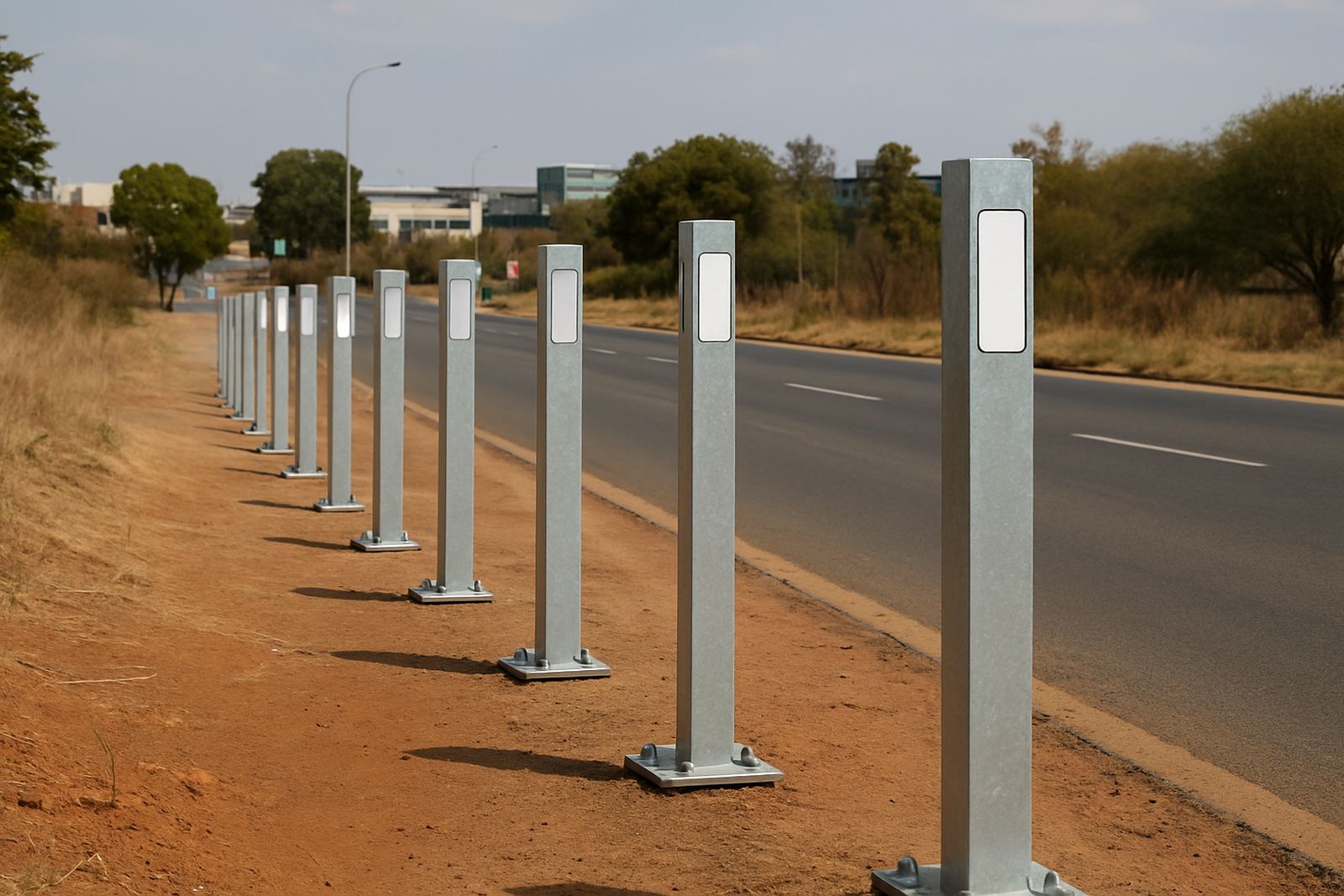
- Reflective accents for access roads and security estates
Where estate entry signs work best
These signs suit residential estates, gated clusters, private roads, logistics parks, industrial estates, townhouse schemes and secure office precincts. They also work well at controlled access entries where the site needs a strong identity without cluttering the gate line. In developments with multiple access points, we often repeat the same visual language across the main gate, pedestrian gate and visitor lane so that the site feels organised from every approach.
For municipalities, developers and body corporates, the sign must also fit the approval conditions. Setbacks, height limits, electrical connections and roadside visibility can all be governed by local requirements. We check the site layout early, because a good sign is easier to approve and simpler to maintain when the structural and electrical details are sorted from the start.
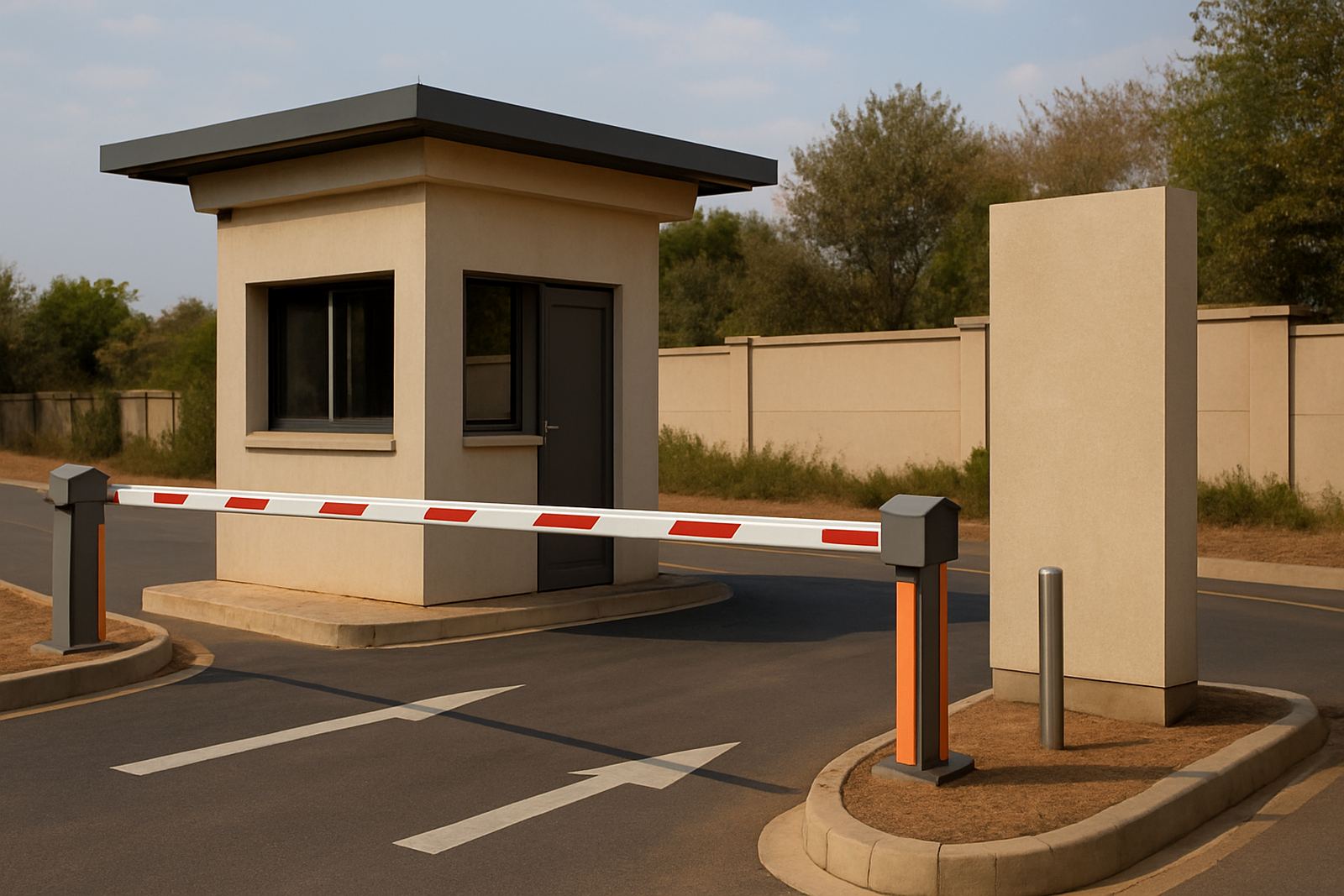
- Residential estate entrances with guardhouses and boom gates
- Business parks with visitor control and truck access
- Private developments needing branded road-facing identification
- Secure precincts with directional and compliance messaging
How we install and power the sign
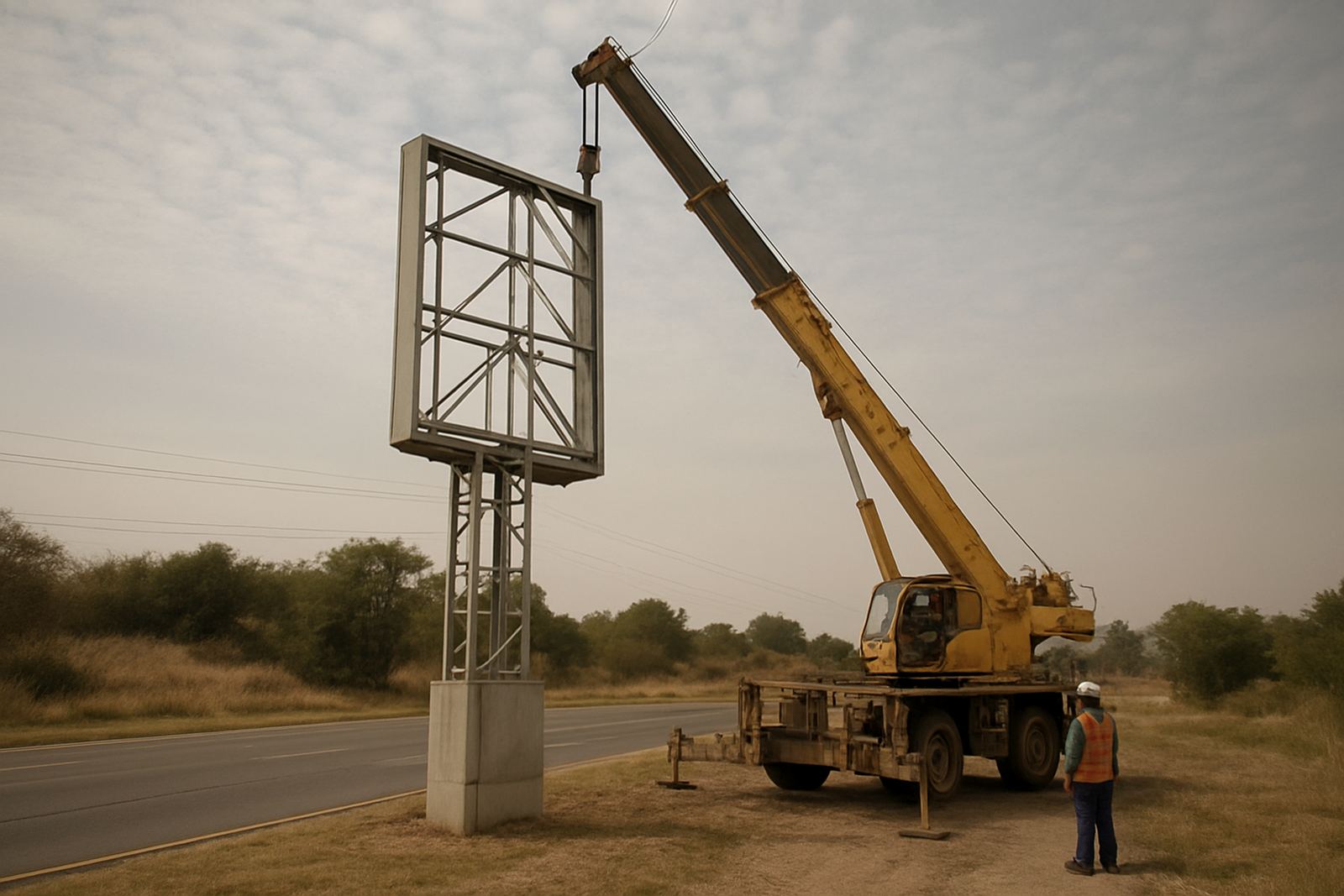
Installation starts with a site survey, then structural coordination, then fabrication and rigging planning. We confirm footing sizes, wall loads, cable routes, earthing points and access for lifting equipment before anything is made. Where the sign is free-standing, the base must carry wind loads and allow for maintenance access. Where it sits on a boundary wall or gate structure, we check the wall condition, fixing method and any movement joints so the panel does not crack or pull loose.
Power needs depend on the sign type. A non-illuminated sign needs no electrical connection, while lit signs usually need a dedicated supply, weatherproof isolator and controlled switching. LED signs and screens may need more complex load planning, ventilation and surge protection, especially in areas affected by load-shedding or unstable supply. If backup power is required, we can factor that into the project plan so the sign stays usable when the rest of the site is on standby.
- Structural footing or wall anchoring matched to sign size
- Electrical provision for lighting, timers and access control integration
- Weatherproof sealing for rain, dust and coastal humidity
- Safe lifting and rigging access for tight gate areas
Materials that hold up in South African conditions
Estate entry signs face strong sun, heat, dust, theft risk and sometimes salt-laden air. Material choice therefore matters. Aluminium works well for lightweight panels and cabinets, while steel gives strength for larger frames and posts. Perspex is useful for routed faces and illuminated elements, and brass is often used for detail, lettering or premium estate branding. Where a tougher finish is needed, powder coating and marine-grade fixings help extend service life.
For sites in Johannesburg, Pretoria and the Highveld, UV resistance and thermal expansion need proper allowance. For Durban and other humid areas, water ingress and corrosion control are key. If a sign is close to road spray, irrigation or a wash bay, we keep the joinery simple and the drainage clear. A tidy sign is easier to clean, less likely to trap grime and cheaper to service over time.
Checks to make before you order 3D letters
Before you order an estate entry sign, it helps to confirm the site dimensions, the exact wording, the logo artwork quality and whether the sign must be readable from one direction or both. It also helps to know if the estate is under HOA rules, municipal controls or developer branding standards. If you are adding lighting, check where the power point will come from and who will sign off the electrical work.
We also recommend checking the maintenance plan. Who changes a failed lamp, who cleans the face, and who signs off on repairs after storm damage or vehicle impact. If the estate has seasonal landscaping or future phasing, allow for plant growth, access changes and possible gate upgrades. A sign that looks good on day one should still make sense when the site is busier two years later.
- Exact wording, spelling and approved brand artwork
- Overall width, height and mounting position
- Daytime only or illuminated requirement
- Local approval, electrical and structural sign-off needs
Care, servicing and long-term upkeep
Routine care is straightforward if the sign was built properly. Wash the face with mild soap and water, check the sealant after heavy rain, and inspect fixings at least twice a year. For lit signs, test the LEDs, transformers, switches and protective devices before the winter peak and again after storm season. In secure estates and logistics parks, we also suggest checking for vehicle scrapes, tampering and dirt build-up around the base.
When a sign is part of a larger access control system, maintenance should be planned with the gate contractor and electrical team, not handled piecemeal. That keeps the site safe and avoids unnecessary downtime. We can build a maintenance plan into the handover so the estate team knows what to inspect, when to call for repairs, and how to keep the entry looking presentable year round.
Key facts
| Typical widths | 1.2 m to 6 m plus, depending on frontage and layout |
|---|---|
| Common materials | Aluminium, Perspex, steel, brass detail and composite cladding |
| Lighting options | Unlit, front-lit, halo-lit or internally lit LED |
| Mounting types | Free-standing monument, wall-mounted panel or gate structure fixed |
| Power needs | None for unlit signs; dedicated weatherproof supply for lit signs |
| Service life considerations | UV exposure, corrosion resistance, fixings, drainage and access for maintenance |