
What a pylon sign does on a busy site
A pylon sign is built to stand above vehicles, boundary walls and planting so your tenant names, logo or directional information can be seen from a distance. On Johannesburg roads and along fast-moving routes in Gauteng, that height matters because drivers have only a few seconds to read the message.
We specify pylon signs for new developments, upgrades and replacements where an older board is no longer visible or has started to rust, lean or fail in wind. A proper pylon is not just a shell with graphics on it. It is a structure that needs the right footing, steelwork, panel build-up, lighting and access for future servicing.
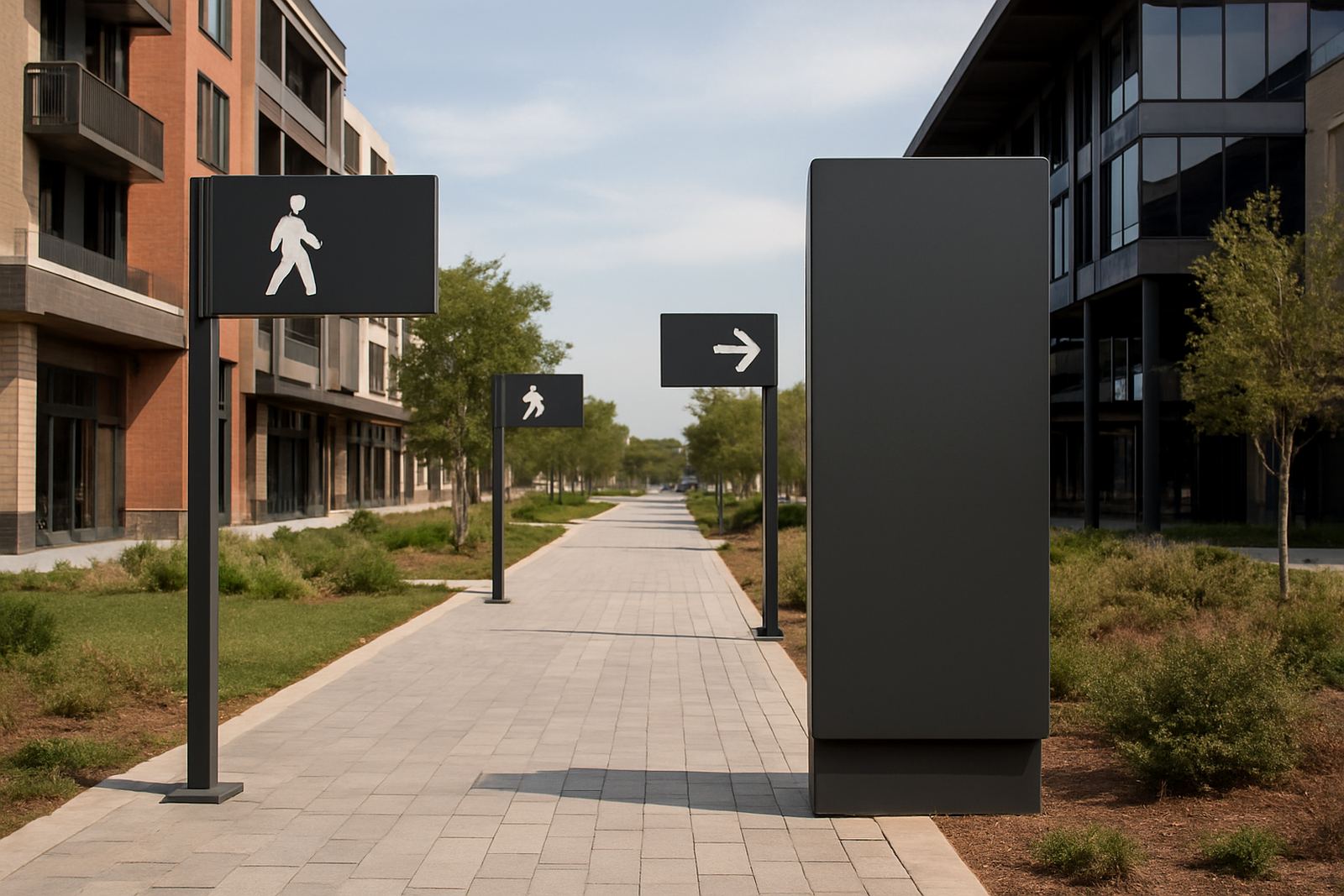
For many clients the pylon becomes the main identity point on site. It can carry one main brand, a list of tenants, or a combination of name panels and directional arrows. On larger sites, we also plan the sign so it works with gate signage, road signs and building mounted signs rather than competing with them.
Typical sizes, materials and construction choices
Pylon signs are normally custom sized to suit the road speed, viewing distance and site footprint. A small entrance pylon for a business park may stand at 2.4 to 3.5 metres high, while roadside and retail pylons often range from 4 metres to 10 metres or more depending on planning approval and structural needs. For very large roadside sites, the structure can be taller again, but that must be supported by a proper engineering review.
We commonly build pylons from galvanised steel frames with cladding in aluminium composite, painted mild steel, aluminium sheet, Perspex or other specified face materials. Faces can be flat, stepped, curved or boxed, and the sign may include routed lettering, applied vinyl, raised letters or internally lit panels. Where the site needs a sharper premium look, brushed metal finishes and edge lighting can be used, provided the installation and maintenance access are planned from the start.
In Gauteng, a powder-coated or correctly painted finish with sealed joints is usually enough for inland conditions if maintenance is kept up. In Durban and other coastal areas, we allow for higher humidity and salt in the air, so fixings, fasteners and any exposed steel need extra attention. A poor spec here shows up quickly in peeling paint, rust at the base plate or water getting into the structure.
Where pylon signs work best
Pylons are used where visibility has to start before a visitor reaches the gate. They work well on dealership strips, retail centres, office parks, schools, hospitals, fuel forecourts, industrial estates and mixed-use developments. On a corner site or along a feeder road, a pylon can help traffic identify the site without slowing down too late or missing the entrance completely.
For developers and municipalities, pylon signs also help with precinct identity and wayfinding. A well-placed structure can show estate names, tenant directories, entrance numbers or directional information in a neat format that is easy to read from a moving vehicle. If the site has more than one access point, we often plan the pylon together with arrows, gate blades and internal wayfinding so the first sign and the second sign agree.
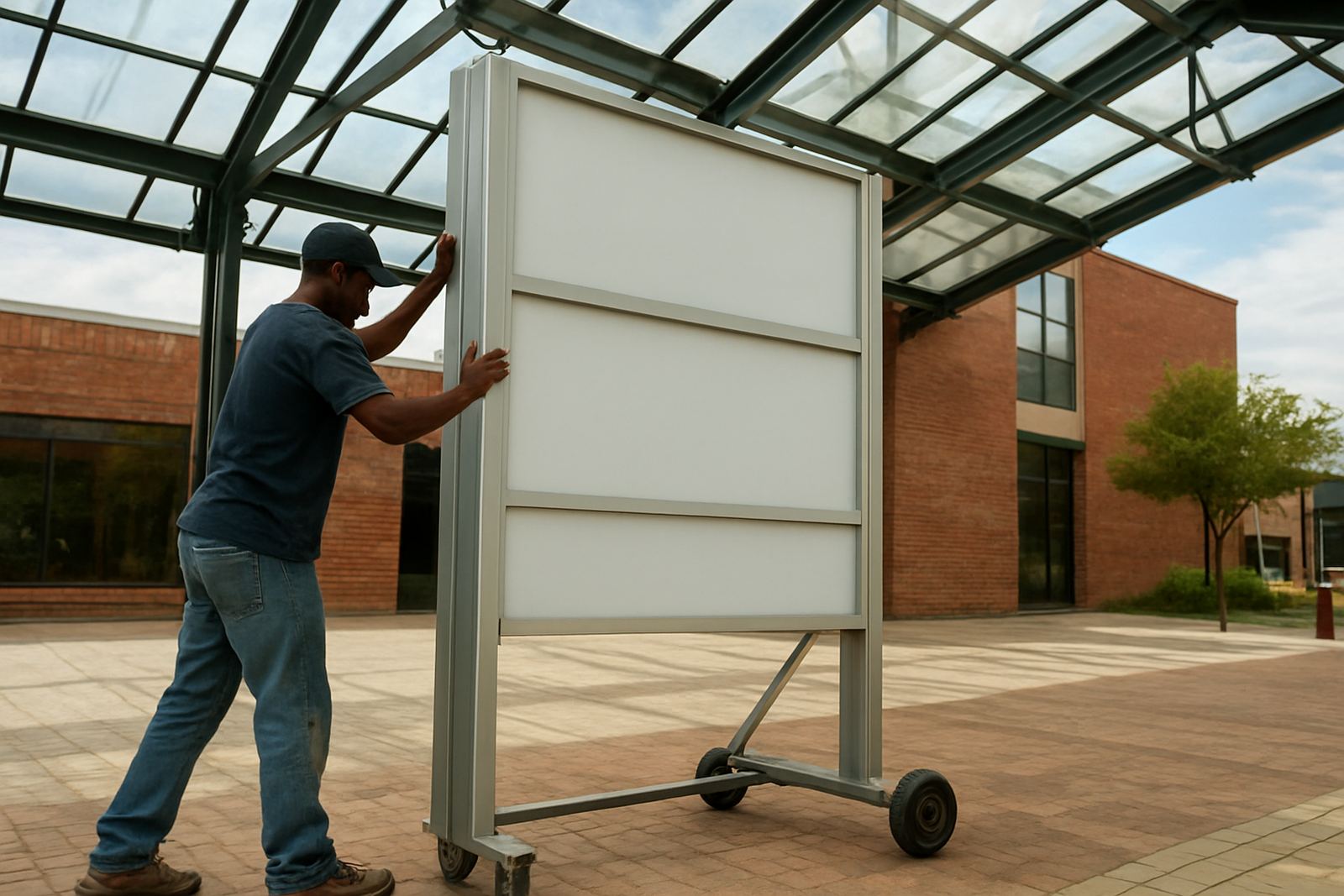
We also specify pylons for redevelopment sites where the old branding no longer matches the current tenant mix. In that case, a modular face layout is useful because tenant panels can be updated without replacing the whole structure. That saves time and reduces downtime when a lease changes or a new anchor tenant comes in.
Lighting, power and screen integration
Many pylon signs need lighting for night-time visibility, especially where the site operates after dark or the road is busy during early morning and evening peaks. Internal LED illumination is common for face panels and tenant names, while external flood lighting may be used for larger structures or where the sign is too deep for a lit box. LEDs are the practical choice in South African conditions because they use less power and cope better with load-shedding than older lighting systems if the site has a backup supply.
Power planning matters. We check where the supply will come from, how cabling will be routed and whether a timer, photocell or building management system is required. If the pylon includes a digital display or LED screen component, we also look at heat, ventilation, surge protection and access for future servicing. These units are more demanding than a simple illuminated sign, so the structural and electrical coordination has to happen before fabrication starts.
For municipal or roadside installations, visibility and glare control need to be checked against the local approvals and traffic environment. A sign that is too bright or badly angled can create a complaint, while one that is too dim will not serve its purpose. The right balance depends on the site, the road and what people need to read from a distance.
Installation, foundations and approvals
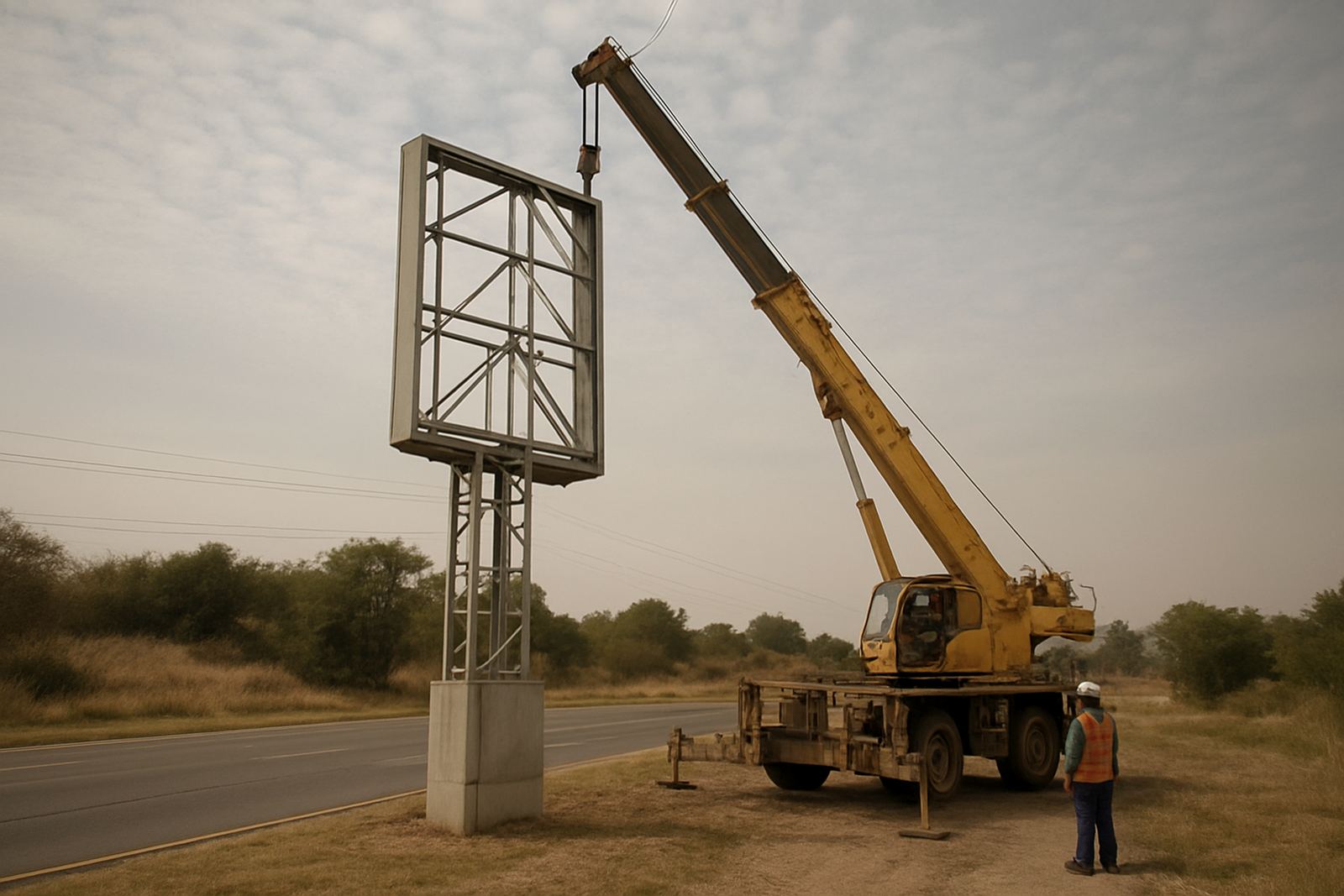
A pylon sign is only as good as its base. Before installation we check ground conditions, access for cranes or rigging gear, service runs, underground obstructions and any municipal or landlord requirements. The footing must suit the height, wind load and soil conditions, and in some locations a structural engineer’s input is needed before work can proceed.
Our team manages site surveys, structural coordination, fabrication, installation planning and handover. Where required, we assist with approvals so the sign can be installed legally and with the right drawings in place. If the site is in a busy area such as Sandton, Midrand, Randrand or Pretoria, we also plan around traffic, delivery times and site access restrictions to reduce disruption.
Installation usually includes setting the base, erecting the frame, fixing the face panels, completing electrical connections and checking alignment from the road. Once the sign is up, we test illumination, review fixings and confirm that the message reads clearly at the intended distance. If the site needs future tenant changes, we build that into the handover so maintenance teams know how to open, replace or clean the panels safely.
How to care for a pylon sign and what to check before ordering
Pylon signs need periodic checks, especially in wind, rain and coastal conditions. Clean the faces so dust, traffic film and bird droppings do not dull the message. Look for cracked seals, loose fixings, water ingress, damaged lighting and fading graphics. If the sign is illuminated, test it after load-shedding and after heavy rain because those are the times weak joints and failing drivers usually show up.
Before ordering, it helps to confirm the viewing distance, the number of tenant names, whether the sign must be lit, and if there is enough space for a footing and safe maintenance access. You should also know whether the landlord, municipality or roads authority has height limits, setback rules or specific approval conditions. The earlier those details are clear, the easier it is to price the structure properly and avoid redesign later.
When clients come to us with a pylon brief, we usually start with a few practical questions. That keeps the project tight and avoids surprises once fabrication has started.
Key facts
| Height range | Commonly 2.4 m to 10 m plus, subject to site and approvals |
|---|---|
| Frame | Galvanised structural steel with optional painted or powder-coated finish |
| Face options | Aluminium, aluminium composite, Perspex, polycarbonate or metal panels |
| Illumination | LED internal lighting or external flood lighting |
| Use cases | Multi-tenant sites, dealerships, malls, estates and roadside entrances |
| Service areas | Modderfontein, Sandton, Midrand, Randburg, Germiston, Pretoria, Centurion and Durban |