
What a flag and mast installation includes
A proper flag and mast set-up starts with the brief and ends with a site that can carry wind, traffic and day to day use without fuss. For gateways, forecourts and ceremonial sites we specify the mast height, flag size, bracket type, foundation detail and finishing so the display looks balanced from the road and still works on site.
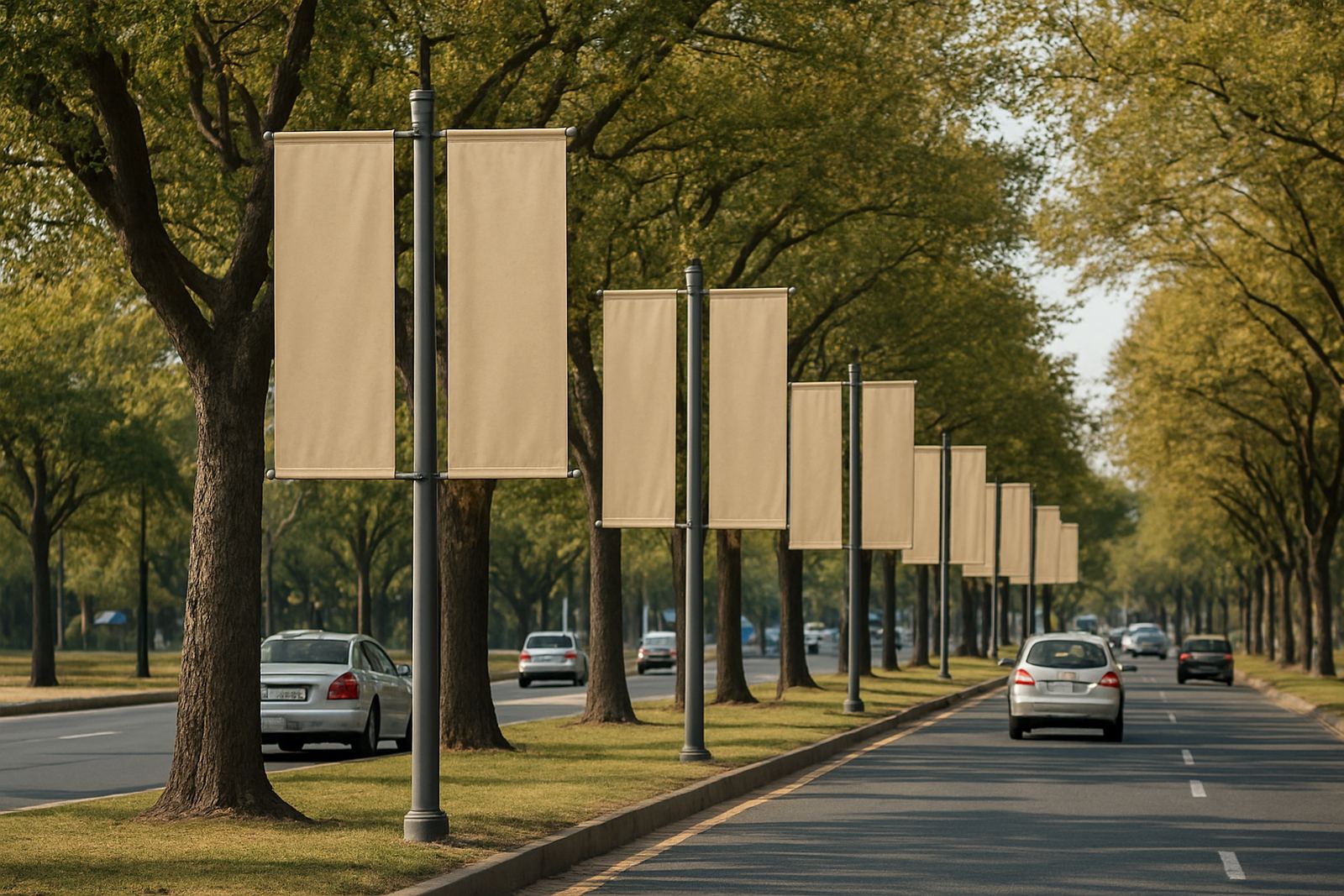
Most corporate installs use a tapered aluminium or steel mast with a halyard system, cleats, pulleys and a weighted or counterbalanced arrangement for smooth raising. Where the site calls for a cleaner look we can use a banner style system or fixed display. For public spaces and municipal sites we also check sightlines, pedestrian movement and any local approval needs before fabrication starts.
Heights, sizes and layout options
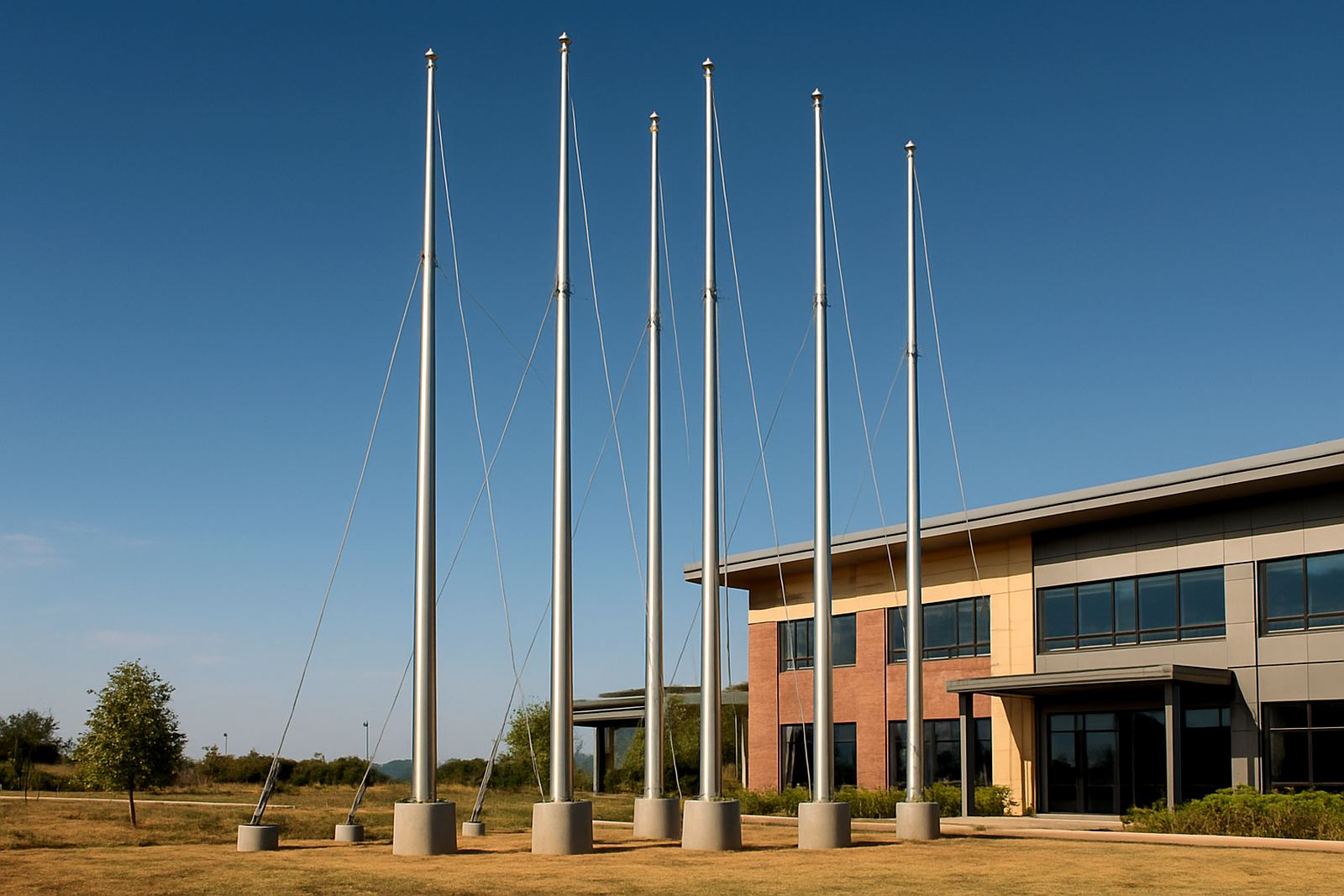
Flag and mast sizes are chosen to suit the building line, the driveway width and the viewing distance. A small entrance forecourt may only need a 6 m mast with a single flag, while a large corporate front or civic site might call for 9 m, 12 m or 15 m masts in a row for better proportion. If the site is exposed to strong wind, we may advise on a smaller flag panel or a more flexible fixing detail to reduce wear.
Typical options include single masts, paired masts and multi mast runs for symmetrical entrances. We can also specify ground sockets for temporary use or fixed bases for long term installations. When more than one mast is going in, we check spacing carefully so the flags do not foul each other and the proportions stay correct.
- Mast heights commonly range from 6 m to 15 m
- Standard flags are often 1.2 m x 1.8 m, 1.5 m x 2.25 m or custom sizes
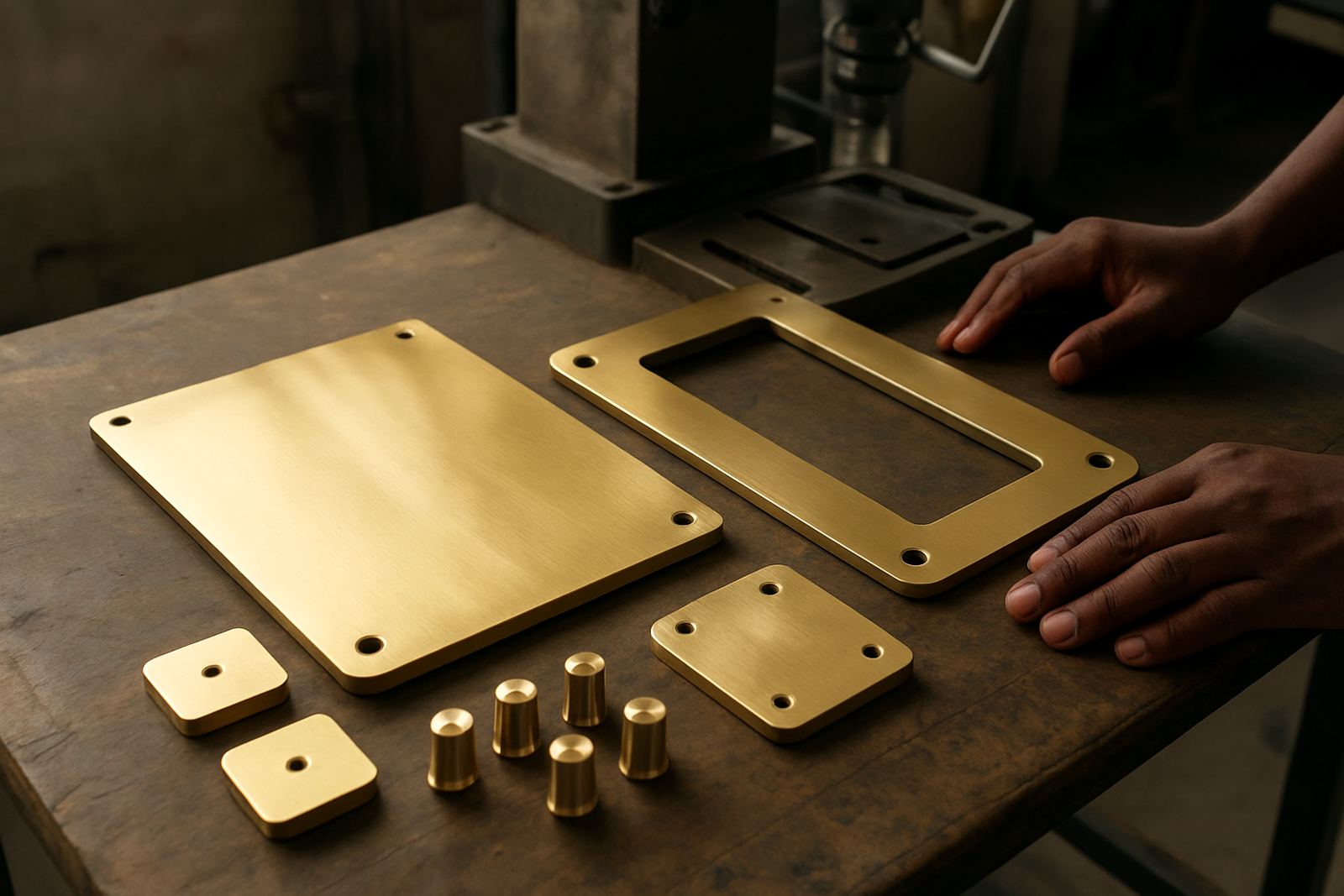
- Base plates, sockets and anchor bolts are selected to suit the footing design
- Options include internal or external halyard systems
Where flagpoles work best
Flags and masts suit spaces where first impressions matter and a vertical marker helps define the entrance. We often install them at office parks, industrial parks, schools, hospitals, lifestyle estates, municipal facilities, developer sites and ceremonial venues. They also work well at gateways where a signboard alone is not enough on its own, and a flag gives movement and visibility from a distance.
In Johannesburg and Pretoria, a mast beside a roadway often needs to be placed back far enough from the kerb for safety and maintenance access. In Durban and other coastal areas, we usually allow for corrosion resistance and extra attention to fixings because salt air can shorten the life of poor quality hardware. On dusty inland sites the main concern is grit in the halyard and regular inspection after heavy rain or high winds.
Installation, footings and site services
Installation starts with a site survey and setting out, then we confirm footing depth, underground services and access for lifting equipment. The mast base may need a reinforced concrete foundation with cast in anchor bolts or a sleeve socket depending on whether the installation is permanent or temporary. On some sites we also coordinate with civil contractors, security teams and the principal contractor so the work can happen with minimal disruption.
For taller masts or sites with restricted access, lifting plans and rigging controls become important. A clear working area, stable ground and the right equipment are non negotiable. If a site is near power lines, landscaping irrigation or underground services, we check all of that before any excavation starts. In some cases, especially at ceremonial sites, a dry run is useful so the flag raising sequence is neat and safe.
- Site survey and setting out before any excavation
- Foundation depth matched to soil conditions and mast height
- Anchor bolts, sockets and base plates fixed to specification
- Access planning for cranes, cherry pickers or manual lifting
- Coordination with civil works, security and site management
Power, lighting and wind control
Most flag and mast installations do not need power, but if the site wants night visibility we can include external lighting or uplighting around the base. Where a ceremonial display needs to stay visible after dark, we specify lighting angles that reduce glare and avoid washing out nearby signage. Solar options can work on remote sites, although battery sizing and placement need proper thought and regular maintenance.
Wind is the bigger issue on most sites. The mast, bracket and flag fabric must be chosen with the local exposure in mind, especially on hilltops, open forecourts and coastal promenades. If a client wants a larger flag for visual impact we may recommend a wind relief detail or a more durable fabric weight. It is better to size the system correctly from the start than to replace torn flags every few weeks. That becomes expensive very quickly.
Care, servicing and replacement planning
Even a good mast needs regular checks. We usually recommend a service visit after installation, then periodic inspection for rope wear, pulley movement, corrosion, loose bolts and paint condition. Flags take the hardest punishment, especially in strong sun, load-shedding related generator exhaust areas and places where dust builds up fast. A clean mast with a frayed flag does not look professional, so replacement planning should be part of the site budget.
For maintenance, the flag should be lowered in extreme weather and removed if damage starts at the hem or eyelets. Aluminium masts need attention at fittings and joins, while steel masts may need paint touch ups where chips expose the metal. In coastal zones, a rinse down can help reduce salt build up. If the site has a lot of activity, we can put together a service schedule so someone is responsible for checks rather than leaving it to chance.
What to check before ordering
Before you place an order, make sure the supplier has the site dimensions, the intended flag size and the exact location of the mast. Check whether the display is for one flag, two flags or a row of poles, because spacing changes the footing layout and the visual balance. You should also confirm whether the installation is permanent or temporary, and whether there are any municipal or property management rules to follow.
It helps to know what finish you want as well. Powder-coated black is common for modern corporate sites, while galvanised or painted finishes suit harsher environments. If the site is a gateway or public frontage, ask for the view from the road, not only from the footpath. Small changes in height or offset can make a big difference. We can also help with the specification if the project is being rolled out across more than one location, so the look stays consistent from Gauteng to other provinces.
- Confirm mast height, flag size and number of poles
- Choose permanent base, sleeve socket or temporary footing
- Check wind exposure, access for maintenance and underground services
- Agree on finish, halyard type and replacement schedule
- Allow for approvals where municipal or estate rules apply
Key facts
| Product type | Corporate flag and mast installations |
|---|---|
| Common heights | 6 m, 9 m, 12 m and 15 m |
| Typical flag sizes | 1.2 m x 1.8 m, 1.5 m x 2.25 m, or custom |
| Materials | Aluminium, galvanised steel, stainless fittings, UV resistant flag fabric |
| Mounting options | Fixed base plate, cast in footing, or removable socket |
| Use cases | Gateways, forecourts, ceremonial sites, campuses and public fronts |