
What a LED video screen does on site
A LED video screen is a modular display made from panels that join together to form one picture surface. It can show video, still images, live text, price updates, timetables, safety notices and event content. For sites that need attention from passing traffic or footfall, it gives stronger visibility than printed signage, especially at night and in poor weather.
These screens are used where messages change often and where a fixed sign would become outdated too quickly. In retail, that may be daily promotions or store opening hours. On roadsides, it may be brand messages, countdowns or public notices. At civic sites and events, it may be queue information, wayfinding or live feeds. Because the content can be changed remotely, one installation can serve many campaigns and many users over time.
We specify each screen to suit the viewing distance, brightness needed and structure available on site. The wrong screen size or pixel pitch can leave text hard to read, so the starting point is always the application, not just the image size.
Screen sizes, pixel pitch and brightness options
There is no single standard size. LED screens are built from modules, so the finished area can be scaled to suit a shopfront, façade, pylon, stadium wall or indoor foyer. Common formats start from compact message screens and extend to large format roadside displays and very large event systems. The key is matching resolution to the distance at which people will view it.
Pixel pitch is the spacing between LED points and it affects image sharpness. A smaller pitch gives a finer image for close viewing. A larger pitch is more suitable for longer distances and larger outdoor faces. For example, a screen viewed from a mall entrance needs a tighter pitch than a billboard style screen seen from a moving vehicle.
- Indoor screens: finer pixel pitch, lower structural load, easier servicing access
- Outdoor screens: higher brightness, weather sealing, stronger frames and access panels
- Fixed installations: mounted to steel, masonry or concrete structures with engineering sign-off
- Rental or event systems: fast assembly, transport cases, repeat rigging points
Brightness is measured in nits. Indoor applications often work at lower levels, while outdoor roadside screens need high brightness to stay visible in direct sun. We also factor in anti-glare needs, viewing angle and how much afternoon heat the site takes. In coastal conditions, corrosion protection becomes part of the spec too.
Where LED screens work best in Gauteng and beyond
LED video screens suit sites where the message must be seen quickly and clearly. In Gauteng, we see strong demand from retail centres, forecourts, office parks, mixed-use developments and public facilities. In Johannesburg and Pretoria, screens are often used for tenant information, promotions, direction changes and public awareness notices. In Midrand and Sandton, they are also used in corporate foyers and high-footfall entrances where brand visibility matters every day.
For roadside applications, the screen has to be readable from a moving vehicle and safe from a structural and legal point of view. We check sightlines, wind loading, setback distances and whether the site needs municipal approval or road authority input. On event sites, the screen must fit the rigging plan, stage layout and power available on the day. If it is for Durban or another coastal city, the system should be specified for humidity, salt in the air and quicker maintenance access.
The best locations are those with enough viewing time and a clear content plan. If people only see the screen for a second or two, then the message must be short and bold. If they stand still, the content can be more detailed. That simple point saves a lot of wasted spend.
Power, structure and installation requirements
LED screens need proper planning before the first panel goes up. Power demand depends on screen size, brightness and how often the display runs at full intensity. Outdoor systems usually need dedicated electrical supply, suitable isolation and protection against surges. Backup planning matters too, because load-shedding can interrupt content unless the system is supported by site backup or a managed switching arrangement.
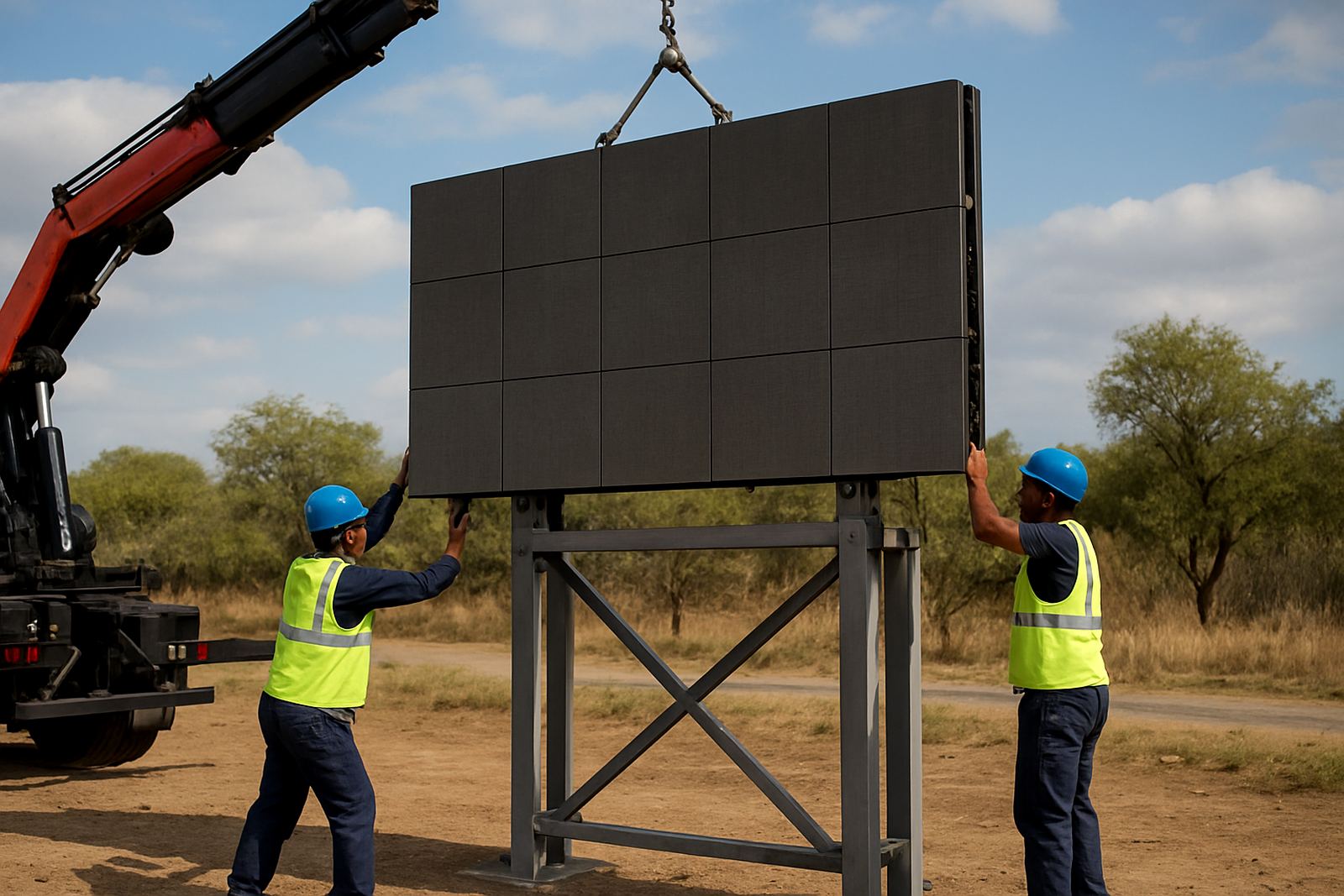
The structure is just as important as the electronics. A screen may be mounted to a steel frame, parapet, pylon, gantry or purpose-built support. The frame must handle wind, vibration and repeated maintenance access. For large installations, our team coordinates with structural engineers, electricians and the site contractor so the screen sits safely and accurately.
- Check available power supply and backup provision before ordering
- Confirm the mounting surface, steelwork or foundation capacity
- Allow for access to the rear or front service side
- Plan drainage and cable routes so water does not track into the enclosure
Rigging and installation are planned around the site conditions, not the other way round. That includes crane access, working hours, road closures if required and public safety barriers where people pass close by. On live sites, we also plan for noise, dust and short installation windows. That keeps the project moving without creating avoidable disruption.
Servicing, cleaning and long term care
LED screens need regular inspection if they are to stay bright and readable. Dust, pollution, rain and sun all affect performance over time. In Johannesburg, dust build-up can dull the face of a screen. In coastal areas, salt and humidity can work into connections if the enclosure is not maintained properly. A planned servicing schedule reduces the risk of dead pixels, water ingress and unplanned downtime.
Cleaning must be done with the correct method so the screen surface and seals are not damaged. Internal components should be checked for fans, cabling, signs of heat stress and any movement in the mounting frame. We also recommend content checks, because a perfectly working screen can still look poor if the source files are low quality or incorrectly sized.
- Regular visual inspection of modules, seals and fixings
- Cleaning with approved methods only, no harsh chemicals
- Checking software, content playlists and signal paths
- Seasonal review after heavy rain, heat or storm damage
For schools, municipalities and public-facing sites, maintenance planning should be written into the handover. That way the people using the screen know who controls content, who checks the hardware and what to do when a fault appears. A little routine attention avoids bigger repairs later on.
Checks to make before you order 3D letters
Before ordering a LED video screen, it helps to settle the practical details early. The screen should be sized to the message, the site and the budget, not just to a desired image on paper. Our team checks the viewing distance, the type of content, the available structure, power and whether approvals are needed before fabrication or import decisions are made.
Good ordering information usually includes the final location, required screen dimensions, whether the installation is indoors or outdoors, and whether the site will use single messages or live content updates. It should also confirm if the screen needs sound, remote control access, multiple input sources or integration with existing systems. If the site is in a windy or coastal area, that should be stated up front. It changes the spec.
- Viewing distance and traffic speed
- Indoor or outdoor use, with sun and rain exposure
- Power availability and backup plan
- Mounting method and access for maintenance
- Content type, resolution and control method
Projects are supported from Modderfontein in Johannesburg across Gauteng and the rest of Africa. From a single screen at a retail site to a large public display requiring structural coordination and rigging, the requirement stays the same: fit for purpose, safe and suited to site conditions.
Key facts
| Product type | Modular LED video display system for indoor and outdoor use |
|---|---|
| Typical applications | Retail, roadside, public information, events and corporate communication |
| Brightness range | Indoor: about 800 to 1 500 nits, outdoor: about 4 500 to 7 000+ nits |
| Common pixel pitch | Fine pitch for close viewing, larger pitch for roadside and distance viewing |
| Power requirement | Site-specific single or three-phase supply with surge protection and backup planning |
| Environmental rating | Weather-sealed outdoor specification available for sun, rain, dust and coastal humidity |