What routered Perspex letters are used for
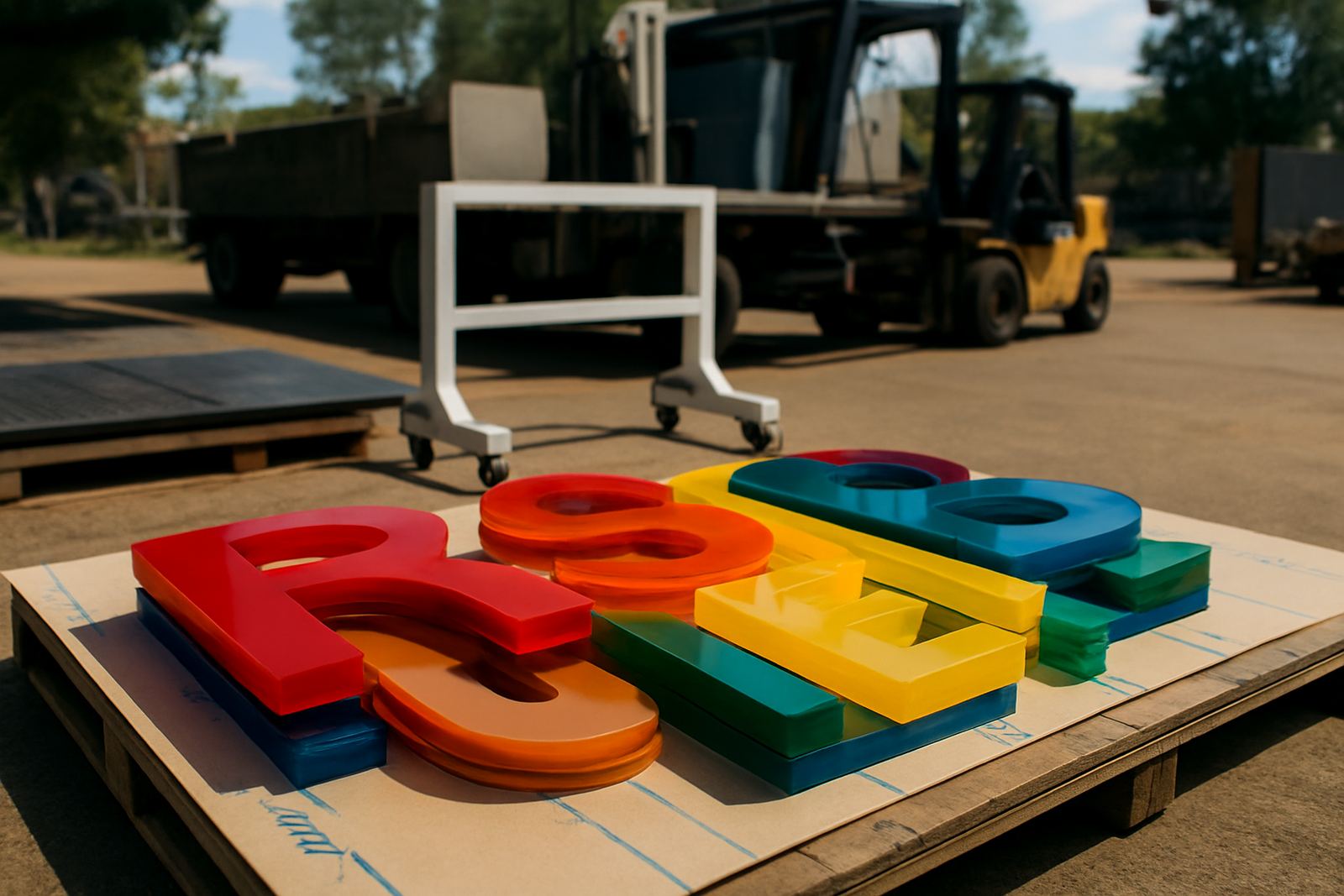
Routered Perspex letters are cut from acrylic sheet to exact artwork and then finished for wall mounting, stand-off fixing or integration into a lit sign build. They suit reception branding, boardroom walls, retail fascias, estate entrances, office lobbies and developer marketing spaces where the logo must read clearly from a distance and still look tidy up close.
Because the letters are machine cut, the edges stay even and the proportions remain consistent across a full wordmark. That matters when you are matching corporate colours or setting up multiple branches in Sandton, Midrand, Pretoria or Durban. The finish can be gloss, matte or colour matched to suit the brand system, and the letters can be used on indoor or outdoor applications depending on the fixing method and backing surface.
Size ranges, thicknesses and finish options
The usual size range starts at small internal letters around 50 mm high and runs to large feature letters well above 1 m high for fascias and exterior branding. Thickness is selected to suit the look and fixing method, with common options between 3 mm and 20 mm, and deeper builds possible when a projected profile is needed. For large outdoor sets, we often combine Perspex faces with secondary backing plates or spacer systems to keep the line neat and secure.
- Letter height: 50 mm to 1500 mm plus, depending on layout and visibility
- Material thickness: 3 mm, 5 mm, 8 mm, 10 mm, 12 mm, 15 mm and 20 mm
- Finish: gloss, matte, translucent, tinted or opal for lighted use
- Fixing: adhesive only, stand-off pins, hidden studs or combined systems
- Suitability: internal walls, shaded exteriors, fascias and illuminated sign faces
For larger signs, we check wind load, wall condition and access before finalising the build. In coastal areas and in parts of Gauteng where the weather swings between dry heat and summer storms, the fixing detail matters as much as the artwork.
Where routered Perspex suits best
This product works best where the brand needs a neat profile and a crisp edge rather than a heavy block letter. It is a strong choice for reception walls, property showrooms, school entrances, medical rooms, municipal counters and retail rollouts. It also works well for layered signs where Perspex is paired with aluminium, brass or printed vinyl to create contrast without making the face too busy.
For illuminated branding builds, routered Perspex can form the visible face, a halo edge or a layered component in a lit box. If the sign is going outdoors, we look at sun exposure, rain run-off, cleaning access and whether the wall is on a busy road or an exposed corner. In Johannesburg and Pretoria, a sign may need to read through bright midday light and still hold up after dust, load-shedding related power cycling and regular cleaning.
- Reception walls and foyer branding
- Shopfront fascias and tenant signs
- Developer sales offices and show units
- Municipal counters and public-facing offices
- Layered illuminated signs and feature logos
How installation, power and support details are handled
Installation starts with site survey and measurement, then the fixing method is matched to the substrate. A smooth internal wall may take adhesive and hidden studs, while a fascia or masonry surface often needs mechanical fixings and a backing plate. Where the sign forms part of a light box or LED build, power must be planned early so the cabling, transformer position and maintenance access are all sorted before the letters go up.
For illuminated work we also check the electrical load, cable route and weather protection. If the sign includes LED modules or a lit backing, the unit must be installed by qualified personnel and the supply must be isolated for servicing. In some site conditions, especially on rooftops or at municipal sites, we will also plan access equipment and approval steps before we bring the letters to site. It helps us avoid return visits, site delays and unnecessary refitting.
Care, cleaning and servicing over time
Perspex is easy to keep clean, but it should be handled with the right cloth and cleaner so the face stays clear and free of fine scratching. Use a soft microfibre cloth, lukewarm water and a mild cleaner. Avoid abrasives, strong solvents and rough pads because they can cloud the surface or dull the edges over time. On outdoor signs, a regular rinse removes dust, pollen and city grime before it builds up.
For illuminated or layered signs, ask for a maintenance plan that includes access details, spare parts where needed and a basic inspection interval. In humid coastal areas and on sites exposed to road dust, we recommend checking fixings, seals and cable entry points every few months. If a letter ever loosens or starts to lift, it should be attended to quickly rather than left to move in the wind. Small issues become big ones fast.
- Clean with soft cloths only
- Avoid solvents, ammonia and scouring pads
- Check fixings after heavy rain or strong wind
- Inspect lit signs for water ingress and cable wear
What to check before ordering contra vision film
Before ordering routered Perspex letters, have the final artwork, overall size, colour reference and fixing surface confirmed. If the sign is going onto cladding, plaster, glass or tiled surfaces, the mounting detail must be planned with the substrate in mind. It is also worth checking whether the logo should be face-lit, halo-lit or unlit, because that affects the thickness, backing and power requirements. A clear brief at the start keeps the job moving.
Deep3 Signage Consultants handles signage strategy, site surveys, material specification, structural coordination, fabrication management and installation management from Modderfontein in Johannesburg. We work with brands, developers and municipalities across Gauteng and the rest of Africa, including Sandton, Germiston, Randrand, Pretoria, Centurion, Durban and beyond. If you need a sign that must fit first time, hold its shape and read properly from the road or the foyer, we can help specify it properly.
- Final logo file and approved dimensions
- Colour match or finish requirement
- Indoor or outdoor use
- Wall type, access and fixing limits
- Need for lighting, timers or service access
Key facts
| Product type | Routered Perspex letters for branding and wayfinding |
|---|---|
| Material | Cast or extruded acrylic sheet, clear, coloured or opal |
| Thickness range | 3 mm to 20 mm, with deeper builds on request |
| Typical sizes | 50 mm to 1500 mm plus, depending on artwork and site |
| Mounting options | Adhesive, studs, spacers, backing plates and hybrid fixings |
| Use environments | Reception walls, fascias, shopfronts, offices and lit signs |