
What a scoreboard system does on site
A scoreboard is more than a display panel. It is a purpose-built information system that helps players, referees and spectators follow the game without confusion. Depending on the sport, it can show score, period, clock time, fouls, set counts, innings, team names and sponsor messages. For schools and community grounds, the main need is usually clear visibility in bright daylight and reliable operation during load-shedding or unstable municipal supply.
We supply scoreboard systems for soccer, hockey, netball, rugby, athletics, cricket and multi-use courts. Some projects call for a simple numeric display. Others need a larger panel with custom graphics, scrolling messages or separate event timers. Where the venue is exposed to dust, summer storms or coastal humidity, the enclosure and fixings need to be chosen carefully so the unit stays readable and serviceable over time.
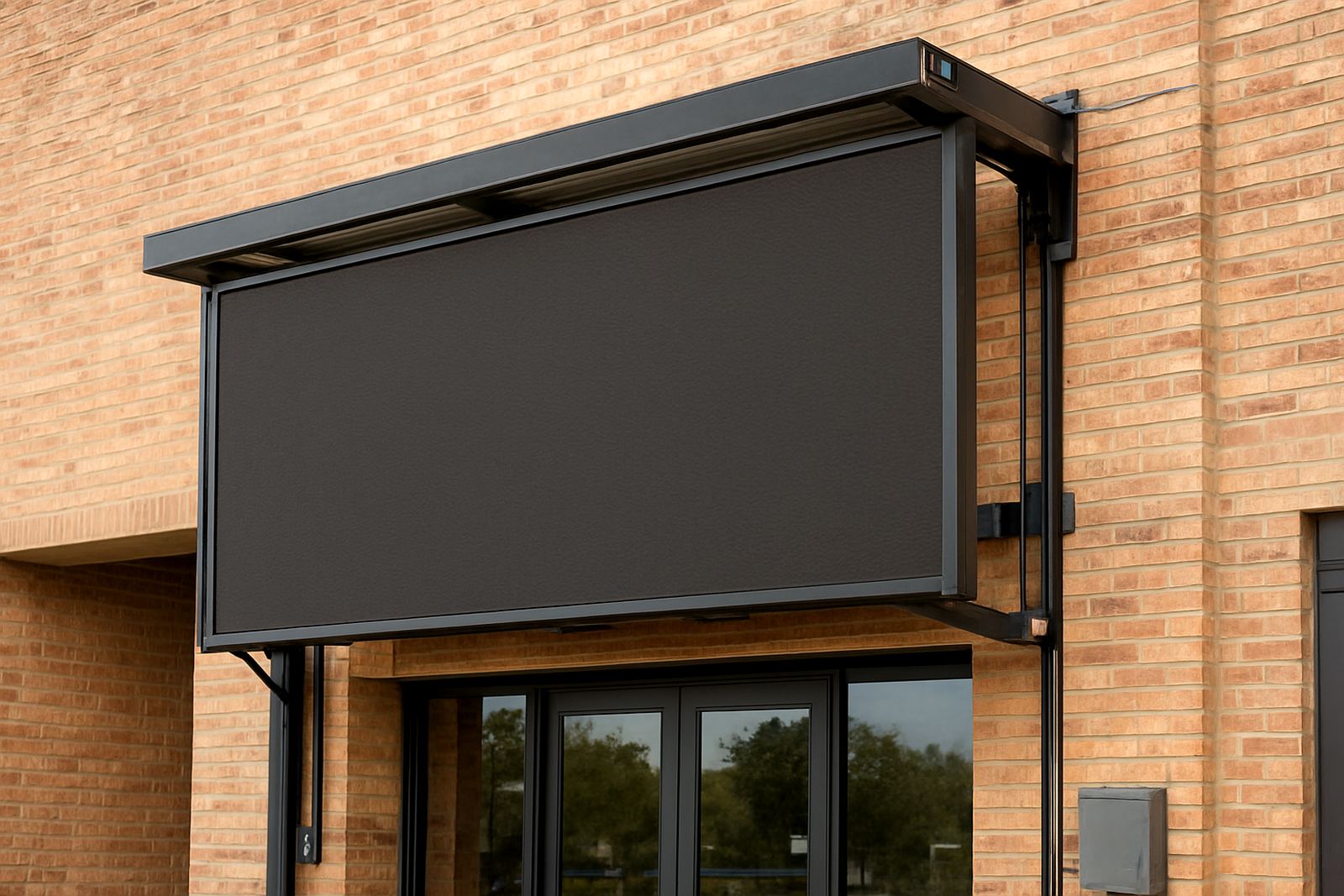
Each scoreboard is planned around the actual viewing distance, whether it will be mounted on a wall, steel pole or independent frame, and how the referee or scorer will operate it on match day. If the facility is used after dark, the display brightness and front face finish become important, especially on open grounds with little ambient light.
Sizes, layouts and display options
Scoreboards are made in a range of practical sizes rather than one fixed format. The right size depends on field width, spectator distance and how much detail must be shown. Smaller school courts may only need a compact unit that shows score and time. Larger sports grounds often require a wider display with higher digit heights and space for team names or event labels.
- Compact school court units: typically 1.2 m to 2.4 m wide
- Mid-size club and academy boards: about 2.4 m to 4.8 m wide
- Large stadium or municipal boards: 5 m wide and above
- Digit heights: commonly 150 mm, 225 mm, 300 mm and larger
- Mounting: wall-fixed, pole-mounted or framed free-standing structures
- Options: clock, period counter, horn output, foul count, team names and sponsor line
Displays can be single sided or, where needed, read from two directions. For open sports complexes, we often recommend a weather-rated enclosure with front access for maintenance and rear access for cable work. LED modules are usually selected for high visibility in sunlight, while the controller can be kept in a secure room, scorer booth or locked cabinet.
If the venue hosts different sports, a multi-sport layout is usually better than a single-purpose board. This makes day-to-day use simpler and helps reduce the need for future changes to structure or power supply.
Where scoreboards suit best in Gauteng and coastal areas
These systems suit schools, sport academies, universities, municipal grounds, church facilities, community parks and private clubs. In Johannesburg, Pretoria, Sandton, Midrand and Germiston, scoreboards are often installed where spectators need clear viewing from a distance and the site has active weekend use. In Durban and other humid coastal areas, the specification has to account for corrosion, salt in the air and fast weather changes.
Common applications include soccer fields with fixed spectator seating, indoor halls with court markings, cricket ovals, rugby fields, netball centres and mixed-use community facilities. For municipalities, the display may also need to support public notices or event branding, not just match information. In rural or semi-rural projects, solar support and battery backup can be considered where grid supply is unreliable.
We also assist with wayfinding and support signage around the scoreboard position, because access paths, scorer access points and safe viewing zones often need to be shown clearly. That matters where a venue is busy on tournament days and vehicles, pedestrians and players all move through the same area.
Installation, power and control requirements
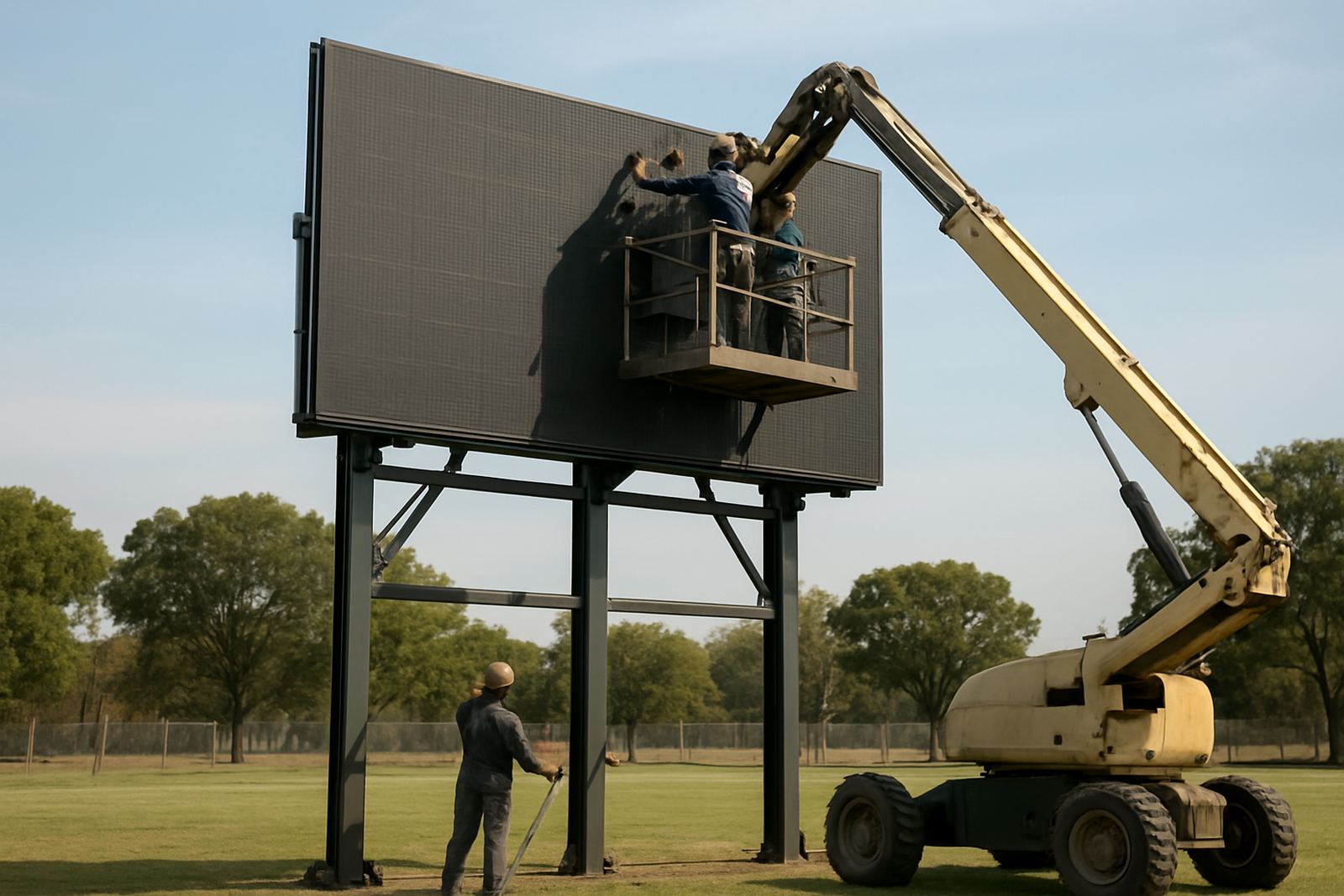
Installation starts with a site survey. We check visibility lines, wind exposure, mounting height, cable routes, access for service and the condition of the supporting structure. If the scoreboard is large or mounted high, structural coordination is important so the frame, anchors and brackets are sized correctly. In many cases, the display is easier to service if a lockable control panel is positioned at ground level or in a nearby scorer area.
Power requirements depend on the display size and brightness setting. Most projects need a dedicated 230 V AC supply with surge protection, while larger systems may also need a small control cabinet, UPS support or backup battery provision for short outages. For remote sites, solar can be considered where the load is modest, but the panel and battery bank must be sized properly for local conditions and match-day runtime.
- Typical supply: 230 V AC, single phase unless otherwise specified
- Protection: surge protection and proper earthing are essential
- Control: wired handheld controller, fixed console or remote scoring input
- Cabling: UV-stable outdoor cable in conduit or approved trunking
- Mounting: structural steel, masonry anchors or freestanding frame
- Lighting: display brightness must suit direct sun and night use
Where the scoreboard is part of a wider sports precinct, we can coordinate with civil, electrical and structural contractors so the work is installed in the right sequence. That avoids delays on sites with tight handover dates and limited shutdown windows.
Care, servicing and parts replacement
A scoreboard needs regular visual checks, cleaning and periodic testing. Dust, insects and moisture can affect connectors, fans and cabinet seals if the unit is neglected. In coastal towns, corrosion on fasteners and brackets should be inspected more often. On inland sites, the main issue is usually dust build-up and heat from direct sun.
Routine care includes cleaning the face panel with a soft cloth, checking that all segments are visible, confirming that the clock and scoring functions are accurate, and making sure the control system responds properly. If the venue is used for tournaments or league fixtures, it helps to test the unit before the season starts and again after heavy storms.
- Monthly: check display clarity and control response
- Quarterly: inspect fixings, seals and cable entries
- After storms: look for loose brackets, water ingress or power faults
- Annually: review mounting structure and electrical protection
Spare parts and service access should be considered at ordering stage, not after the first fault. We recommend keeping a record of the model, panel size, control method and electrical details so maintenance teams can work quickly if a component needs replacement later.
Details to verify before ordering acrylic face signs
Before a scoreboard is specified, the client should confirm the sport, viewing distance, mounting position and whether the venue needs one-sided or two-sided visibility. It also helps to decide what exactly must be displayed. A school may only need score and time, while a municipal venue may require fouls, set counts, team names and event messaging.
We also check how the scorer will use the system, whether the site has stable power, and whether the frame must be designed for high wind loads or public access. On some projects, the scoreboard is installed above a boundary wall or at a field edge where the surrounding structure already exists. On others, a new steel support frame is needed from the ground up.
Useful information to have ready includes the following:
- Sport or sports to be covered
- Approximate spectator distance and viewing direction
- Preferred size or available wall and frame dimensions
- Power source and backup expectations
- Any branding, sponsor line or school crest requirements
- Installation town, access conditions and handover date
With the right details at the start, the final unit is easier to build, easier to install and better suited to day-to-day use. That usually means fewer callouts, fewer faults and better visibility for the people who use the ground every week.
Key facts
| Product type | Digital scoreboard and display system |
|---|---|
| Typical use | Schools, sports grounds, clubs and community facilities |
| Display options | Score, time, fouls, team names and match messages |
| Mounting methods | Wall-mounted, pole-mounted or free-standing frame |
| Power requirement | 230 V AC with surge protection, backup options available |
| Common digit heights | 150 mm to 300 mm and larger depending on viewing distance |