
Outdoor LED screens built for sun, rain and dust
Outdoor LED screens are modular display systems made from weather-rated LED panels, steel support frames, power distribution gear and control equipment. They are used where static signage is not enough, such as petrol forecourts, retail centres, municipal squares, transport interchanges, sports precincts and tall façade features. In South Africa, the screen must cope with hard summer sun, wind-driven dust, thunderstorms and in many coastal areas, salt in the air. That means the cabinet, fixings and cable management all need to be specified properly from day one.
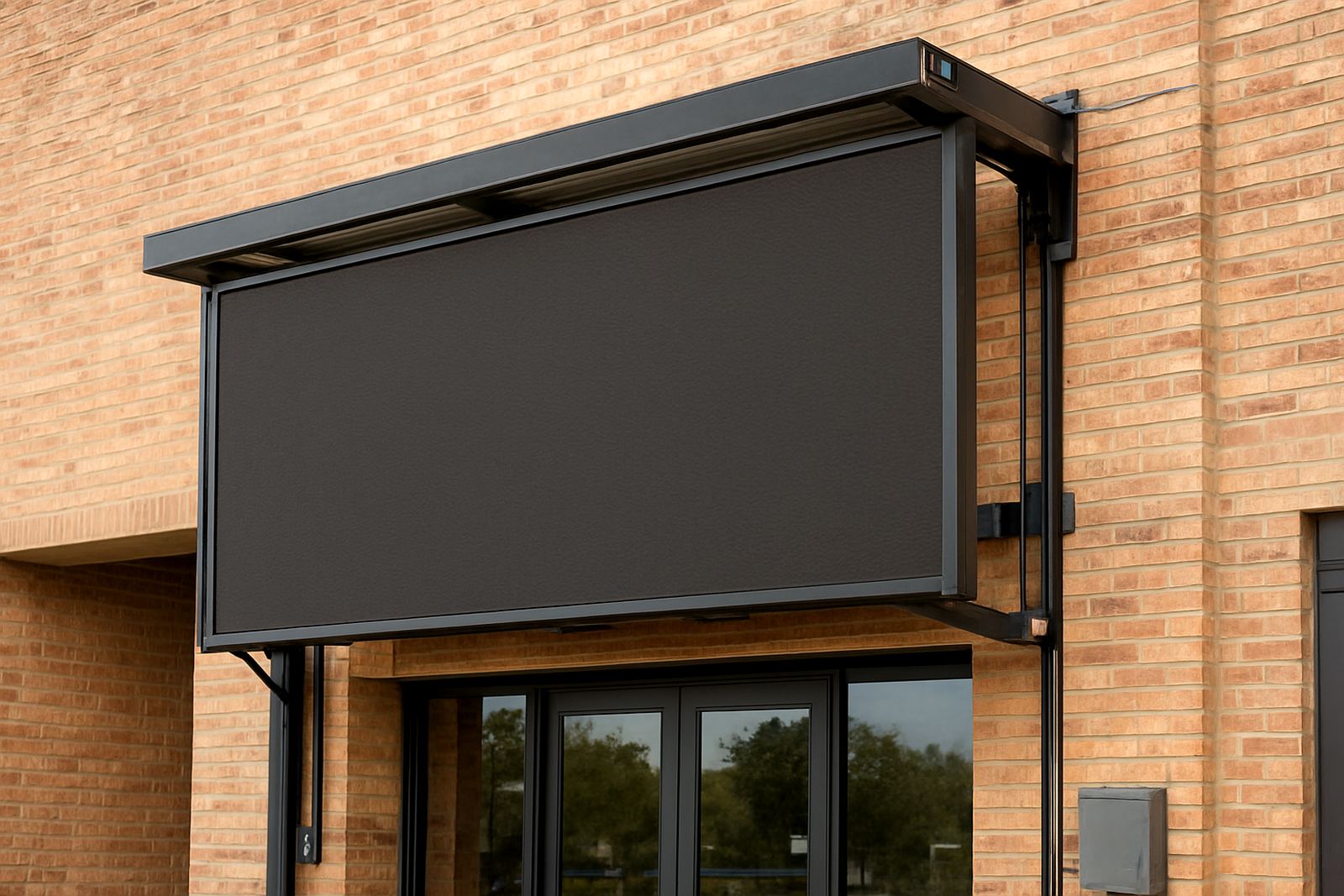
We work on screens for ground-mount structures, wall-mounted frames, gantries and roofline applications. Depending on the site, the screen can be single-sided or double-sided, front-service or rear-service, and integrated with a content management system for scheduled messages. The right choice depends on viewing distance, traffic speed, mounting height and whether the screen is intended for promotional video, public information or time-sensitive alerts.
Common sizes, pixel pitches and viewing distances
There is no single standard size for an outdoor LED screen. The size is usually set by the sightline, available structure and how far viewers will stand or drive from it. For a forecourt or pedestrian plaza, a smaller screen with a tighter pixel pitch may be appropriate. For a roadside pylon or tall façade installation, a larger format with a coarser pitch can be more practical and cost-effective.
Typical options include screen faces from around 2 m x 1 m for compact site messaging up to large-format assemblies of 6 m x 3 m, 8 m x 4 m or larger for transport and municipal use. Pixel pitch commonly ranges from P3.9 to P10 for outdoor projects, with the smaller numbers giving finer detail at closer viewing distances. If the message will be seen from moving vehicles at 50 km/h or more, clarity at distance matters more than ultra-fine detail.
- Front service access: useful where rear access is limited by walls, landscaping or public circulation.
- Double-sided formats: suited to islands, entrances and corner sites with two traffic flows.
- Cabinet depth: depends on LED module type, ventilation and maintenance access.
- Brightness control: automatic dimming helps manage glare after dark and reduce power use.
Where outdoor LED screens work best
These screens suit places where messages change often and must stay visible in strong daylight. Forecourts use them for fuel pricing, promotions and safety notices. Developers use them for branding and launch messaging at site boundaries or on temporary hoarding. Municipalities use them for public notices, event information and transport messaging. Retail sites use them to draw attention from passing traffic, especially where a fixed sign would be too small to carry changing content.
They also work well in busy Gauteng conditions where signs must stand up to dust from construction, heat buildup on west-facing façades and load-shedding planning. In Durban and other coastal areas, enclosure details and corrosion resistance are important. The screen should be positioned so it is visible without creating road glare, and it must not block pedestrian paths, sight triangles or access for maintenance vehicles.
- Forecourts and service stations
- Shopping centres and retail entrances
- Transport sites and taxi ranks
- Municipal and civic information points
- Developer hoardings and launch sites
Installation, structure and power requirements
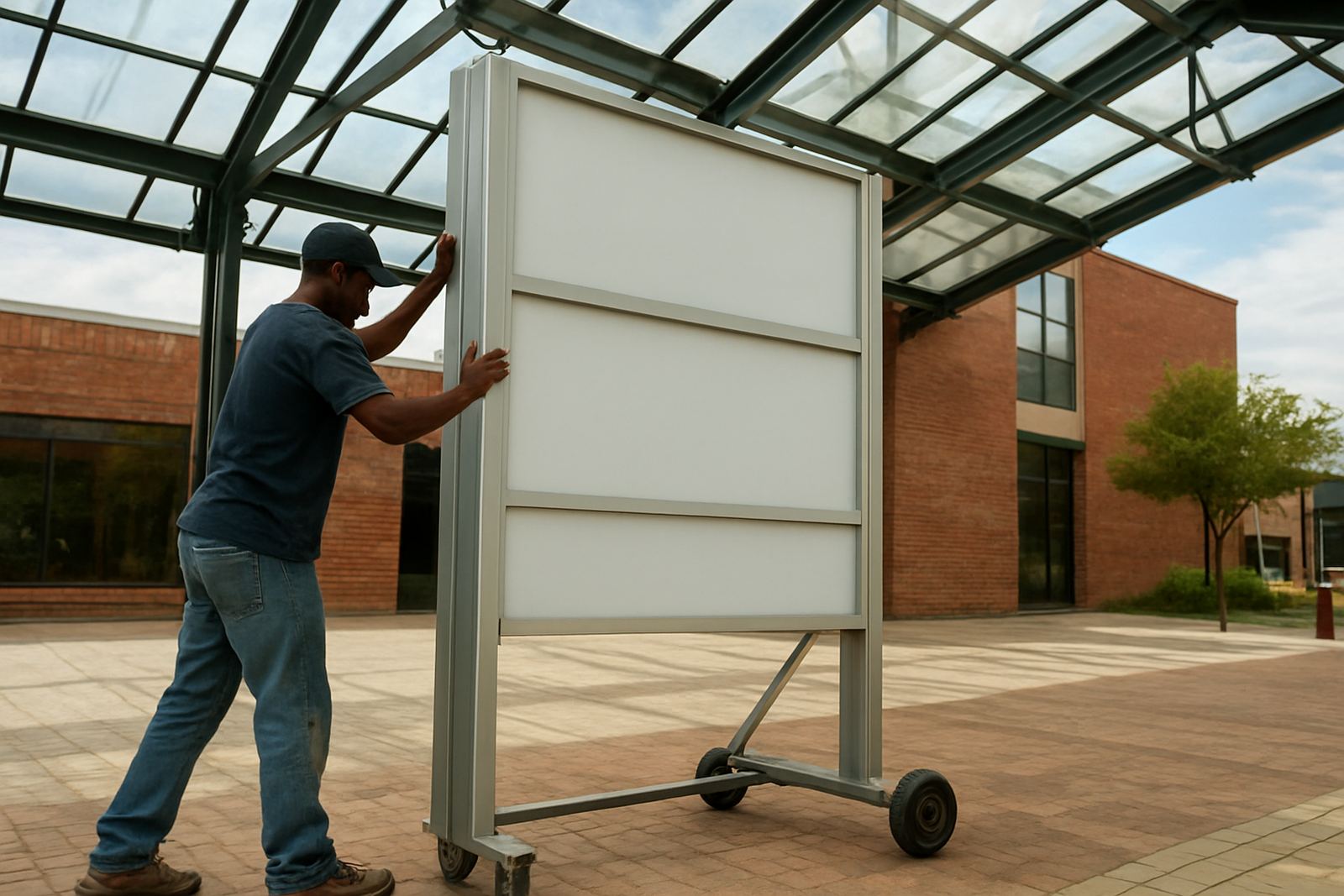
An outdoor LED screen is only as reliable as the structure behind it. We coordinate structural design, base plates, anchor bolts, wind loading, access platforms and cable routes so the screen can be installed and serviced safely. For wall-mounted units, the supporting wall must be checked for capacity and fixing conditions. For freestanding screens, the footing and steelwork must be designed for the site wind zone and exposure. On taller installations, rigging plans and lift access need to be confirmed before fabrication starts.
Power requirements vary with screen size and brightness settings, but most projects need a dedicated electrical supply, surge protection and clean cable routing. If the site is affected by power interruptions, a backup plan should be agreed early, whether that means a generator connection, inverter support for controls or a controlled shutdown procedure. Outdoor screens are usually supplied with weatherproof enclosures, correct earthing and service isolators. In our experience, it is worth planning for access to the mains board and control cabinet before the concrete is poured, not afterwards when space is already tight.
Gas is not usually part of the screen itself, but some sites ask for nearby generator fuel planning or fire compliance around enclosed plant areas. If the screen sits on a mixed-use site, we check the adjoining services and access routes so the installation does not interfere with other contractors or municipal approvals.
Care, cleaning and servicing in South African conditions
Outdoor LED screens need scheduled maintenance if they are to stay bright and legible. Dust, insects and bird droppings can build up on the surface, and coastal moisture can affect connectors if the cabinet is not properly sealed. Routine care includes gentle cleaning of the face, checking fasteners, testing fans and inspecting cable glands, control systems and weather seals. A screen that looks fine from the road may still have a hot spot or failing module behind the face.
For sites with long operating hours, we recommend planned servicing intervals and a simple fault response process. That way small issues are dealt with before they become visible dead pixels or shutdowns. If the site is exposed to vandalism or accidental impact, it helps to specify a protective frame or physical barrier. Maintenance planning should also cover software access, content control permissions and who is responsible for turn-on and turn-off after load-shedding events.
- Clean the face with approved non-abrasive methods only
- Check seals, fans and drainage after heavy rain
- Inspect brackets, bolts and anchor points at regular intervals
- Test brightness settings for day and night use
- Keep spare modules and critical components on site where practical
Checks to make before you order 3D letters
Before ordering an outdoor LED screen, it helps to be clear about the goal, the site conditions and the level of detail you need. A screen for close pedestrian use is specified differently from one seen from a busy arterial road. The same applies to a municipal noticeboard versus a branded forecourt feature. If these points are not settled early, the screen can end up too small, too bright, too hard to maintain or not visible where it matters most.
We look at the viewing distance, mounting location, available power, structural limits, approval requirements and the type of content to be shown. We also confirm whether the screen will be used full time or only at certain hours. This affects brightness, cooling and operating cost. For city sites, approval support and wayfinding coordination may be needed. For developers, the screen may need to tie into broader signage strategy across the estate.
- Required screen size and aspect ratio
- Viewing distance and traffic speed
- Single-sided or double-sided layout
- Outdoor brightness and anti-glare needs
- Power supply, backup and control access
- Maintenance access and safety requirements
Deep3 project support from specification to handover
Deep3 Signage Consultants handles the full path from concept to handover on outdoor LED screen projects. Our team works from Modderfontein and supports clients in Sandton, Midrand, Randburg, Germiston, Pretoria, Centurion, Durban and further afield across Africa. We handle signage strategy, site surveys, design development, material specification, structural coordination, approval support, fabrication management, installation management, LED screen integration, maintenance planning and project handover.
That matters when a screen has to fit a real site with real restrictions, not just a drawing. The project may involve a developer, municipality, landlord, traffic consultant and electrical contractor all at once. We keep the technical decisions aligned so the screen can be built, rigged and maintained properly. If you need an outdoor LED display that must survive South African conditions and still look sharp at street level, we can help specify the right solution from the start.
Key facts
| Typical use | Forecourts, façades, public squares, transport sites and branded site fronts |
|---|---|
| Pixel pitch range | P3.9 to P10 outdoor specification, depending on viewing distance |
| Weather protection | Outdoor-rated cabinets with sealed connectors, drainage and ventilation |
| Brightness control | Automatic or manual dimming for day and night operation |
| Mounting options | Wall-mounted, freestanding, gantry, roofline or double-sided formats |
| Service access | Front-service or rear-service layout, depending on site constraints |