
What Wall Murals Are Used For
Wall murals are made for interiors that need more than a coat of paint. They can carry brand graphics, wayfinding, timelines, local artwork, safety messages or a simple pattern that makes a room feel finished. In South African offices and public buildings, they are often used where wall space is available but permanent alterations are not practical.
For schools, clinics, municipal foyers and retail areas, a mural can help people recognise departments, understand directions and create a better first impression. In meeting rooms and staff areas, murals are often used to add colour without clutter. They work well on smooth plaster, gypsum board, sealed concrete and many painted surfaces, provided the wall is sound and dry.
A good mural is planned for the room it sits in. Lighting, viewing distance, moisture, cleaning routines and foot traffic all affect the final choice. In a busy corridor or canteen, the material and finish should be selected with more care than in a private office, especially where the walls are touched often.
Sizes, Panels and Finish Choices
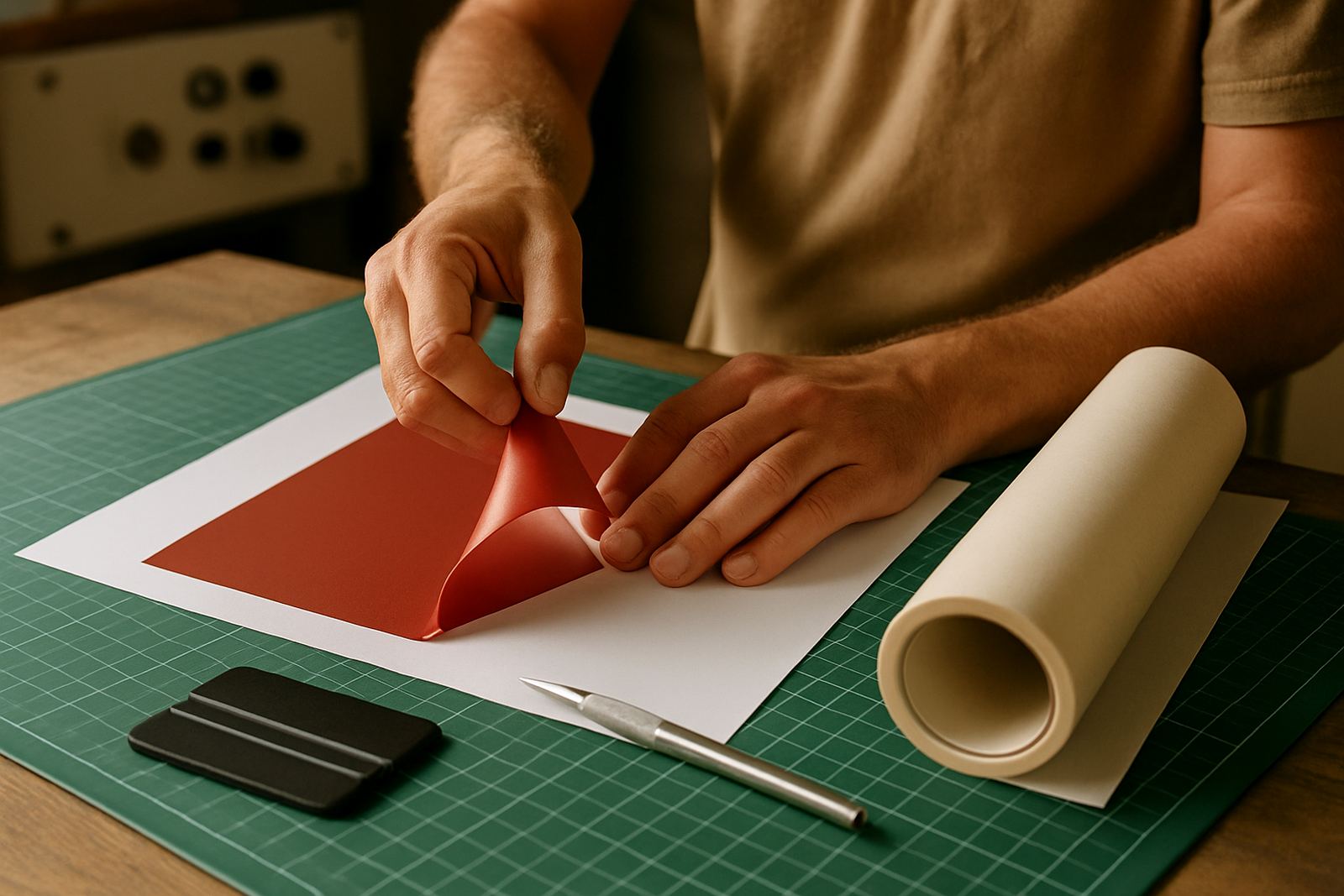
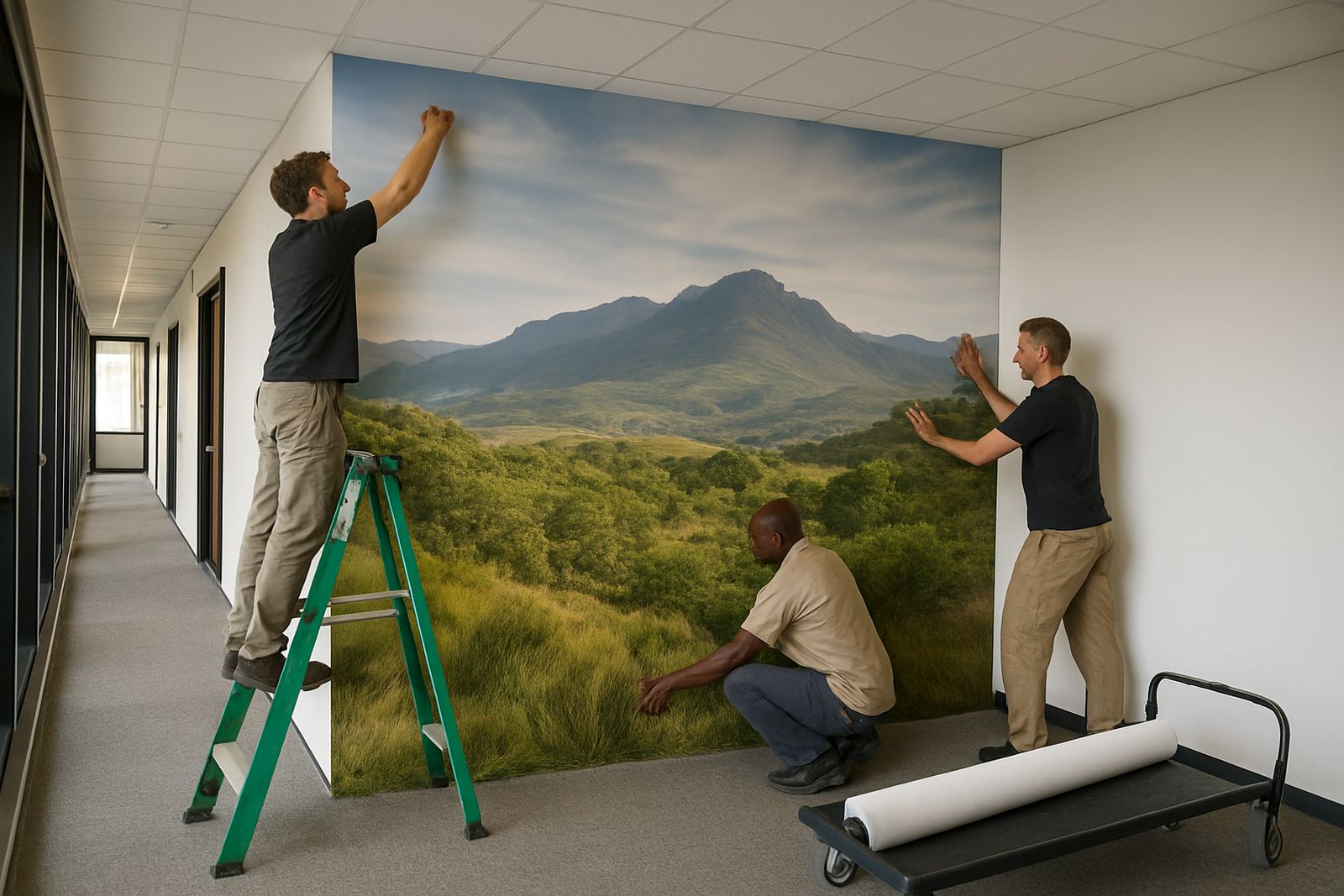
Murals are usually made to suit the wall size rather than a fixed standard. Small feature panels might cover 1 m by 2 m, while larger installations can run across a full reception wall or a long passage. Artwork is normally supplied in panels for accurate alignment and easier fitting on site.
Common finish options include matte, satin and low sheen. Matte reduces reflection under downlights and near windows, while satin can be easier to wipe down in busy areas. For rooms with strong daylight or reflective flooring, a matte finish is often the safer choice. Where the wall is textured, a heavier media or protective lamination may be needed to improve adhesion and appearance.
- Panel sizes are set to suit the wall and access conditions
- Oversized walls may need seam planning for a neat join
- Matte finish suits most offices and schools
- Satin finish is useful where regular wiping is expected
- Protective coating can help in high-touch or dusty areas
Where Wall Murals Suit Best
Wall murals suit places where people pause, queue, learn or gather. That includes corporate lobbies, boardrooms, training rooms, corridors, libraries, classrooms, healthcare waiting areas and retail display zones. They also work in residential estate offices and hospitality venues where a plain wall needs to do more than sit there.
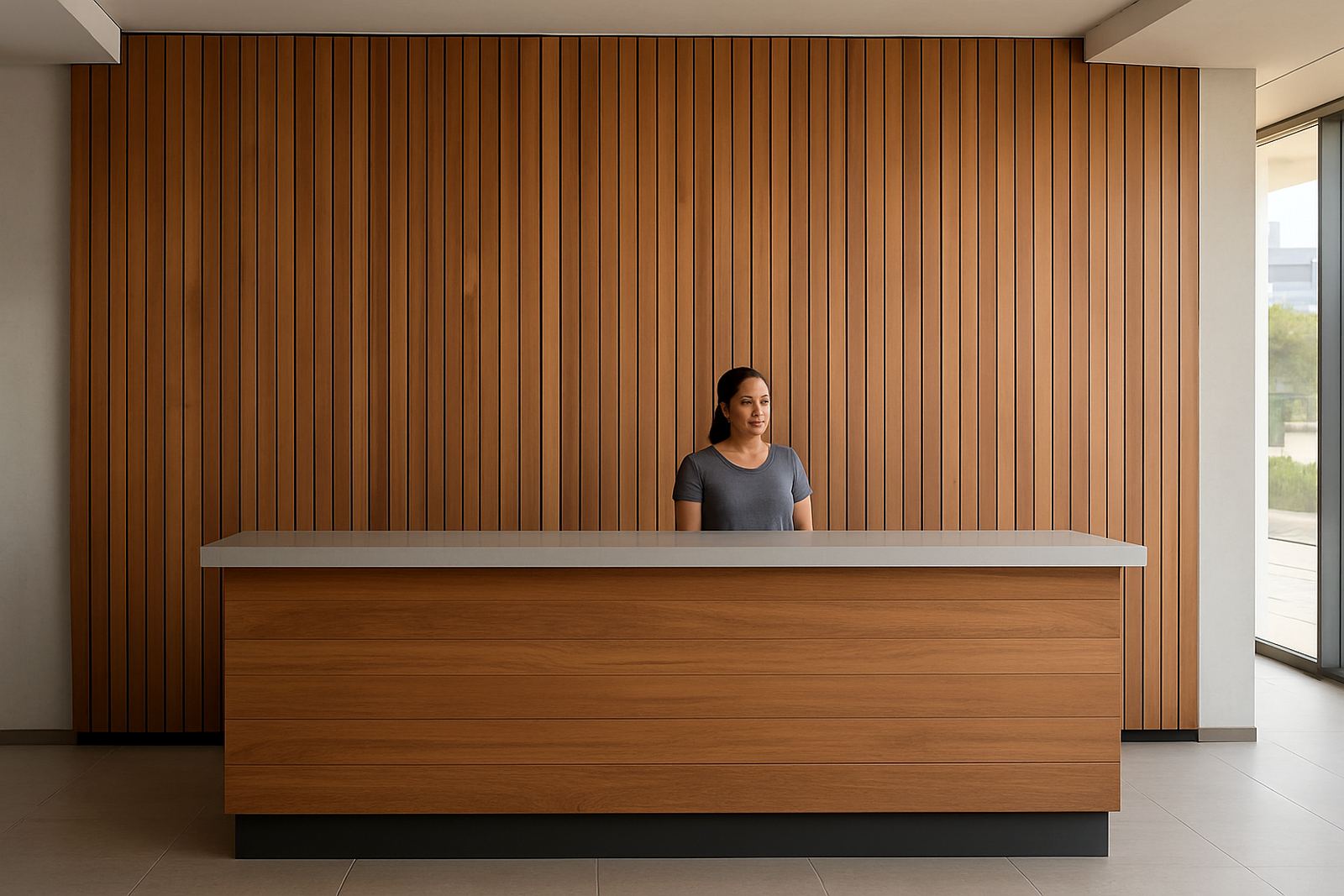
They are especially useful in buildings that need visual identity across several rooms. A school can use them for subject areas and house colours, while a developer can use them to show site plans, amenities or lifestyle imagery. Municipal spaces often use murals for public information, local history, or directional graphics that support visitors.
- Reception areas where the wall sets the tone immediately
- Passage walls that can carry wayfinding or directional content
- Training rooms that need charts, values or process steps
- Public spaces that benefit from stronger identity and order
- Display environments where temporary exhibits need a cleaner backdrop
Installation, Access and Site Requirements
Installation starts with a proper site check. The wall must be dry, flat enough for the chosen material and free from loose paint, dust and oil. If there is dampness, flaking plaster or movement in the substrate, that must be corrected first. On a recently painted wall, the curing time should be confirmed before fitting begins.
For most interior murals, no electrical power or gas supply is needed because the product is passive. However, access around sockets, data points, aircon units and skirting must be planned before fitting. If the mural runs behind furniture, notice boards or a reception counter, those items should be measured so the image lands cleanly. In double-volume spaces, access equipment may be required and the rigging method will depend on wall height and site rules.
- Check wall moisture and paint condition before order confirmation
- Allow space around plugs, switches and aircon grilles
- Confirm ceiling height, lifts, stairs and delivery access
- For tall walls, confirm whether scaffolding or access equipment is allowed
- Allow time for after-hours work in occupied buildings
Care, Cleaning and Servicing
Wall murals are generally easy to maintain if the right finish is chosen at the start. Dust should be removed with a soft dry cloth or a lightly damp microfibre cloth, depending on the surface. Strong solvents, abrasive pads and heavy scrubbing should be avoided because they can mark the print or lift the coating.
In schools and public buildings, regular inspection is useful because corners, edges and high-touch zones may wear faster. If a section is damaged by impact or moisture, it may be possible to replace only that panel rather than the full wall. This is one of the practical benefits of panel-based mural work, especially where budgets have to be managed carefully.
Buildings near the coast or in dusty industrial areas should check for additional wear from humidity or airborne dirt. Aircon drip lines and leaks should also be monitored. A mural lasts longer when the wall behind it stays stable and the cleaning routine is consistent.
What To Check Before Ordering
Before a mural is ordered, the wall size, viewing distance and purpose should be clear. A large image seen from across a foyer can use different detail than a corridor graphic seen at arm’s length. The artwork or content should be checked for spelling, logos, colour matching and any municipal or building rule that may affect installation. If the mural is in a public building, fire performance requirements may also need to be reviewed.
It helps to know who is responsible for each step. Some clients need help with design development and approval support, while others already have a finished artwork and only need fabrication and fitting. If the site is in a live building, timing matters as much as the graphic itself. A clean install in the wrong window can disrupt operations.
- Wall dimensions and usable height
- Surface condition, paint type and dryness
- Artwork resolution and final text approval
- Required finish, cleaning method and expected wear
- Access constraints, working hours and site rules
How Deep3 Manages Wall Mural Projects
Deep3 Signage Consultants handles wall mural projects from planning through to handover for offices, schools, public buildings and display environments across Johannesburg, Gauteng and further afield. The team can assist with signage strategy, site surveys, material specification, structural coordination and installation management, so the mural fits the building and the purpose behind it.
For clients in Modderfontein, Sandton, Midrand, Randburg, Germiston, Pretoria, Centurion and Durban, project details can be aligned with local access conditions, building rules and site timing. Whether the mural is a single feature wall or part of a wider interior signage package, the aim is practical: clear content, neat edges and a finish that holds up in real use.
Key facts
| Product type | Large-format interior wall graphics |
|---|---|
| Typical use | Offices, schools, public spaces and display environments |
| Common substrates | Smooth painted walls, gypsum board, sealed plaster and concrete |
| Finish options | Matte, satin or low sheen |
| Installation method | Panelled application with site checks and surface preparation |
| Maintenance | Dust with a soft cloth and clean with mild, non-abrasive methods |