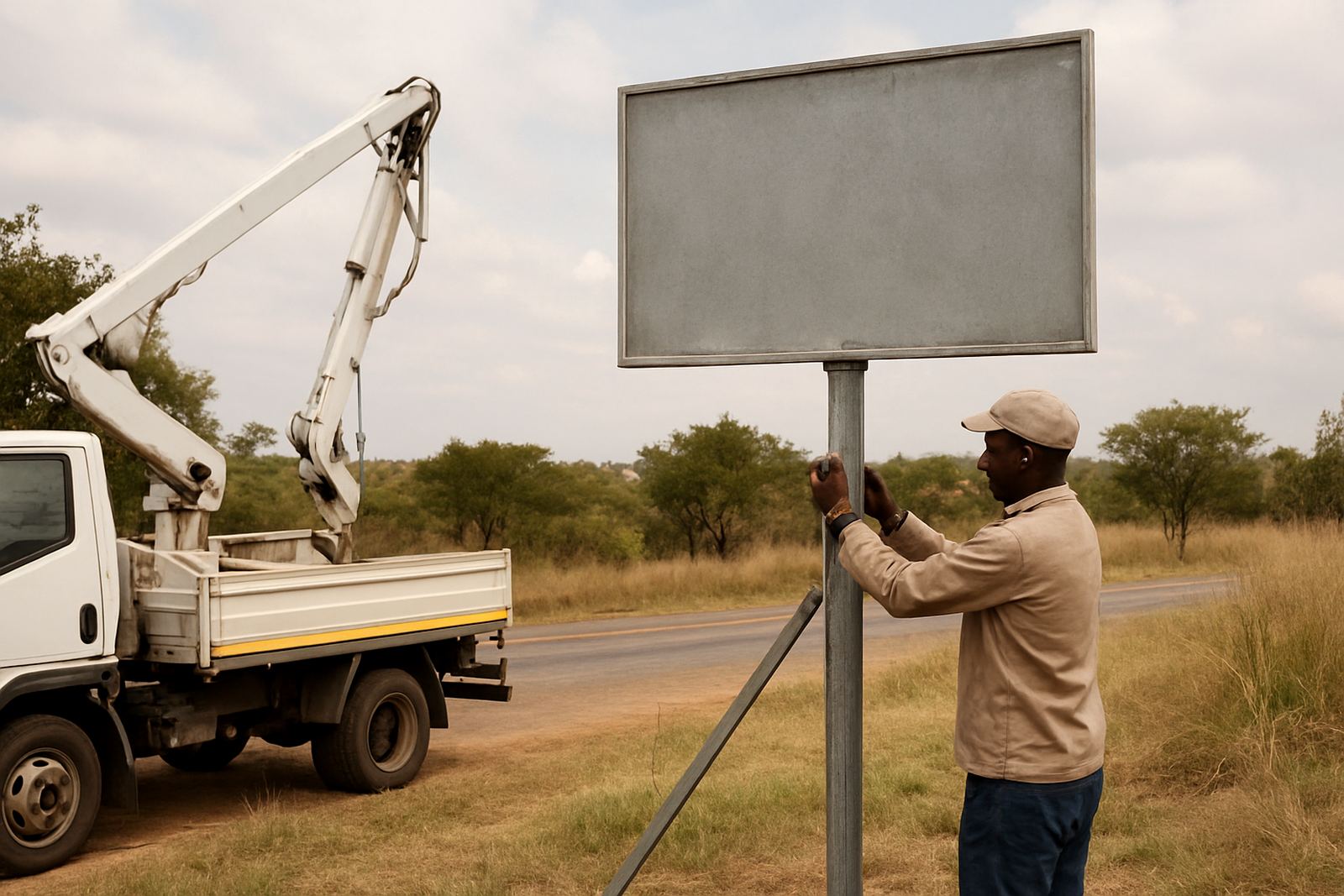

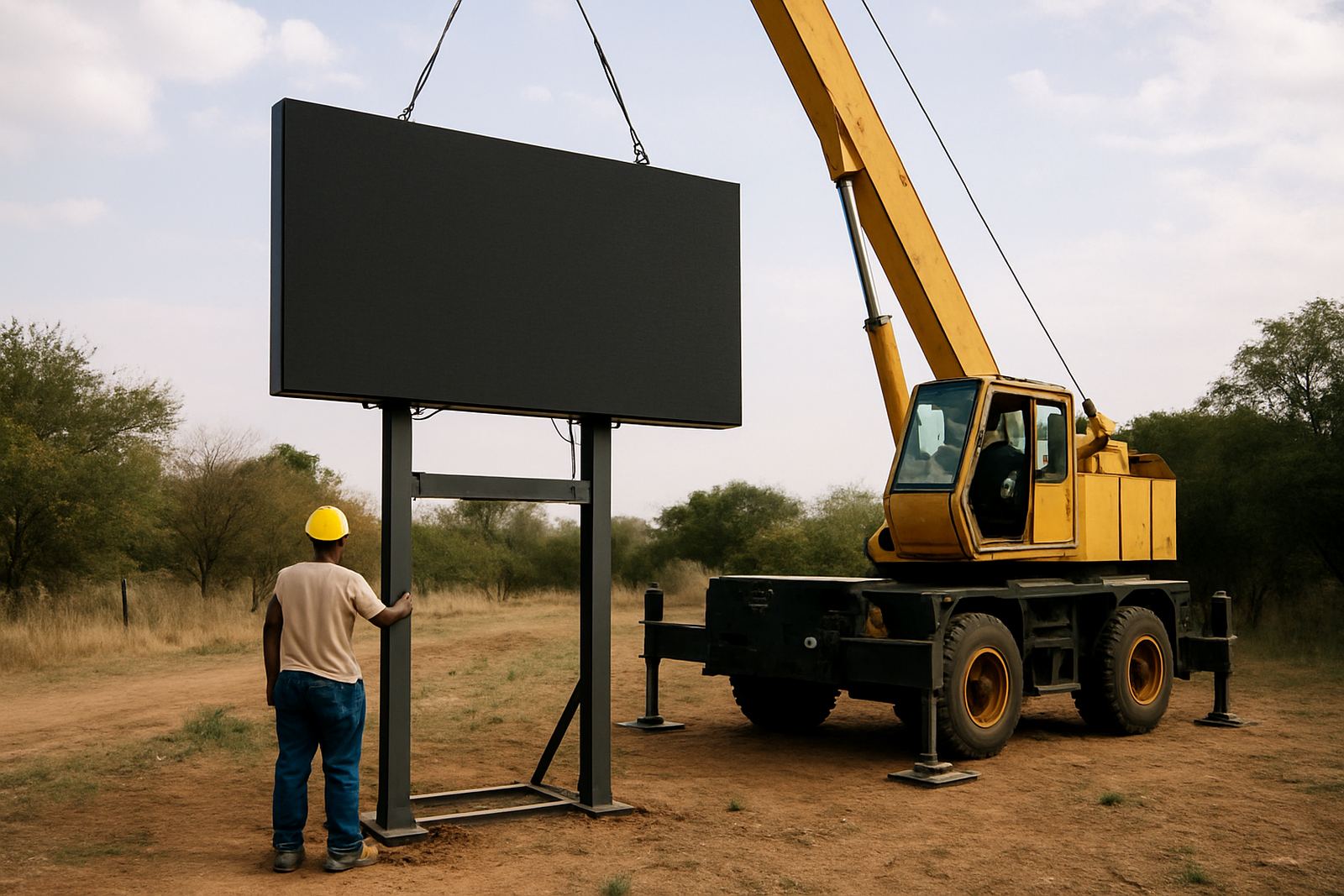
Confirm the exact fixing point before anything arrives
Before fabrication or delivery, make sure the final fixing positions are signed off on site and matched to the approved drawings. Even a small shift of 100 mm can affect sight lines, building services, window openings and access for lifting equipment.
For wall mounted signs, give us the finished wall type, cladding detail and any hidden services behind the surface. For pylons and freestanding signs, confirm the set-out pegs, boundary line and the level of the finished ground. If the site has recently been backfilled or resurfaced, let us know because ground bearing capacity can change fast.
Clear the access route for trucks, cranes and lifting gear
Access is often the part that slows a project down. Please check that the route from the gate to the install point is wide enough, with no low branches, cable runs, parked vehicles or soft areas that could trap a truck. On tight Gauteng sites, a simple access plan avoids delays and extra calling out of plant.
- Open all gates and confirm who will be on site to unlock them
- Remove loose rubble, sand piles, pallets and old signage near the work area
- Mark any overhead cables, service trenches or fragile paving
- Allow enough turning space for a flatbed, crane truck or cherry picker
If access is shared with tenants, security or a residential body corporate, please arrange permissions in advance. We can work around municipal and private site rules but we still need practical access on the day.
Prepare the power and network points for LED screens
For LED video screens, power and signal routes must be ready before rigging starts. Confirm the location of the isolator, the cable route and the breaker size with your electrical contractor. If the screen is outdoors, the supply must be suitable for weather exposure and positioned where maintenance can reach it later.
Where data or fibre is required, please make sure the comms team has tested the feed and labelled both ends. If there are load-shedding considerations, discuss backup power and safe shutdown arrangements early. It is better to plan for this than to deal with a dark screen on opening day.
- Confirm supply voltage and breaker capacity
- Keep the electrical room or distribution point unlocked
- Allow space for service loops and future access
- Make sure earthing points are available where required
Check approvals, landlord consent and municipal requirements
Many delays come from paperwork not hardware. Before install day, confirm that the landlord, body corporate or facilities manager has approved the work in writing. For road facing signs, freestanding pylons, billboards and other visible structures, municipal permission or traffic related approval may also be needed depending on location and size.
Please keep copies of any approved drawings, wayleave documents or site access permits on hand. If the project is in a commercial park, near a road reserve or at a municipal facility, we may need extra notices or method statements. It helps if these are sorted before fabrication reaches the final stage.
Protect the building, finishes and surrounding activity
Sign installation can involve drilling, lifting and occasional dust, so the surrounding area should be protected. Move vehicles away from the work zone and cover finished paving, glass, paintwork and landscaping where needed. On busy retail or office sites, a simple barrier or temporary exclusion zone keeps the public clear and protects the sign finish too.
If the site is coastal, dusty or exposed to strong sun and wind, tell us. Material choice and fixing details may need to be adjusted for corrosion, movement and long term maintenance. That matters in Durban, on exposed rooftops and in open industrial areas alike.
Nominate one site contact and one decision maker
Every install runs better when there is one person on site who can answer questions quickly. That person should know where the sign goes, who can give access and who can approve minor adjustments if conditions differ from the drawing. Without that, teams lose time waiting for calls and sign offs.
Please also identify a decision maker who can confirm hold points, such as final set-out, power switch-on or crane arrival. A five minute delay at the right moment is better than a full stop later in the day.
- Share the site contact name and arrival procedure
- Confirm working hours and any noise restrictions
- Tell us about neighbouring tenants or event schedules
- Keep emergency contacts available on site
What to have ready on installation day
By the time our team arrives, the site should be ready to work. That means safe access, confirmed drawings, required approvals and a clear work zone. If the project includes rigging or a large sign lift, the ground area must be stable and the area below the lift point kept clear for the full duration.
A well prepared site keeps the job moving and protects the finished product. It also helps us hand over cleanly, with fewer return visits and less disruption to your operations.