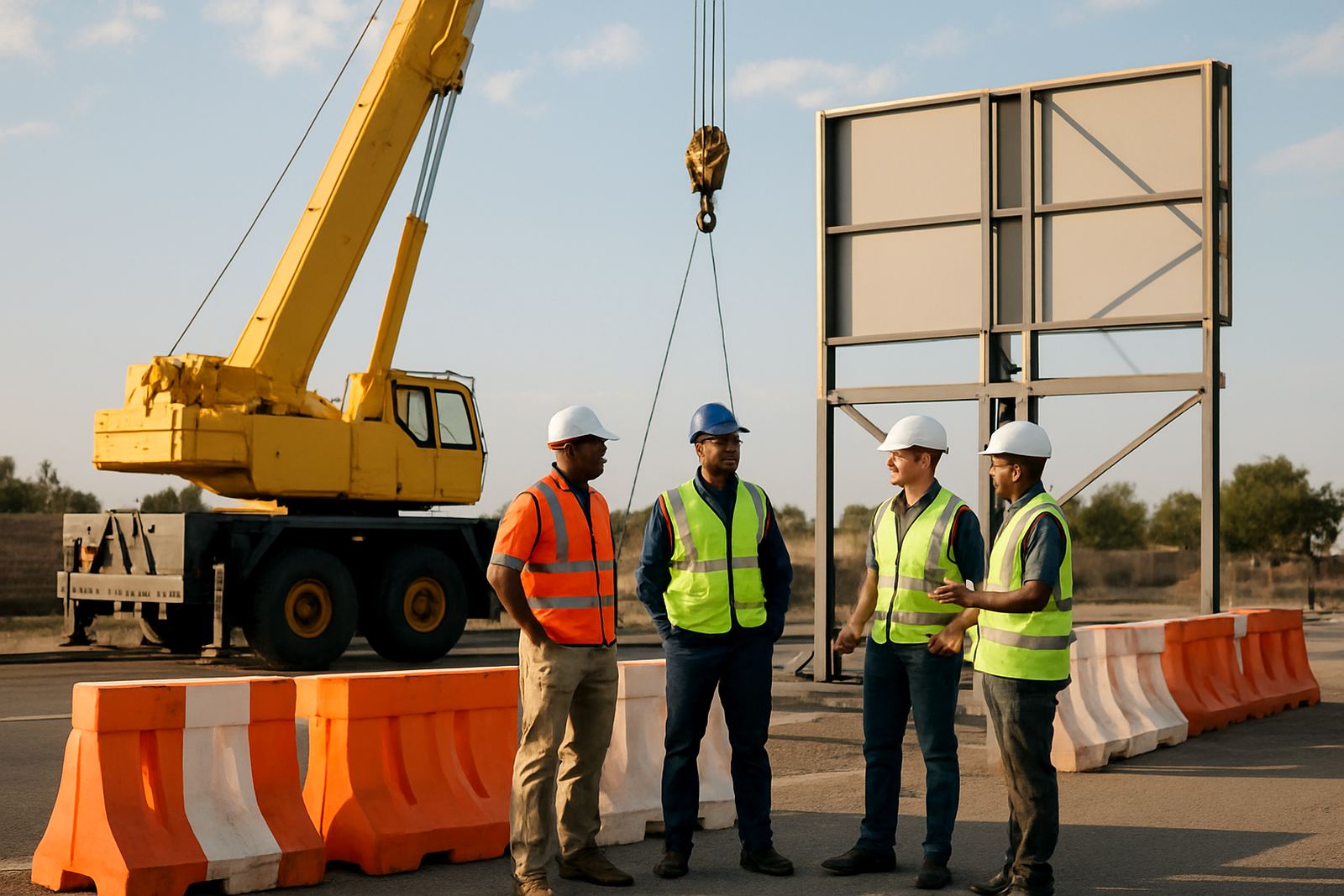

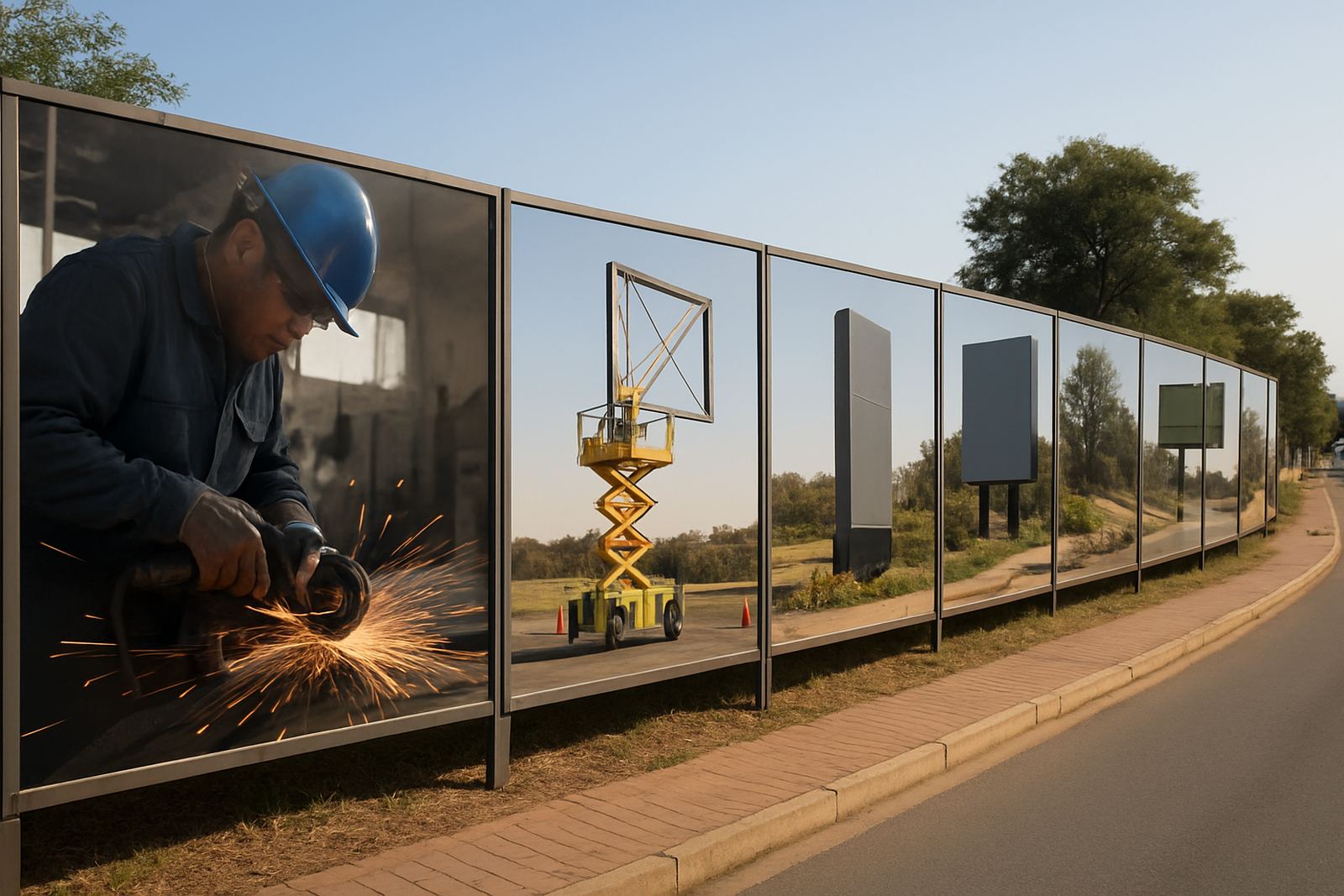
A hoarding is the first public face of a development
When a site opens up in Johannesburg, Pretoria or along a coastal corridor in KwaZulu-Natal, the boundary becomes part of the project story immediately. A plain barrier says little and can look neglected within weeks. A properly planned hoarding gives a site a clear edge, carries the development name, and tells neighbours, motorists and tenants that the project is managed with care.
That matters in busy Gauteng streets where pedestrian movement, public transport stops and deliveries all happen close together. It also matters on windy sites and in humid coastal areas where panels, fixings and printed graphics need to cope with movement, moisture and dust. Hoarding should not be an afterthought. It should be specified with the same care as any other temporary structure on site.
At Deep3 Signage Consultants, we treat hoarding as a working part of the project, not just a cover. That means planning the structure, the message, the finish and the access points together.
Security, access control and public safety come first
Before anyone notices the branding, the hoarding must keep people safe and help control movement around the site. Clear boundaries reduce unauthorised access, hide hazards and make it easier to manage deliveries and contractor entry. On municipal projects, or where a developer is building near a pavement or road reserve, this can also support compliance with local requirements and reduce complaints from surrounding properties.
A good hoarding layout should consider sightlines, lighting, gates and the points where the public naturally tries to cross. It should also allow enough space for emergency access where needed. If the site is being worked at night or in stages, the hoarding needs to be detailed so that temporary openings are not left confusing or unsafe.
- Mark pedestrian routes clearly, especially near schools, taxi routes and bus stops.
- Use reflective elements where vehicles move close to the boundary at night.
- Build in lockable access panels and service doors where the site team needs them.
- Allow for inspection and maintenance without removing whole sections.
The best hoardings guide people instead of confusing them
A site boundary can do the work of a wayfinding sign if it is planned properly. That is useful on large developments, mixed-use precincts and phased construction sites where visitors do not always know where to enter. Directional panels, zone names, lift lobby references and temporary access notes help people move with confidence and reduce site interruptions.
This is especially valuable in places like Sandton, Midrand and Modderfontein where multiple contractors, consultants and tenants may all use the same perimeter at different times. A clear hoarding can show the right gate for deliveries, the visitor entrance, the future retail side or the office block that is still being completed. It can also show approved detour paths without cluttering the street with loose boards and handwritten notices.
Hoarding should answer practical questions quickly: where do I park, where do I enter, what is safe to cross and what is still under construction? If those answers are visible from the road, the site runs more smoothly.
Printed panels, structure and finish need to work as one system
The value of hoarding depends on how well the structure and graphics perform together. Printed vinyl on a poorly prepared panel will fail early, especially under strong sun or in areas where dust and wind collect at the edges. Likewise, a neat frame with weak access doors or uneven cladding will soon look tired. The material choice needs to suit the site, the duration of the works and the level of public exposure.
For short term works, printed panels may be enough. For longer developments, a more durable build-up with aluminium, steel framing, sealed joints and replaceable graphic sections is usually better. On projects where tenants are being sold or leased before completion, the hoarding can also carry renderings, launch dates and developer information without needing constant replacement. If the brief includes lighting, power availability and maintenance access must be planned from the start, especially during load-shedding periods.
- Match the material to the exposure: road side, pedestrian side or internal site edge.
- Specify finishes that clean easily and keep their colour in strong sun.
- Plan for repairs, panel replacement and graphic updates during the build.
- Allow for cable routes and fixing points if lighting or LED elements are included.
A local example: a phased development in Modderfontein
On a recent phased site in Modderfontein, the developer needed more than a boundary. The project ran next to active roads, with public movement on one side and contractor access on the other. The hoarding had to protect the site, present the project name clearly and direct different users to separate entrances. It also had to cope with dust, changing work areas and regular updates as the development progressed.
The solution was planned in sections. Primary branding faced the road, with clean messages and a simple visual language. Secondary panels carried directional notes for deliveries and visitors. Opening points were built into the layout instead of being cut in later, which kept the perimeter tidy and reduced confusion. As the project changed, some panels were swapped out without disturbing the full boundary, which saved time and avoided unnecessary rework.
That is the difference between a hoarding that merely closes a site and one that actively supports the project. The first just hides work. The second helps the work run better, and it reflects well on the client the whole way through.
What good hoarding planning should include from day one
Hoarding works best when it is included in the early project conversation, not left until construction is already under way. The sign consultant should work with the developer, contractor and engineer to align the visual design, structural requirements and approval path. That is where practical details get sorted before they turn into delays.
Deep3 Signage Consultants manages that process across Gauteng and beyond, from signage strategy and site surveys through to fabrication management, installation management and project handover. For hoarding, that means thinking about the site as a moving environment with changing access, changing risks and changing messages.
- Confirm the site boundary, access gates and public interface early.
- Check structural support, wind loading and fixing details before fabrication.
- Agree the message hierarchy: safety, direction, branding and project information.
- Set a maintenance plan for cleaning, repairs and panel changes.
When all of that is handled properly, the hoarding earns its keep. It secures the edge, supports the build and gives the development a professional public face from the first day to handover.