Why cleaning cycles matter more than most clients think
Cleaning is not only about looking neat on a Monday morning. On illuminated signs, dirt reduces light output and makes acrylic, vinyl and diffuser faces look dull before their time. On reflective road and wayfinding signs, grime and oxidation can cut visibility at night, which is when many drivers rely on them most.
In Johannesburg and Pretoria, dust from traffic and building sites settles quickly on sign faces and on the tops of cabinets and pylons. In Durban, salt air and moisture add another layer of trouble, because fine residue sticks to paint and metal fittings. Left long enough, that build-up can stain, block drainage points and make routine maintenance more expensive than it should be.
For clients managing estates, campuses, retail centres or municipal assets, cleaning cycles should be written into the maintenance plan from the start. That way, the sign is not treated as a once-off install but as an asset with a working life, and the budget is easier to manage year after year.
How often each sign type should be cleaned
Cleaning intervals need to match the conditions on each site. A roadside pylon near the N3 will need more attention than a sign under a covered mall canopy. The right cycle depends on dust, wind, bird activity, vehicle spray, nearby trees and how exposed the sign is to sun and rain.
As a practical guide, high-traffic and illuminated signs should be inspected monthly and cleaned when needed, while lower exposure signs may only need quarterly attention. In coastal areas, anything with exposed metal or brackets should be checked more often because corrosion starts quietly. If a site sits near construction, quarry activity or a busy logistics yard, shorten the cycle because grime builds up fast.
- Retail centres and forecourts: monthly inspection, quarterly cleaning minimum
- Road signs and pylons: monthly check, spot clean after storms or dust events
- LED video screens: weekly visual inspection, scheduled cleaning at planned intervals
- Municipal signs: quarterly or after vandalism, bird fouling or road spray
It is also worth setting different cycles for different materials on the same asset. A sign face may need a gentle wash while the steel frame needs rust spotting and a protective touch-up. That approach stops over-cleaning on sensitive surfaces and keeps the whole installation in better shape.
What to use and what to avoid on illuminated and digital signs
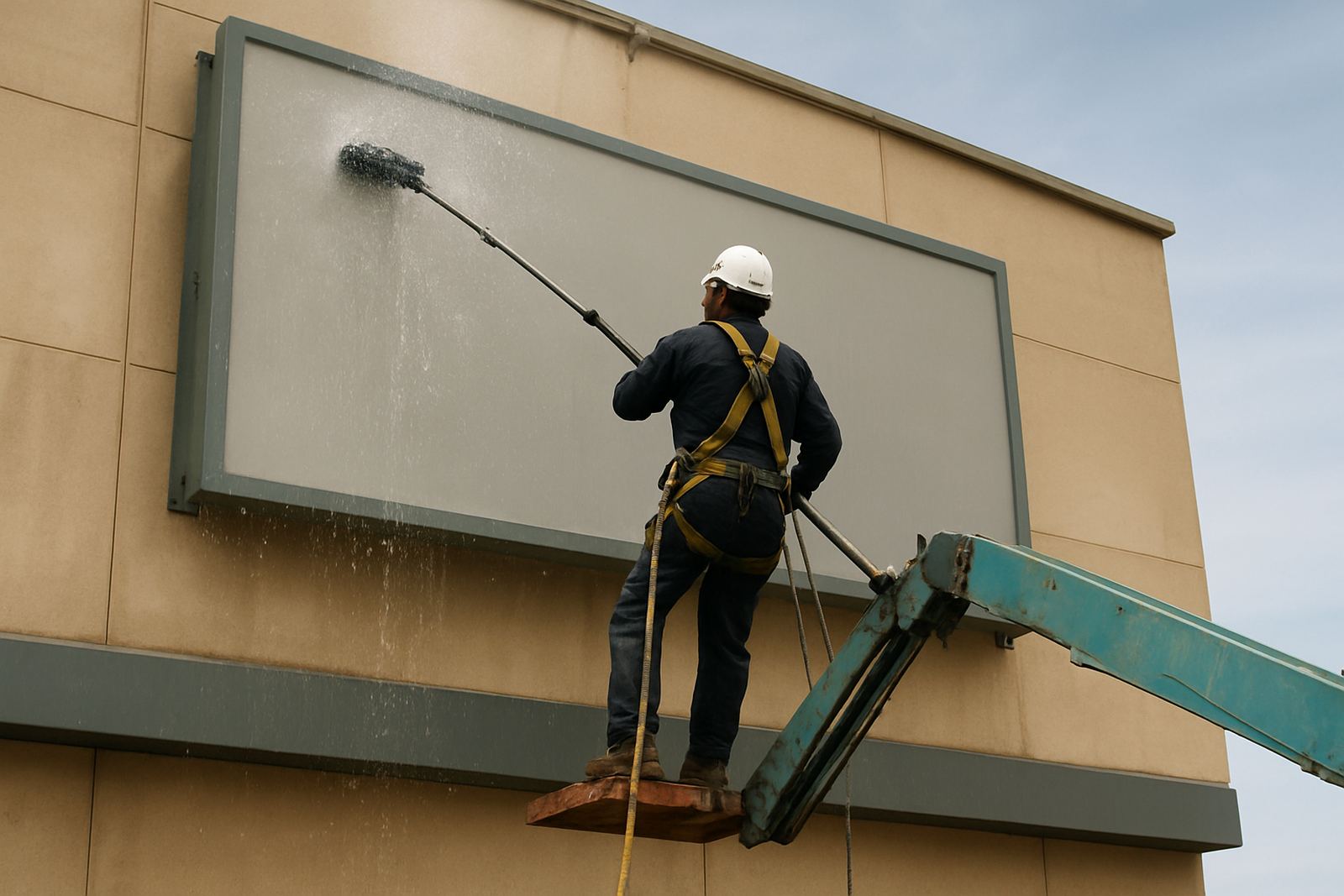
The cleaning method must suit the material. A soft microfibre cloth, clean water and a mild non-abrasive cleaner are usually enough for most face panels and printed surfaces. Harsh solvents can haze acrylic, lift printed inks or damage vinyl edges, so they should be kept off the job entirely. On light boxes, care is needed around seams, gaskets and cable entries, because water forced into the cabinet creates extra faults later.
LED screens need even more caution. The surface modules are not cleaned like a shop front window. They need the correct pressure, the right tools and a method that avoids pushing dirt into the electronics. If a screen is cleaned with too much water or the wrong chemicals, dead pixels and corrosion can follow and those repairs are rarely cheap.
Metals also have their own rules. Brushed aluminium shows scratches easily, brass can dull or spot, and painted steel should not be scoured with abrasive pads. A better practice is to rinse loose grit first, then wipe gently and dry the surface so water marks do not sit on the finish. On one or two older sites we have seen crews use whatever was at hand and the result was more damage than dirt removed.
Gauteng conditions that shorten signage life
Modderfontein, Sandton, Midrand and Randburg all see heavy dust from traffic, freight movement and nearby works. Add summer thunderstorms and you get dirty runoff on vertical faces, splash marks at the base of pylons and water trapped in corners. If those marks are left to dry and bake in the sun, they become harder to remove the next time round.
Municipal and road-side signs face another issue: exposure to spray, tyre residue and occasional impact. A sign on a busy corridor near Germiston or Pretoria can look older than its age simply because the environment is hard on it. In these cases, inspection matters as much as cleaning. A loose fixing, cracked seal or lifting panel should be noted during the cleaning visit so it can be corrected before it becomes a bigger call-out.
LED screens in public spaces need a similar mindset. Heat, dust and power interruptions can all affect performance, and if there has been a load-shedding event followed by a surge, a post-outage check is sensible. The screen may still operate, but the cabinet, power supplies and cooling routes should be looked over before the next event or campaign goes live.
A simple cleaning routine for estates, developers and municipalities
Most sites do best with a clear routine rather than a once-off deep clean when someone notices a problem. The routine should say who inspects the sign, what gets cleaned, which products are approved and when a specialist must be called in. That makes it easier for operations teams, security staff and contractors to work from the same plan.
For a managed estate or retail site, the cycle can be built around existing grounds maintenance visits. For a municipal asset, it can be tied to inspection rounds and complaint logs. For a developer handing over a site, the cleaning schedule should be included with the handover pack so the sign is not left to guesswork. A small note on access, switching and water points can save a lot of time later.
It also helps to log the condition before and after each clean. Photos, dates and notes on staining or damage make patterns visible. If one sign face fouls faster than the rest, or if a certain corner keeps taking dust and runoff, the design or installation may need adjustment. That is especially useful on projects with multiple signs across one property or precinct.
Planning cleaning into the project from the start
The easiest sign to maintain is the one designed with maintenance in mind. Access points, safe reach, drainage, removable panels and suitable mounting all affect how often a sign can be cleaned and how much it will cost. If a cabinet is too high, too narrow or too awkward to access, people will delay the job and that shortens the life of the finish.
That is why cleaning cycles should be considered during signage strategy, material specification and approval support, not after installation. A good specification can reduce ongoing costs by choosing surfaces that resist staining, selecting fixings that do not rust quickly and allowing for safe access during maintenance. The same thinking applies to road signs, pylons and large format LED installations.
At Deep3 Signage Consultants, we see cleaning as part of the full project life, not a side note. From Modderfontein through Gauteng and across Africa, the signs that stay clear longest are the ones planned with maintenance from day one. A few extra minutes on the cycle now can spare a client much bigger replacement costs later and keep the brand message readable when it matters most.