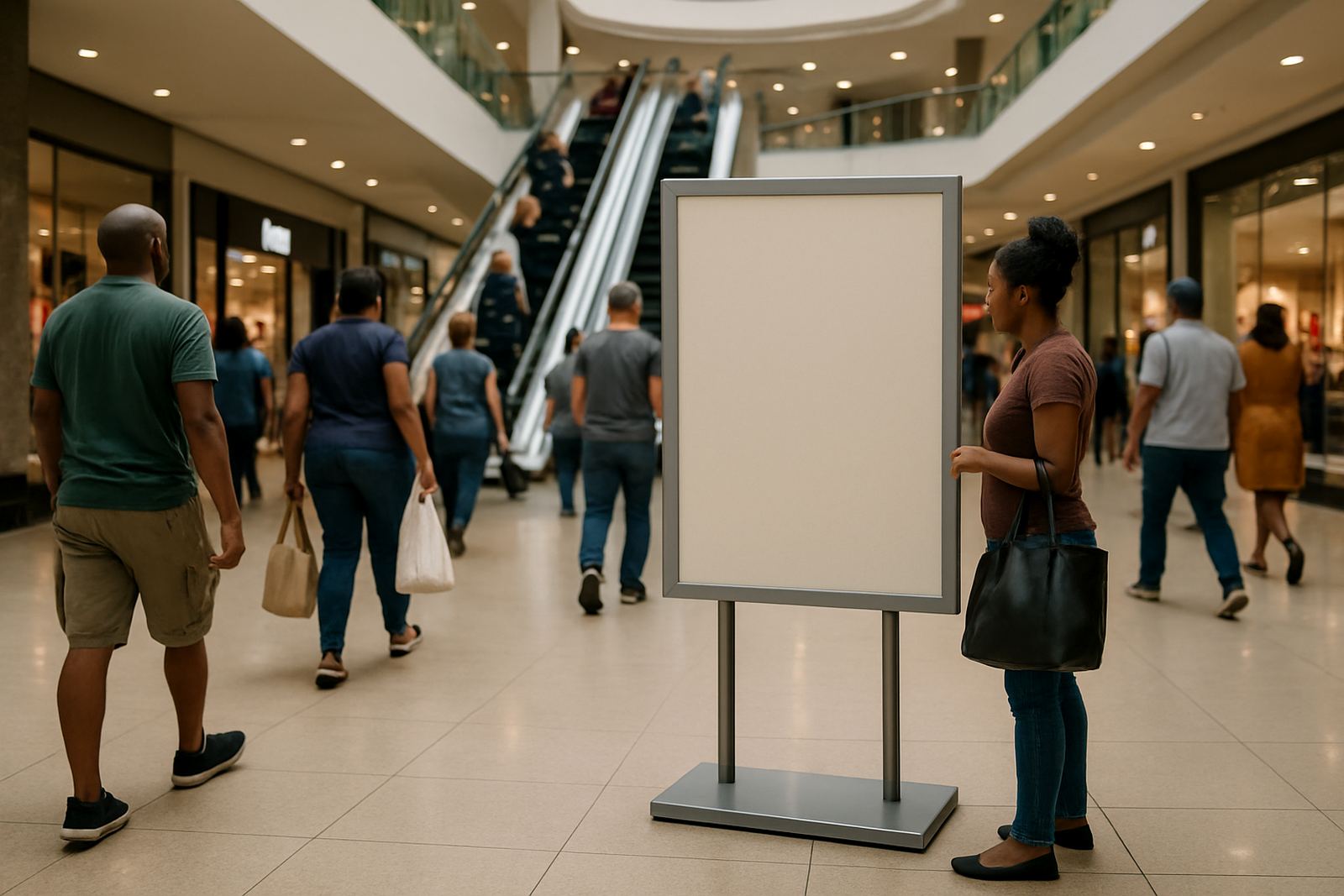
Mall wayfinding that had to work from opening time to closing time
The brief came from a regional retail centre in Gaborone that needed clearer internal navigation for shoppers, tenants and service teams. The mall wanted signage that could be read quickly from a distance, still look neat in bright daylight and remain visible after load-shedding when the public areas switched to backup power. Because the building already had active trading areas, the signage had to be installed in phases with limited disruption to trading hours.
The main challenge was not just making signs that looked good. It was getting the placement right for people approaching from multiple entrances, moving between upper and lower levels, and trying to find specific stores without stopping at every corridor. We also had to work around existing ceiling services, sprinkler lines and structural points that were already committed, so the mounting detail had to be coordinated carefully.
What the brief needed us to solve
The centre wanted a directory system that could guide visitors from the main entrances to anchor tenants, food areas, toilets and parking access without adding clutter to the architecture. The spec called for internal directories, suspended navigation signs and illuminated units that could carry tenant names clearly, with enough flexibility for future tenant changes. We also had to keep to a finish standard suited to a busy commercial environment where fingerprints, dust and maintenance access are part of everyday use.
- Clear tenant grouping by zone and level
- Legible graphics at walking speed and driving approach speed inside the parkade
- Illuminated elements for low light conditions and evening trading
- Simple maintenance access for cleaning and panel changes
- Materials suitable for long-term use in a dry inland climate
Because this was a public-facing mall, approvals mattered too. The client needed a signage package that could be reviewed by the centre management team and aligned with the existing building rules, fire routes and tenant branding controls.
Our specification and build approach
We started with a site survey to measure sightlines, ceiling heights, circulation paths and likely decision points. From there we developed the layout for each sign type and matched the construction to the location. The directories were built with aluminium frames, printed face panels and replaceable name strips, while the suspended navigation signs used lightweight internal framing with routed graphics for clean edges. Light boxes were specified with even illumination so the message read properly across the full face, not just at the edges.
For finishes, we used materials that hold up well in Johannesburg and in inland Southern African conditions, where dust, vibration and dry air can affect signage over time. Fixings were chosen to suit the building substrate and ceiling conditions, and where service access was tight we planned the mounting sequence in advance. The fabrication team prepared each component in sections so that installation could happen efficiently on site, with final alignment completed after the mall team confirmed the installation windows.
Key components included:
- Internal directory boards with modular tenant panels
- Suspended wayfinding blades for directional guidance
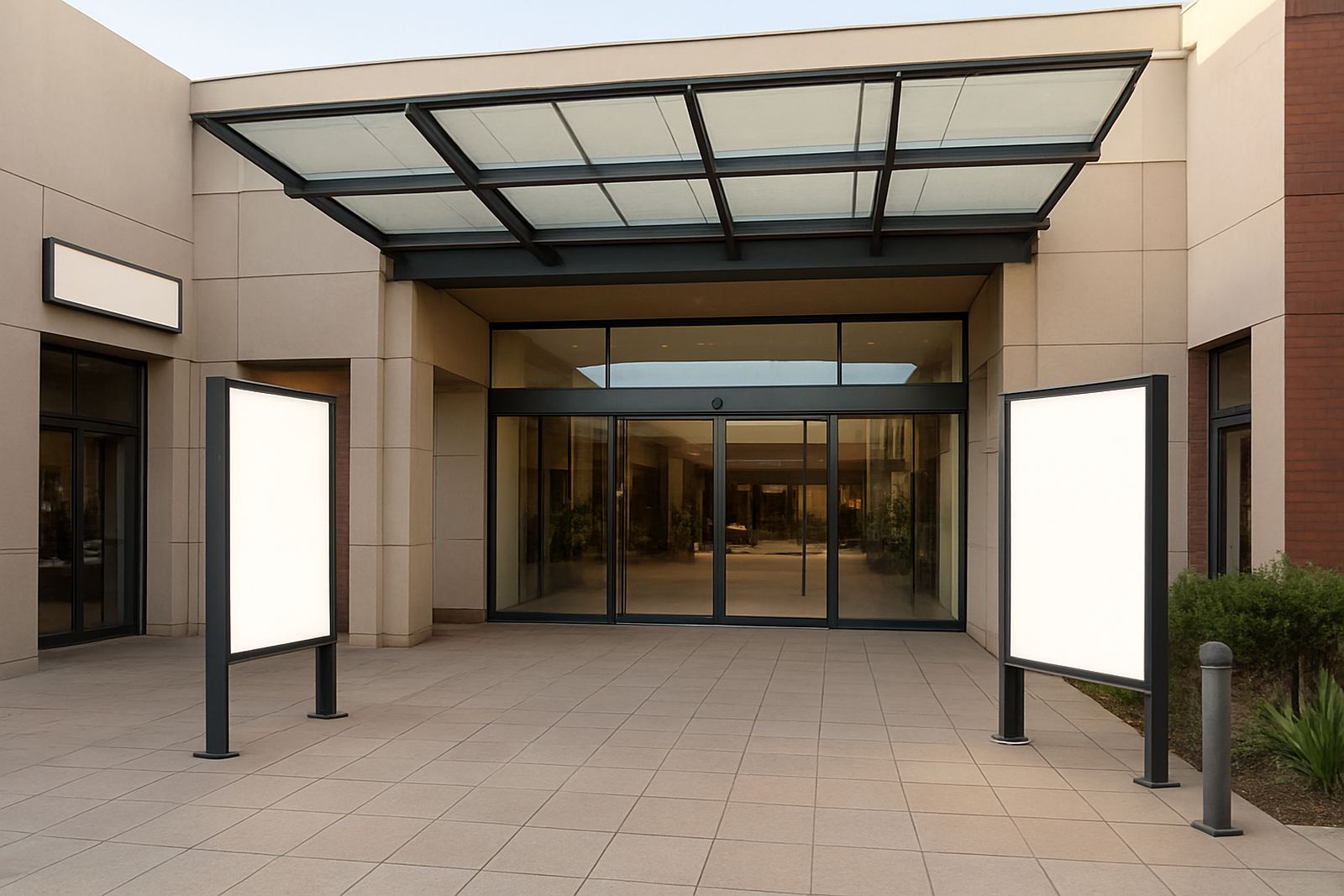
- Light boxes for high visibility at junctions and entrances
- Vinyl graphics for supplemental messaging and arrows
- Installation templates and setting out marks for accurate positioning
Rigging and installation in an active retail space
The installation ran in stages over four weeks, with the first week focused on final drawings, approvals support and procurement. Weeks two and three covered fabrication and pre-assembly, and the final week covered delivery, rigging and handover. That schedule allowed us to coordinate with centre operations and keep the public areas open while work was completed after hours where required.
Suspended signage in a mall needs careful setting out because even a small error is visible from the floor. Our rigging team marked every drop point, checked clearances against existing services and made sure the signs sat square to the main walk lines. Where access equipment was needed, we planned around trading peaks and loading bay activity so the mall could keep moving. The result was a clean, orderly fit-out with no unnecessary rework on site.
- Phased install to reduce disruption to shoppers and tenants
- Ceiling and service coordination before drilling and fixing
- Final levelling and alignment on site
- Protection of surrounding finishes during work
- Handover notes for cleaning and future updates
Results the centre could use straight away
Once the signage was in place, the mall had a clearer movement pattern through the main public areas and fewer moments where visitors had to stop and ask for directions. The directories gave tenants a proper point of reference, while the suspended signs helped people make decisions earlier in the journey. That matters in a regional centre because better wayfinding can improve shopper confidence and reduce pressure on staff at information points and security counters.
The illuminated units also helped in the evening and during power interruptions, keeping the wayfinding readable when the ambient light level dropped. From a maintenance point of view, the centre now has a signage system that can be updated without replacing every structure. That is important for a mall with tenant changes, seasonal trading shifts and periodic refits.
What made the biggest difference was consistency. The signs all followed the same language, spacing and hierarchy, so the mall now reads as one organised space instead of a collection of separate messages. That gives the centre team a better base for future tenant moves and any additional directional signage they may need later.
What we would repeat on a similar mall project
If we were doing this type of project again, we would keep the same sequence: site survey first, layout testing early and phased installation tied to trading hours. That order saves time and reduces the risk of adjustments after fabrication has started. We would also keep the modular directory format, because it makes tenant updates easier and lowers long-term maintenance costs.
For a mall in Gaborone or any other regional centre, we would still specify materials and fixings around local conditions rather than using a one-size-fits-all approach. Coastal humidity, inland dust and temperature changes all affect signage performance in different ways, so the detail has to match the site. The value here was not a fancy concept, it was clear information delivered neatly and installed properly the first time.
Key facts
| Project type | Internal directories, light boxes and suspended navigation signage |
|---|---|
| Location | Gaborone, regional retail mall |
| Timeline | 4 weeks from survey to handover |
| Materials | Aluminium framing, printed panels, routed graphics and illuminated face units |
| Scope | Site surveys, design development, fabrication management, installation management and handover |
| Outcome | Clearer wayfinding for shoppers, tenants and mall operations teams |