
Brief for a busy industrial precinct in Germiston
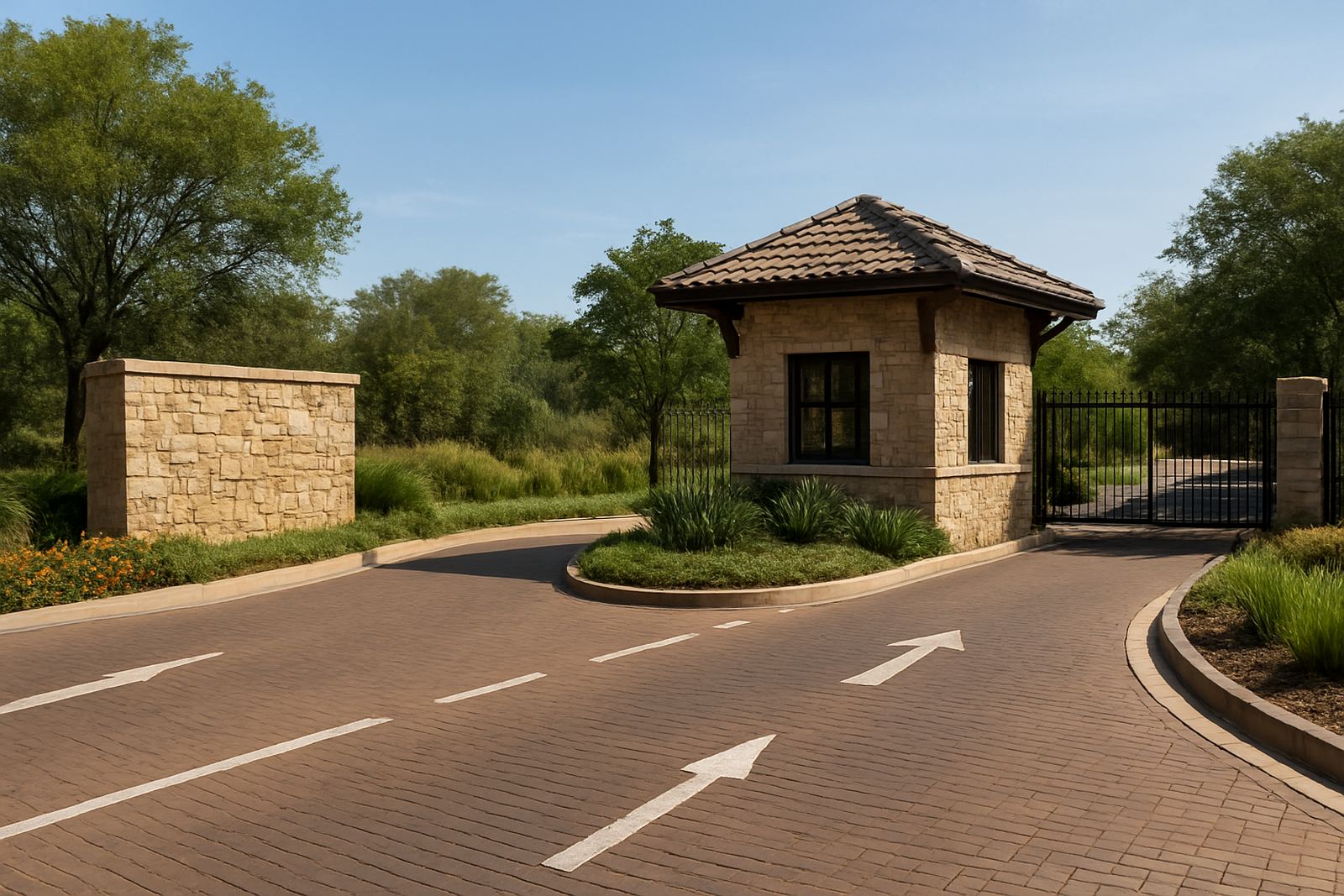
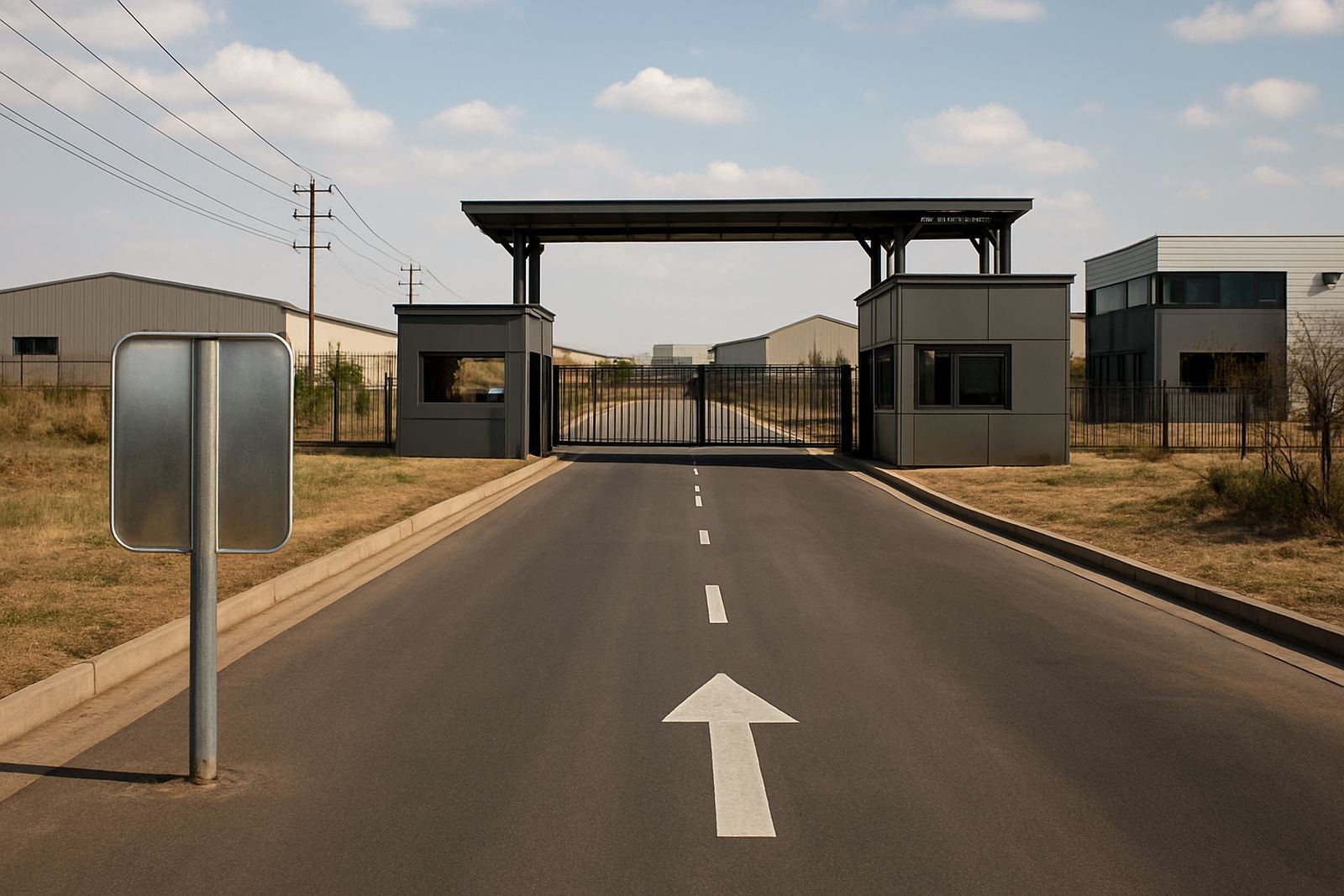
The client was the management team responsible for an industrial precinct in Germiston, where multiple tenants share one access control point, internal streets and service yards. They needed signage that would guide trucks, visitors and contractors without adding clutter to the site. The estate also wanted a cleaner first impression at the gate, because the entrance is the first thing drivers see from the road.
The brief covered three areas: reflective road signage for safe vehicle movement, tenant panels for clear unit identification and gate branding that could be seen in daylight and after dark. The signs needed to be practical, easy to maintain and compliant with typical municipal expectations for private industrial access points. In an area like Germiston, where delivery traffic is constant and dust builds up quickly, legibility matters more than decoration.
Site conditions, access control and daytime glare
The main constraints were traffic flow, visibility and the realities of working on an occupied estate. There were trucks entering and leaving during the day, limited space near the gate and a need to avoid blocking access for tenants. We also had to account for glare on polished surfaces, evening visibility and the fact that reflective faces get dirty faster than standard printed panels.
During the site survey we checked mounting positions, viewing distances and the angle at which drivers would approach each sign. We also confirmed clearances for gate posts and boundary walls, plus the best positions for tenant panels so they could be read from a moving vehicle. It sounds simple, but a sign placed 300 mm too low or too close to a turning lane can become useless very quickly.
- High-traffic entrance with mixed vehicle sizes, including rigid trucks and panel vans
- Exposure to dust, afternoon sun and rain runoff from roof lines
- Need for simple maintenance access without disrupting tenant operations
- Space limits around the gate, wall lines and internal road edges
What Deep3 supplied and how the signage was made
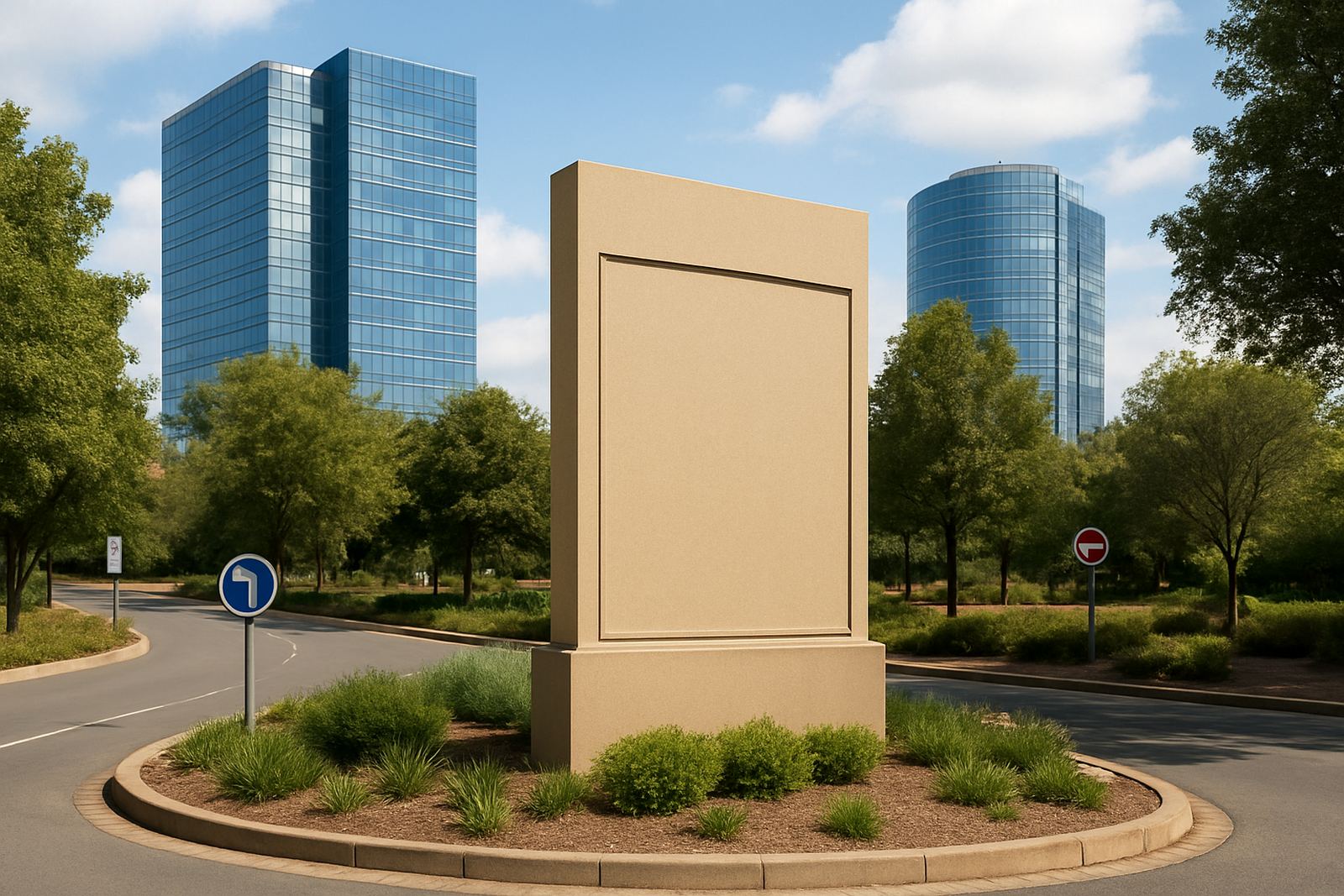
We developed the full signage pack from the ground up, starting with layout and copy approval, then moving into material selection and fabrication control. The road signs were made with reflective faces for night reading, using aluminium composite panels with engineered fixing points. Tenant panels were produced as modular units so names could be updated without replacing the whole frame. Gate branding was fabricated to create a more professional threshold without getting in the way of security hardware.
The build included cut vinyl, printed panels and routed elements where needed. For the gate identity we used durable external-grade graphics and rigid mounting plates suited to a windy, exposed entrance. Where metal was visible, we specified finishes that stand up better to industrial grime and regular cleaning. Nothing here was fancy for the sake of it, but every part was chosen to last in a working estate.
- Reflective road signs for directional and access control use
- Tenant identification panels sized for easy replacement
- Gate branding with fixed alignment to the entrance structure
- External-grade fixings selected for exposed, high-use conditions
Project timeline from survey to handover
The project ran over four weeks from first site visit to final handover. Week 1 covered the survey, measurements and sign schedule. Week 2 was design development and approval support, including artwork corrections and position checks. Week 3 was fabrication and finishing, with quality control on print colour, reflective performance and fixing points. Week 4 covered delivery, installation and final snagging on site.
Because the estate remained operational throughout, we staged the work to limit disruption. The gate branding and tenant panels were installed first, then the road signs were fitted during quieter access periods. That sequence made it easier for the client to keep tenants moving while we worked. It also gave security staff time to adjust access routines around the new sign positions.
Installation details and practical on-site decisions
On site, the focus was on clean alignment, safe fixing and making sure the signs read well from a moving vehicle. We set the road signs at heights that suit both car drivers and truck cabs, and we checked that the reflective faces did not get masked by poles, gates or parked vehicles. For the tenant panels, we kept the lettering large enough to be read from the main drive and arranged the units in a consistent format so the estate looks organised rather than patched together.
We also planned for maintenance. In an industrial setting, signs get bumped, dirtied and occasionally adjusted during operational changes. So we left enough access for cleaning and future updates. The estate team asked for a setup that would not need constant attention, and that is exactly what we aimed for. A little planning upfront saves a lot of callouts later.
- Set sign heights for visibility from both sedans and delivery trucks
- Used modular tenant panels so occupiers can change without full replacement
- Kept gate branding clear of access control equipment and sight lines
- Allowed for quick cleaning and future maintenance access
Results for tenants, drivers and estate management
The finished installation gave the precinct a clearer entrance, better internal direction and a more orderly tenant presence. Drivers now have stronger visual cues when approaching the gate and moving through the estate, which helps reduce hesitation at decision points. Tenant panels also make it easier for visitors, couriers and service providers to find the right unit without asking security for directions every time.
From a management point of view, the biggest gain was consistency. The signs now follow one visual standard across the precinct, so the estate reads as one managed property rather than a collection of separate fronts. The reflective road signs improve after-dark visibility, which matters for early deliveries and late collections. In practical terms, the site is easier to navigate and looks more cared for, without overcomplicating the hardware.
What we would repeat on similar industrial estates
If we were doing this again for another industrial precinct in Germiston, Wadeville or nearby parts of Ekurhuleni, we would follow the same process: start with a measured site survey, confirm traffic patterns, then specify signage around actual movement rather than assumptions. That approach works especially well where estates have mixed tenants, shared access and limited wall space.
We would also keep the sign family modular from day one. Industrial occupancy changes and names get updated, so being able to swap panels or revise route signs without redoing the whole system saves time and money. Reflective road signs should always be checked against real approach distances, not just artwork views on a screen. Good signage is usually quiet work, but when it is done properly people stop getting lost and security teams spend less time redirecting traffic.
For this project, the result was a cleaner entrance, better wayfinding and a sign set that can handle the daily wear of an active estate. That is the standard we aim for on every industrial site, because the best signage is the one that keeps working after the first week, the first rain and the first load-shedding evening.
Key facts
| Project type | Industrial estate signage package |
|---|---|
| Location | Germiston, Gauteng |
| Programme | 4 weeks from survey to handover |
| Main elements | Reflective road signs, tenant panels, gate branding |
| Materials | Reflective faces, aluminium composite panels, external-grade graphics |
| Use case | Private industrial access, tenant identification and internal wayfinding |