
What an acrylic face sign does in a space
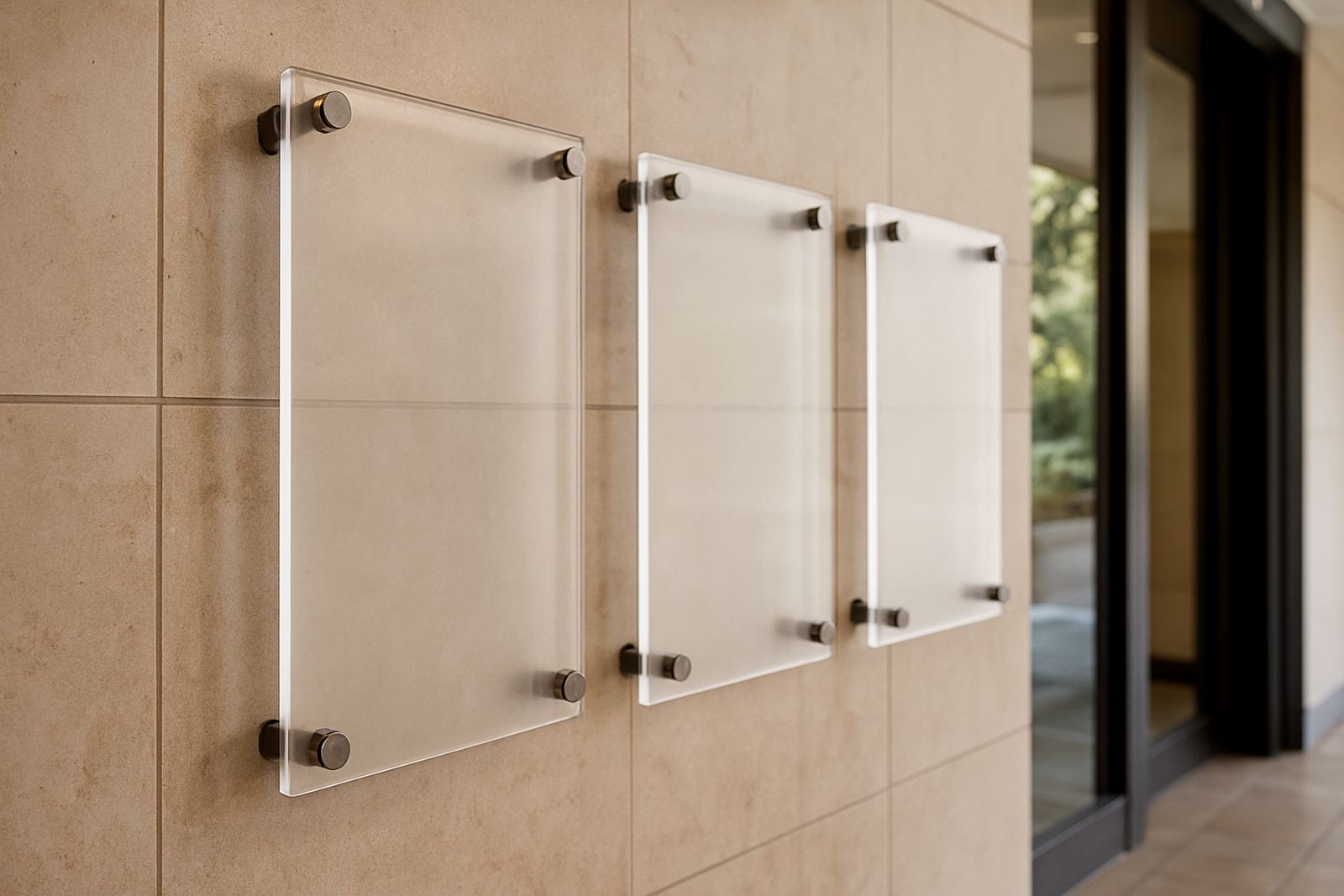
An acrylic face sign uses a clear or coloured acrylic panel as the visible front of the sign, usually with print, vinyl graphics or applied lettering on the surface. It gives a crisp finish that works well in foyers, corridors, tenant directories and boardroom entrances where the message must look tidy from a short viewing distance.
For internal branding, acrylic is a practical choice because it is lighter than glass, easy to cut to shape and available in a wide range of thicknesses. It can be flat mounted, stand off mounted or combined with brushed metal backing for a more formal look. In offices, clinics, estates and corporate parks, this type of sign often carries the logo, department name or wayfinding message without clutter.
Acrylic face signs are also useful where you want a consistent family of signs across several rooms. One reception sign can match door markers, floor directories and meeting room panels, which helps the whole space feel ordered. If the lighting is controlled and the wall surface is level, the finished result is sharp and easy to maintain.
- Suitable for logos, directional text and room identification
- Can be clear, frosted, coloured or backed with printed graphics
- Works well indoors and in sheltered outdoor areas
Sizes, thicknesses and finish options
Most acrylic face signs are made to order, so the size depends on the wall space and how far the message must be read. Small internal signs may start at 200 x 300 mm for room markers, while reception panels often range from 600 x 400 mm to 2000 x 1000 mm or more. Larger multi-panel directories can be built as modular sections to suit the available wall width.
Common material thicknesses are 3 mm, 5 mm, 8 mm and 10 mm. Thinner sheets suit lightweight mounting and smaller graphics, while thicker panels feel more substantial and resist warping better on larger formats. If the sign needs stand-off pins, edge polish or internal LEDs, the thickness is chosen to suit the fixing method and the overall look.
Finish options include gloss clear, frost, full colour print, rear-applied vinyl and routed shapes with polished edges. For a more premium presentation, brass or aluminium spacers can be used behind the panel. Where a softer effect is needed, frosted acrylic reduces glare from reception lighting and nearby windows. In coastal areas, the material choice and fixings need extra attention because salt in the air can mark cheaper metals faster than expected.
- Typical thicknesses: 3 mm, 5 mm, 8 mm, 10 mm
- Typical internal sizes: from 200 x 300 mm upward
- Mounting styles: flush, stand-off, framed or layered
Best places to use acrylic face signs
Acrylic face signs suit places where people need to understand a message quickly and the finish must remain clean. They are widely used in reception areas, corporate lobbies, doctors rooms, legal offices, retail stores, apartment entrances and commercial buildings. In developments and municipal buildings, they are often used for tenant boards, public notice points and room identification.
They also work well in places with controlled indoor lighting because the face reflects light neatly without looking heavy. On the other hand, if the sign will sit in full sun, near a hot roof space or in an area with strong dust movement, the mounting and material selection must be set up properly. Gauteng winter dryness and high UV exposure on north-facing facades can affect cheaper prints and adhesives, so the specification needs to match the site.
For multi-site branding, acrylic face signs offer repeatability. Once the size, thickness, colour and mounting detail are agreed, the same format can be used across branches in Sandton, Midrand, Randburg, Germiston, Pretoria or Centurion without changing the whole look each time.
- Reception branding and office directories
- Room names, department labels and floor markers
- Clinic signage, estate notices and tenant identification
Installation details, power needs and site conditions
Most acrylic face signs are installed with screw fixings, stand-off mounts, concealed brackets or metal frames depending on wall material and sign size. On drywall, the fix must be planned around the framing and anchor points. On brick or concrete, drill depth and plug type matter. If the wall is uneven, the sign may need spacers so it sits flat and does not twist over time.
Many acrylic face signs do not need power at all. If the sign includes internal illumination, edge lighting or an illuminated back panel, then a proper electrical supply is required and the route for cabling must be agreed before fabrication starts. For indoor signs in lobbies and corridors, the electrician and sign installer should coordinate on load points, isolators and access. No gas is needed for standard acrylic face signs.
Installation planning also needs to consider access. In tall foyers, stairwells and double-volume entrances, lifting equipment may be required. Where the sign is above a public area, a safe rigging plan and out-of-hours install can reduce disruption. We often plan these details during site surveys so there are no surprises on the day of fitting.
- Can be installed on brick, concrete, drywall and cladding
- Illuminated versions need electrical supply and cable route planning
- Safe access and working height must be confirmed before install
Care, cleaning and servicing over time
Acrylic stays presentable if it is cleaned with the right cloth and the right product. Use a soft microfibre cloth and a mild soap solution for general cleaning. Avoid abrasive pads, strong solvents and rough paper towel, because these can scratch the face or dull the surface. If a printed face is protected by laminate or clear cover film, the finish lasts longer in busy areas where people may brush past it.
In office buildings and public spaces, fingerprints, dust and cleaning spray residue are the main issues. Routine wiping is usually enough. For signs with stand-off mounts, the fixings should be checked at service intervals so vibration, movement or wall movement does not loosen the panel. In humid coastal areas, even stainless fixings need to be chosen carefully, and a bad fitting will show faster than expected.
If a sign includes lighting, servicing should include lamps, drivers, cable joints and heat build-up checks. A failed component can be replaced without changing the whole panel if the unit was built with maintenance in mind. That is why we normally plan the sign as a serviceable assembly, not just a flat board on a wall.
- Wipe with a soft cloth and mild soapy water only
- Avoid solvents, abrasives and hard scouring pads
- Check fixings and lighting components at service visits
Details to verify before ordering acrylic face signs
Before ordering an acrylic face sign, it helps to confirm the exact text, logo version, size, wall type and viewing distance. A sign that looks fine on paper may be too small once it is on a wide lobby wall, or too large for a narrow corridor. The message should be readable from the point where people first need it.
You should also decide whether the sign is to be flat mounted or stand-off mounted, and whether the face should be clear, frosted or fully printed. If the sign is part of a larger wayfinding system, check the colour rules and naming rules for consistency across all panels. A small wording change can save a lot of rework later.
For project work, we also look at wall condition, access, timing and any approval requirements from the building manager or municipality. If the site is a live office or occupied development, installation windows matter because staff, tenants and visitors still need access. Please make sure these points are settled before fabrication starts, it saves time and cost.
- Confirm exact wording, logo artwork and colour references
- Check the final size against the wall and viewing distance
- Agree on mounting method, lighting and access for install
Key facts
| Material | Acrylic sheet with optional printed, frosted or layered face |
|---|---|
| Typical thickness | 3 mm, 5 mm, 8 mm or 10 mm |
| Typical size range | From 200 x 300 mm to large lobby panels over 2000 x 1000 mm |
| Mounting options | Flush fix, stand-off spacers, concealed brackets or framed installation |
| Use case | Internal branding, directories, reception walls and room identification |
| Power or gas need | No gas required; power only needed for illuminated versions |