What a building name sign does on site
A building name sign is more than a label on a wall. It helps visitors find the right entrance, guides delivery vehicles, supports security control and gives the property a finished look from the road. For multi-tenant offices, apartment blocks, schools and public buildings, the sign also needs to work at a distance and still read clearly when you are standing at the gate.
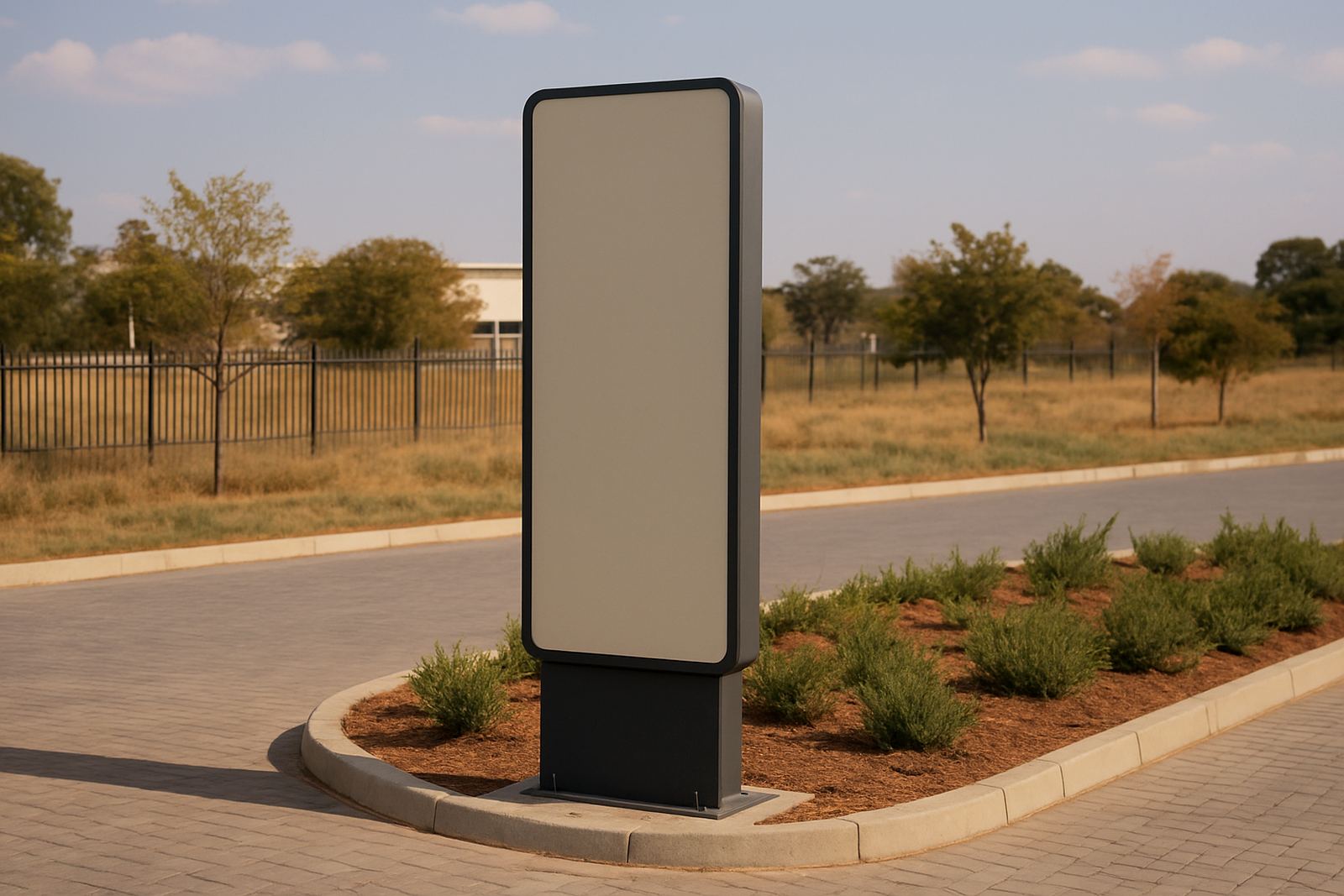
We specify building name signs for new developments and replacements on existing sites. That can include a freestanding pylon at the street edge, a wall-mounted face at the entrance, illuminated letters above a canopy, or a combination of both. In practical terms, the choice depends on setback, traffic speed, viewing angle, municipal rules and what the structure will take. A sign that looks fine on paper can fail once wind load, corrosion or poor visibility are factored in, so the engineering side matters just as much as the artwork.
Common formats, sizes and finishes
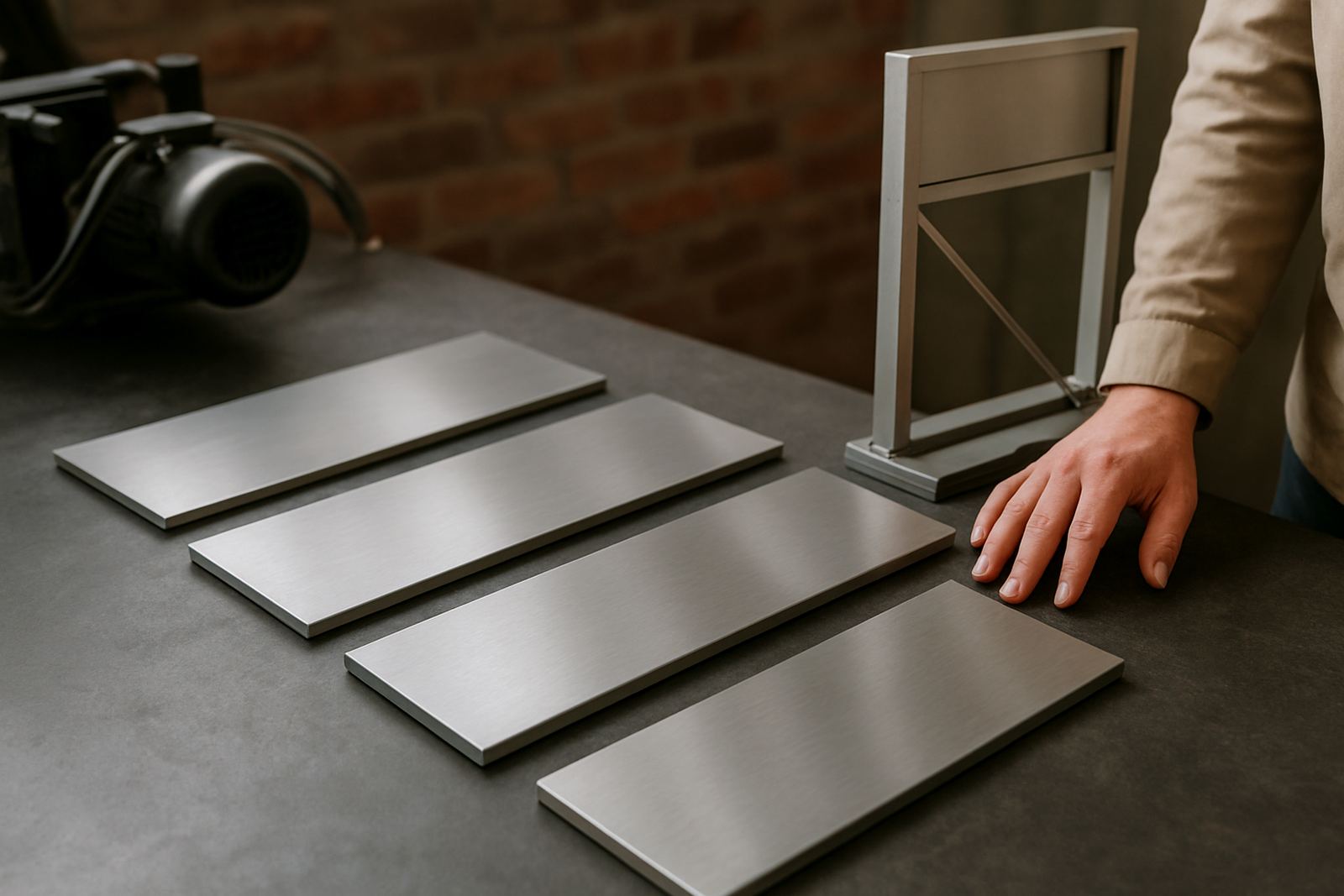
Building name signs are typically made in aluminium, stainless steel, Perspex, brass or a painted steel frame depending on the look and the environment. Coastal sites such as Durban usually need extra corrosion protection, while inland Gauteng properties often need strong UV resistance and good daytime contrast. Finishes can be brushed, polished, powder coated or face-lit, with letters either flat cut or built up in 3D.
- Flat cut letters: from 300 mm high for courtyard walls up to 1200 mm or more for roadside façades
- 3D letters: commonly 50 mm to 150 mm return depth, depending on viewing distance
- Wall signs: from 1,5 m wide for a small entrance panel to 8 m plus on larger developments
- Pylons and monuments: generally 2,4 m to 6 m high, subject to site conditions and approvals
- Illuminated faces: fabricated to suit LED modules, edge lighting or internal backlighting
For apartment and office buildings, a clean aluminium panel with routed lettering is often enough. For campuses and civic facilities, larger format signs with stronger contrast and optional illumination are usually easier to see after dark or during load-shedding.
Where this signage works best
We most often supply building name signs for office parks, sectional title blocks, mixed-use developments, schools, hospitals, churches, municipal buildings and logistics sites. They are also useful for estates and campuses where the name must be visible from more than one approach road. In areas like Sandton, Randburg and Centurion, the sign often has to carry a premium look without becoming too busy. In Germiston and Midrand, visibility from moving traffic is usually the bigger issue.
Before fabrication, we look at how people arrive and what they see first. That includes vehicle turning circles, gatehouse position, pavement width, wall space and whether the sign must be read by pedestrians, taxi traffic or vehicles at speed. If the property has more than one entrance, it may need a primary name sign and a smaller directional sign for service access, which keeps the whole site easier to use.
- Best for front façades, boundary walls, gatehouses and entrance columns
- Useful where GPS directions are not enough on their own
- Helps security teams and reception staff direct visitors faster
- Improves wayfinding on larger sites with multiple blocks or wings
Installation, structure and power needs
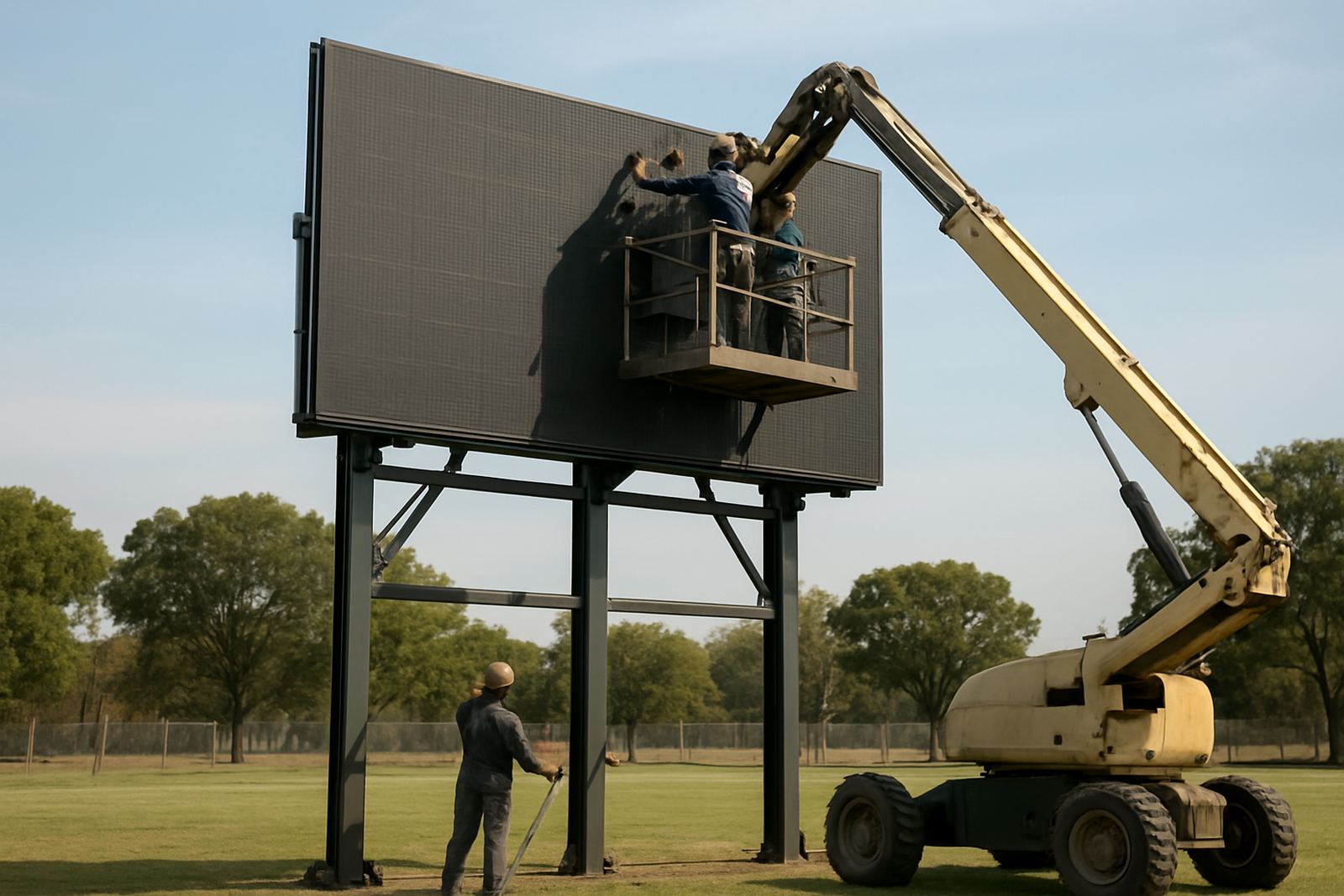
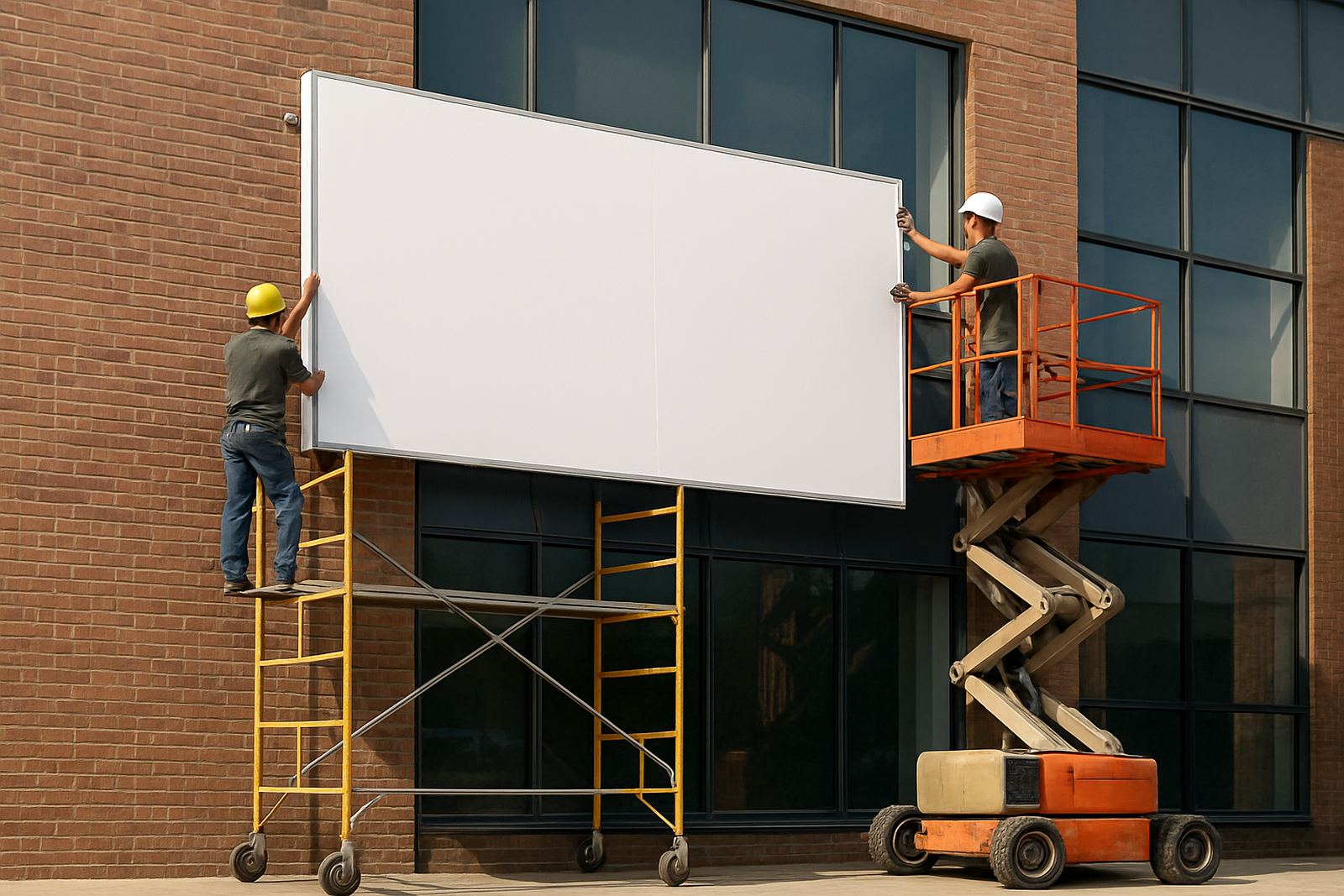
Installation depends on whether the sign is wall-mounted, free-standing or part of a larger entrance feature. Wall signs need proper fixings into brick, concrete or steel, not just surface screws. Freestanding signs require footings sized for the wind load and the soil condition on site. On exposed roads or elevated sites, the structural allowance becomes important very quickly, especially where a building sits in an open estate or near open ground.
Illuminated building name signs need a planned power supply and access for maintenance. We coordinate the electrical layout so the cabling, transformers and switchgear are positioned sensibly and can be isolated when needed. If the sign includes LED backlighting or internal illumination, it should be planned with an electrician from the start, not added later as an afterthought. In load-shedding areas, the client may also want the sign tied into backup power, especially where the building trades at night or receives visitors after dark.
Some sites need permits or approval support before work can start. That can involve the landlord, body corporate, developer, municipality or road authority. We assist with the submission side where required, because a sign that is too large, too bright or placed too close to a roadway can be delayed by non-compliance.
Maintenance in Gauteng weather and coastal air
Building name signs should be planned for long service life, not just day-one appearance. Gauteng sun can fade low-grade prints and chalk cheaper paints, while dust and winter dry air can build up on horizontal surfaces. In Durban and other coastal areas, salt in the air can attack unprotected metal fixings and electrical components much faster than many owners expect.
Routine care is simple but it needs to be scheduled. A basic cleaning with non-abrasive detergent, a check on fasteners and a quick inspection of illumination every few months will prevent small issues from becoming expensive repairs. If the sign is illuminated, we also recommend annual checks on the driver gear, wiring terminations and sealing around entry points. Where a sign is mounted on a high façade or over a busy entrance, access planning for cleaning and servicing should be part of the original spec.
- Clean faces with mild soap and soft cloths, not solvents
- Check for loose fixings after strong wind or heavy rain
- Inspect illumination and power supply on a scheduled basis
- Re-seal any cracked joints before moisture gets inside
Checks to make before you order 3D letters
When ordering a building name sign, start with the viewing distance and the exact mounting position. A sign that sits close to the road needs larger lettering and stronger contrast than one viewed from a courtyard. You should also confirm the final building name, any unit number or sub-name, the preferred finish, and whether the sign must match existing branding on site. If the property has tenants, make sure the wording is signed off early so there are no late changes once fabrication has started.
It is also worth checking the practical constraints. Measure the available wall width and height, note any pipes, joints, expansion gaps or cabling, and find out whether the wall is concrete, plastered masonry or cladding. For illuminated signs, confirm where power can be brought in and who is responsible for switching and maintenance. On new developments, ask whether the sign must be compatible with future phases, because that can affect size and layout now.
Deep3 handles signage strategy, site surveys, design development, material specification, structural coordination, approval support, fabrication management, installation management and handover. That gives the client one clear line of control from the first measure-up through to final commissioning.
Key facts
| Product type | Building name signs for wall, façade, entrance and freestanding applications |
|---|---|
| Typical materials | Aluminium, stainless steel, Perspex, brass, painted steel and composite panels |
| Typical sizes | Wall signs from 1,5 m wide; pylons and monuments from 2,4 m to 6 m high |
| Lighting options | Non-illuminated, face-lit, edge-lit or internal LED illumination |
| Mounting options | Mechanical fixings, stand-off brackets, frames, footings and fascia mounts |
| Service area | Modderfontein, Johannesburg, Gauteng and projects across Africa |