
What stainless name plates are used for
Stainless name plates are metal identification plaques made for clear legibility and long service outdoors or indoors. They are commonly used for building names, tenant directories, donor acknowledgements, heritage markers, memorial plaques, plant room labels and commemorative signage where paint or printed vinyl may not be the best long term choice.
For municipal sites, schools, estates and corporate campuses, stainless gives a neat finish that holds up well in heat, dust and rain. It also suits entrances that need a more formal appearance, especially where the plate must sit beside stone, glass, timber or brushed aluminium. If the job needs anti tamper fixings, directional text or a layered face with cut letters, we can specify the construction to suit the location and budget.
- Suitable for indoor foyers and exterior walls
- Works for single plates, donor boards and multiple wayfinding markers
- Can be brushed, polished, etched or colour filled
Sizes, finishes and fixing options
These plates are made to order, so the size can be matched to the text, logo and viewing distance. Smaller plates are often used for room identification or donor names, while larger panels work better for entrance walls, memorial gardens and building fascias. For legibility, we usually allow enough margin around the copy so the plate does not feel cramped.
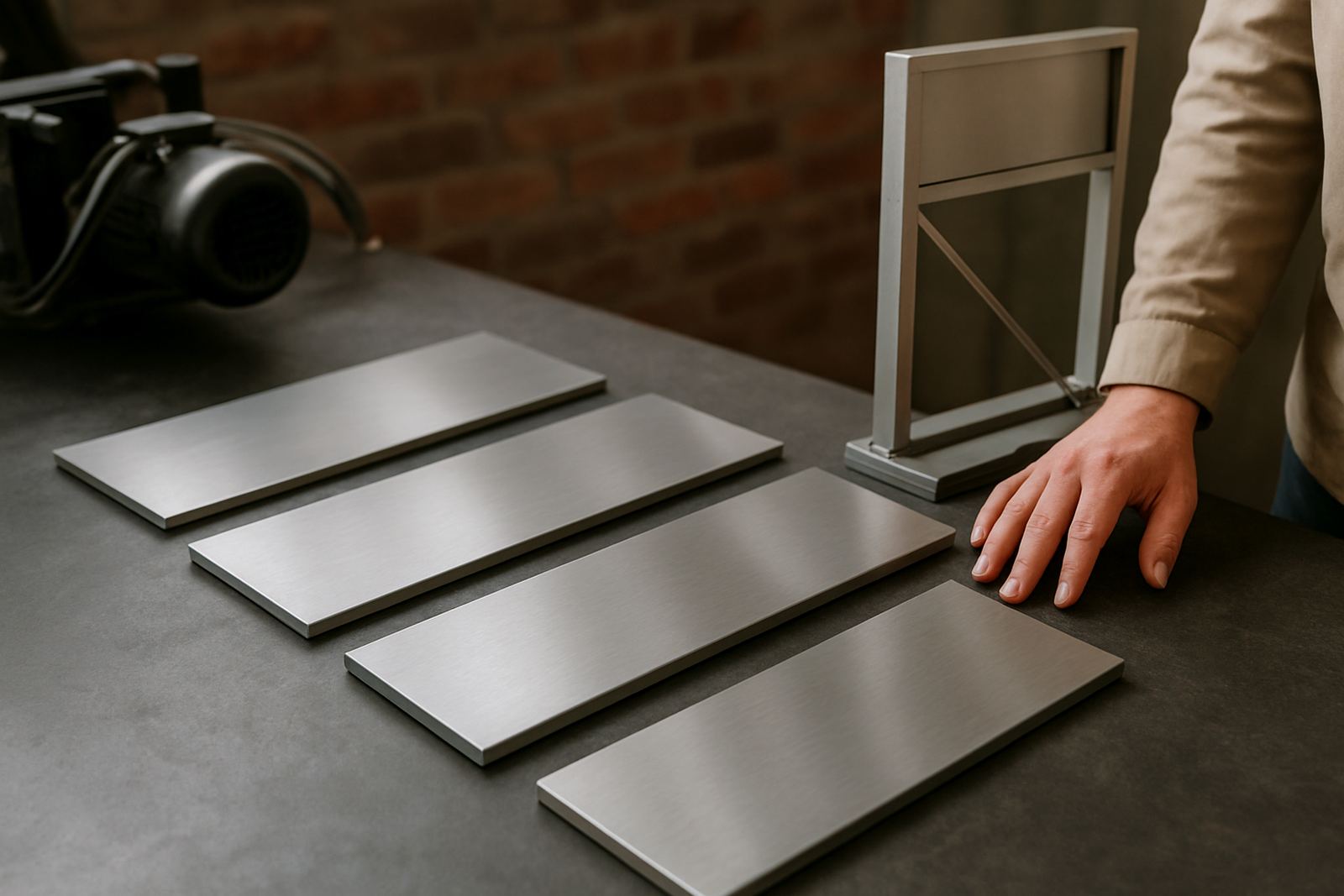
Typical plate thickness is 1.6 mm to 3 mm stainless steel, with thicker sections used where the plate must stay rigid over a wider span. Edges can be square cut, chamfered or folded into a shallow return depending on the look and the mounting surface. Finishes include brushed grain, mirror polish and bead blasted matt. Lettering can be laser cut, etched, engraved or raised with spacer details. Colour infill is possible, but the best choice depends on contrast and how much maintenance the site can manage.
- Common sizes: 150 x 100 mm up to 1200 x 600 mm, and larger if the layout allows
- Thickness: 1.6 mm, 2 mm or 3 mm, depending on span and mounting method
- Mounting: concealed studs, standoff caps, screws, adhesives or a framed panel
Where stainless plates suit best
Stainless is a good choice where a plate must withstand weather, cleaning and regular public contact. In Johannesburg and Pretoria, it handles UV exposure and dust well. Near the coast, it still performs properly if the grade and finish are selected with salt in mind. In high traffic areas like hospital entrances, office lobbies, schools and retail centres, it gives a hard wearing surface that does not rely on print film.
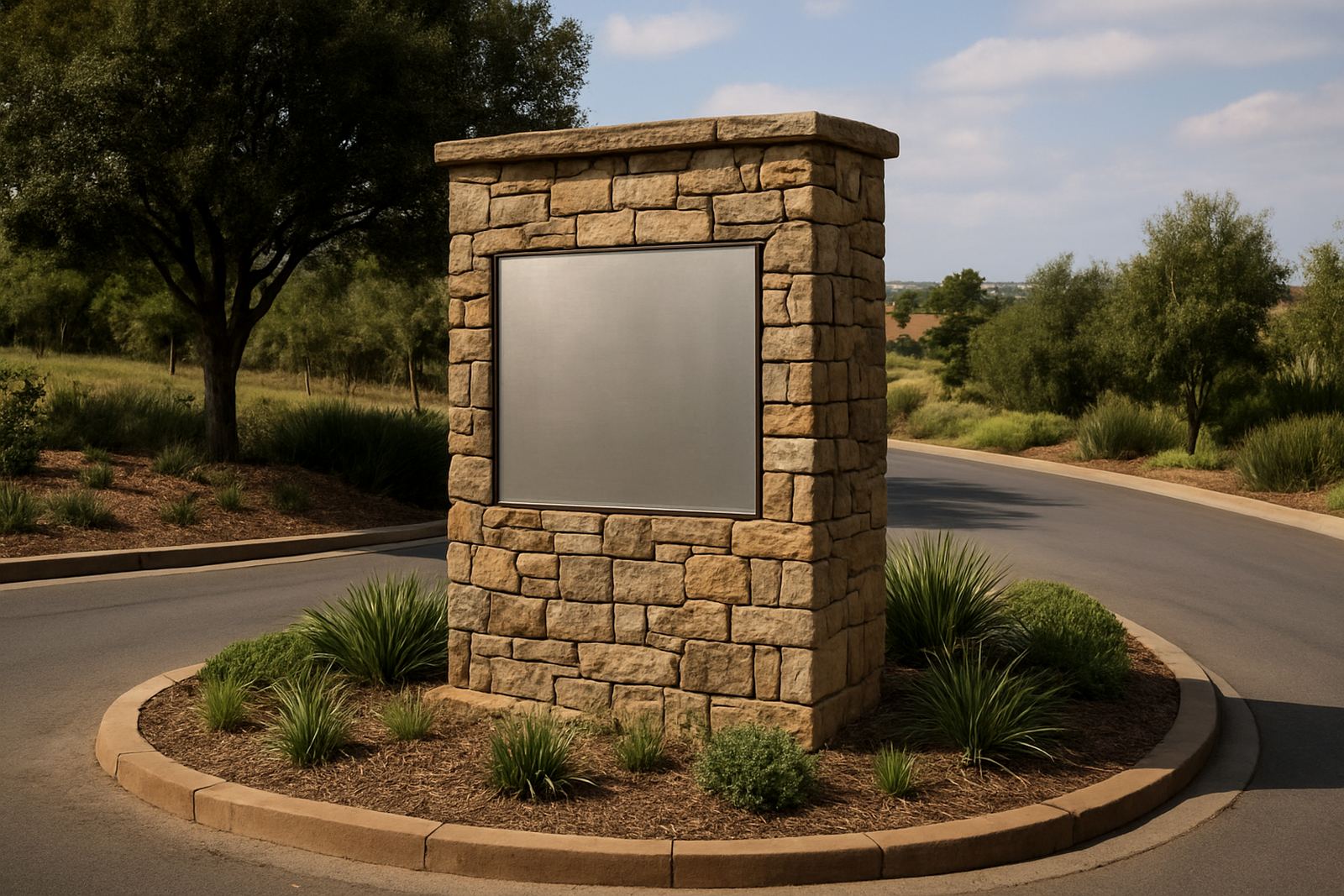
It is also a sensible option for donor walls and commemorative pieces where the message should remain readable for many years. For developers and municipalities, stainless plates can be coordinated with other signage on the site so the entrance, internal directories and road facing markers follow the same visual standard. On larger projects, we often combine stainless with aluminium, Perspex or cut vinyl for a mixed system that keeps cost under control while still looking finished.
- Building identification and entrance markers
- Donor walls, memorial plaques and ceremonial signs
- Plant rooms, safety labels and asset identification
- Schools, hospitals, estates, civic buildings and office parks
How installation is planned and what it needs
Installation depends on the wall type, the size of the plate and the level of weather exposure. On brick, concrete or masonry, concealed studs or mechanical fixings are usually preferred for a tidy finish. On cladding, stone veneer or glass backed panels, we check the substrate first so the fasteners do not compromise the surface. For very exposed sites, we may specify standoff spacing to allow drainage and reduce staining behind the plate.
Stainless name plates do not need power or gas. If the design includes edge lighting, backlighting or a nearby illuminated feature, then power requirements are handled separately and coordinated with the electrical contractor. We also factor in access for maintenance, especially on multi storey buildings, boundary walls and areas that need cherry picker or scaffold access. In Gauteng, dust build up and water marks are usually the main issues, so fixing detail matters as much as the artwork.
- The name plate works without any power or gas connection.
- Electrical supply is only required if you add lighting
- Substrate checks are essential before drilling or adhesive fixing
Care, cleaning and long term servicing
Stainless steel is low maintenance, but it still benefits from the right cleaning method. A soft cloth, mild soap and clean water are normally enough for most sites. Abrasive pads, strong acids and harsh chlorides should be avoided because they can dull the finish or mark the surface. On coastal projects, routine cleaning matters more because airborne salt can leave a light film on exposed metal.
For donor walls and memorial plaques, a regular inspection is useful to check fasteners, sealant edges and any signs of movement. If the plate has painted infill or a polished finish, it should be cleaned gently so the lettering stays crisp. Where a site has heavy dust, sprinkler overspray or air pollution, a planned service interval helps keep the plate readable and presentable without unnecessary replacement. A quick wipe every few weeks is often enough, with a fuller check once or twice a year.
- Use mild soap, water and a soft cloth
- Avoid steel wool, strong solvents and abrasive cleaners
- Check fixings and sealants during routine site maintenance
What to confirm before ordering a plate
The more accurate the brief, the better the finished plate will fit the site. We usually start with the exact wording, the required dimensions, the mounting surface and whether the plate is for indoor or outdoor use. If there are logos, crests or special typography, those files need to be supplied in a usable format so we can set the artwork correctly. For large projects, it also helps to know if the plate must match an existing signage family or a municipal standard.
Before production, it is worth checking the viewing distance, the amount of text, the preferred finish and whether anti theft fixings are needed. If the plate will be installed in a public area, we also look at edge safety, corner treatment and access for cleaning. For sites in Modderfontein, Sandton, Midrand, Randburg, Germiston, Pretoria, Centurion and Durban, our team can factor in local conditions from the start, which avoids last minute changes on site and saves time.
- Final wording and spelling, including names and dates
- Required size, orientation and mounting surface
- Finish, fixing method and whether the plate must match existing signage
Key facts
| Material | Stainless steel, typically 1.6 mm to 3 mm thick |
|---|---|
| Finish options | Brushed, polished, bead blasted or colour filled |
| Fixing methods | Stud mounting, screws, standoffs or adhesive mounting |
| Typical use | Building names, donor walls, memorials and wayfinding labels |
| Power or gas | Not required for the plate itself |
| Service areas | Johannesburg, Gauteng and projects across Africa |