What Printed Vinyl Graphics Are Used For
Printed vinyl graphics are pressure-sensitive films printed with text, logos, patterns or full-colour images, then applied to a prepared surface. They are commonly used on windows, internal walls, aluminium composite boards, hoardings, vehicle panels and temporary event backdrops. For a business in Gauteng, they are a good option when you need fast branding without committing to permanent cladding or painted artwork.
At Deep3 Signage Consultants, we specify printed vinyl for campaigns that need clean graphics, accurate colour matching and a tidy finish on site. It can be cut to shape, laminated for added protection, or combined with frosting and cut lettering when privacy and visibility need to work together. In busy centres such as Sandton, Midrand and Pretoria, the right vinyl choice matters because heat, dust and strong sunlight can affect both appearance and life span.
- Suitable for short term promotions, seasonal campaigns and permanent identification
- Works on glass, metal, painted plasterboard, PVC and smooth board surfaces
- Available as solid print, contour cut lettering, partial coverage or full coverage wraps
Sizes, Finishes and Material Options
Printed vinyl graphics are usually made to measure, so the usable size depends on the panel, window bay or wall area on site. Smaller graphics may be cut as individual decals, while larger campaigns can cover entire shopfronts or board runs of several metres. Where accuracy is important, we survey the surface first to check for joints, sealant lines, window film, rivets, uneven plaster or dust build-up that could affect application.
Common material choices include monomeric vinyl for shorter term use, polymeric vinyl for better stability, and cast vinyl for shaped surfaces or more demanding applications. For outdoor exposure, a UV laminate is often added to help with colour retention and scuff resistance. Frosted effects can be printed or cut, and perforated window vinyl can be used where you want outward visibility from inside. On a construction site in Modderfontein or Germiston, we often recommend a heavier specification if the graphic must handle wind, grit and constant handling.
- Typical thicknesses range from 80 micron to 150 micron depending on use
- Laminates can be gloss, matt or satin for glare control
- Perforated film is useful for shopfront windows and glazed entrances
- Anti-graffiti or heavier duty overlaminates can be specified for exposed areas
Where Printed Vinyl Suits Best
This product suits places where the surface is smooth and the message may need to change from time to time. Retail stores use it for sales, opening notices and window branding. Offices use it for glass partitions, reception graphics and privacy bands. Developers use it on hoarding boards and show unit boards. Municipal teams often use it for temporary notices, site safety messaging and event branding, provided the surface prep and approvals are done properly.
It also performs well in areas with frequent changeover, such as marketing activations, sports events and roadshow displays. In Durban, coastal humidity can affect edges if the surface is not fully dry, while inland sun and heat can cause lesser films to age quicker on west-facing glass. That is why we match the material to the location, not just the artwork. The same graphic can behave very differently on a shaded office facade and on a fence line facing afternoon sun.
- Retail windows and internal mall-facing glass
- Site hoardings, development boards and temporary fences
- Office glass, meeting room partitions and directional panels
- Short term event branding and seasonal promotions
Installation, Power Needs and Site Preparation
Most printed vinyl graphics need no electrical power at all, which makes them straightforward for quick installations and after-hours work. The exception is when the graphic forms part of a light box, illuminated sign or digital display surround, where electrical coordination becomes part of the job. For standard vinyl work, the main requirement is a clean, dry, smooth surface and enough access to position the graphic correctly.
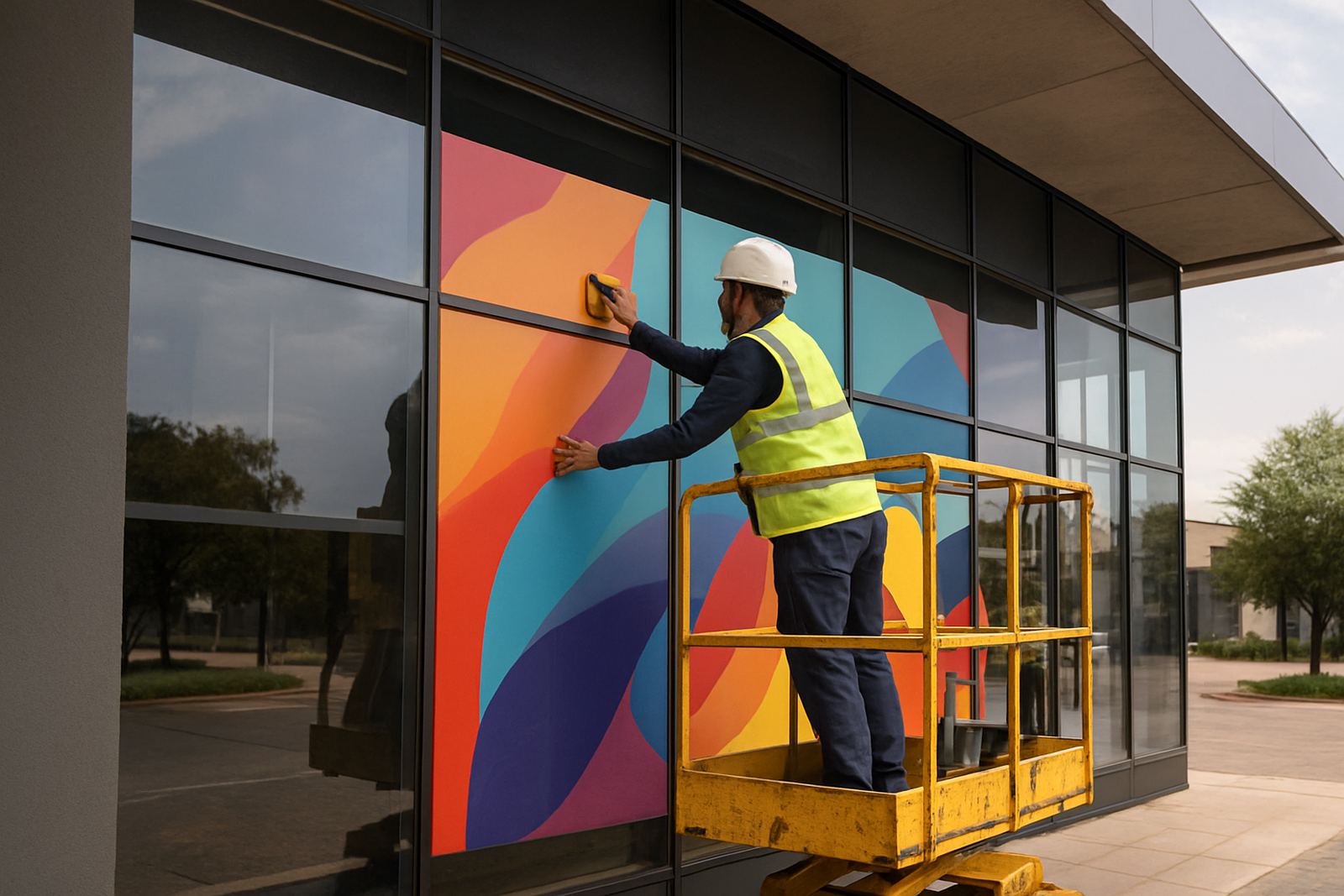
Before installation we check surface condition, temperatures, access height and whether lifting equipment or traffic control is needed. If the work is above ground floor level, or close to roads and pedestrian routes, additional rigging, barriers or approval steps may apply. On some sites in Centurion or Randburg, the real issue is not the vinyl itself but the access window available after trading hours. For boards and hoardings, we confirm fixings, board condition and the wind load exposure before we start.
- No power required for standard printed vinyl installation
- Clean surface, correct temperature and dry conditions are important
- Scaffolding, cherry picker or rope access may be needed for high-level work
- Traffic control or municipal approval may apply for roadside installs
Care, Cleaning and Expected Service Life
Printed vinyl graphics should be cleaned with a soft cloth, mild soap and water, then dried with a clean lint-free cloth. Strong solvents, abrasive pads and high-pressure washing too close to the edge can shorten the life of the graphic. In a dusty environment, regular light cleaning is better than leaving grime to harden on the surface. For retail windows in busy areas, weekly wipe-downs are usually enough.
Service life depends on the film type, orientation and exposure. Internal graphics can last for years with very little change. Exterior graphics on shaded surfaces generally perform better than those on direct western sun. Edges, corners and joints need the most attention, especially where doors are opened often or where rain and coastal moisture can work into the adhesive. If the site is in a high-traffic area, plan for inspection after the first few weeks so any lifting can be handled early.
- Use mild soap and a soft cloth only
- Avoid scrubbing pads, blade scraping and harsh chemicals
- Check edges after heavy rain, strong wind or recent cleaning
What To Check Before You Order
The best results come from clear artwork, correct measurements and a proper understanding of the surface. If you are ordering printed vinyl graphics, check whether the finish needs to be full colour, translucent, frosted or solid blockout. Also confirm whether the graphic is temporary or intended to stay in place for a longer period. That affects the vinyl grade, laminate choice and the installation method.
You should also decide whether the graphic must be viewed from one side only, whether it needs to line up with existing glass joints, and whether any visibility or privacy requirement is involved. For example, a shopfront in Sandton may need bright outward-facing branding while still allowing natural light into the store. A municipal board may need approved wording, readable sizing and durable edges that will not fail during load-shedding related shutdowns or repeated site access. If the job is on a live site, confirm working hours, access rules and any permit or body corporate restrictions before production starts.
- Confirm exact measurements and note any obstacles, joints or fixings
- Choose the finish: gloss, matt, frosted, perforated or blockout
- Check if the graphic is for indoor or outdoor use, and for how long
- Prepare artwork in the correct colours, wording and logo placement
- Confirm access, approval requirements and installation timing
How We Handle Printed Vinyl Projects
Deep3 Signage Consultants manages printed vinyl as part of a wider signage workflow, from site survey and material specification through to fabrication coordination and installation management. That means we can align the vinyl with the rest of the signage package, whether it is part of a temporary campaign, a new site opening or a phased development rollout across Gauteng. We also plan for maintenance and replacement, so the job can be updated without unnecessary downtime.
For clients working across Johannesburg, Pretoria, Midrand and Durban, this approach helps keep the graphics consistent from one branch or site to the next. If a window graphic is only needed for a few months, we say so. If the site needs heavier-duty film because of heat, dust or public contact, we specify that too. The aim is to fit the material to the real conditions on site, not just the artwork on paper.
Key facts
| Product type | Custom printed vinyl graphics for windows, walls, boards and temporary branding |
|---|---|
| Common substrates | Glass, painted walls, aluminium composite, PVC sheet, hoarding board and smooth metal |
| Material thickness | Typically 80 micron to 150 micron, depending on application |
| Finish options | Gloss, matt, satin, frosted, perforated and blockout |
| Outdoor use | Short to medium term exterior use available with UV laminate |
| Installation needs | Clean dry surface, correct access equipment if elevated, no power for standard vinyl installs |