
Menu boards built for fast ordering and clear pricing
A good menu board does one job properly: it helps customers choose quickly without crowding the queue. For restaurants, forecourts, coffee counters, takeaway shops and drive-through lanes, the board must hold up to daily cleaning, kitchen heat, dust and long trading hours. We specify menu board systems that suit the site, the brand palette and the amount of information that needs to change each month or week.
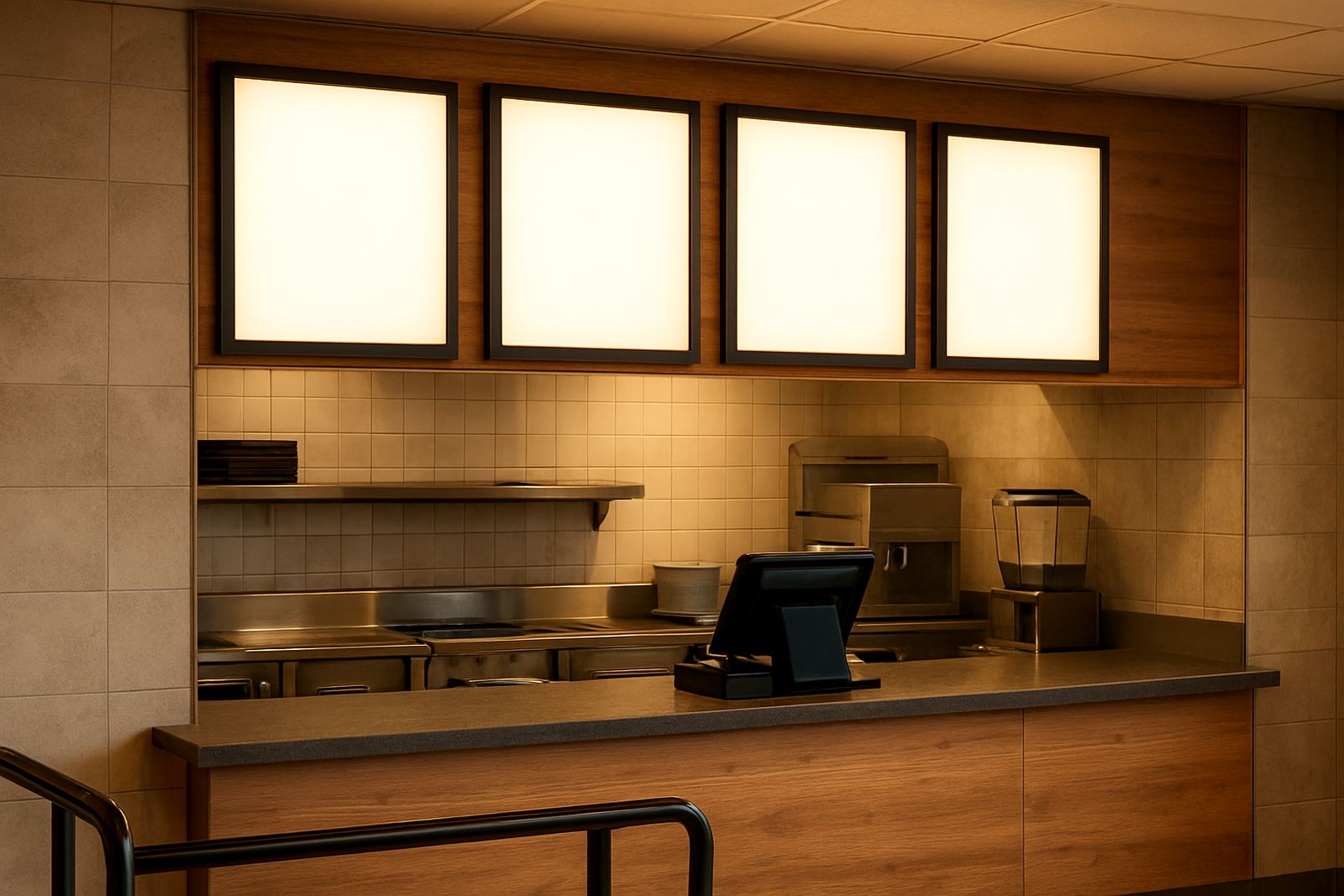
Static menu boards are best where pricing stays fairly steady. Digital menu boards suit sites with breakfast, lunch and evening menus, promotions, or changing meal combinations. In many food service sites, a mixed system works well: fixed brand panels with digital sections for items and prices. That keeps the installation tidy and avoids overloading the customer with too much copy.
For Gauteng sites, glare control matters. At a west facing drive-through or a bright forecourt, the viewing angle, face finish and brightness level all affect legibility. In Durban and other coastal areas, we also allow for humidity and salt air when choosing fixings and housings.
Options, sizes and viewing distances that actually work
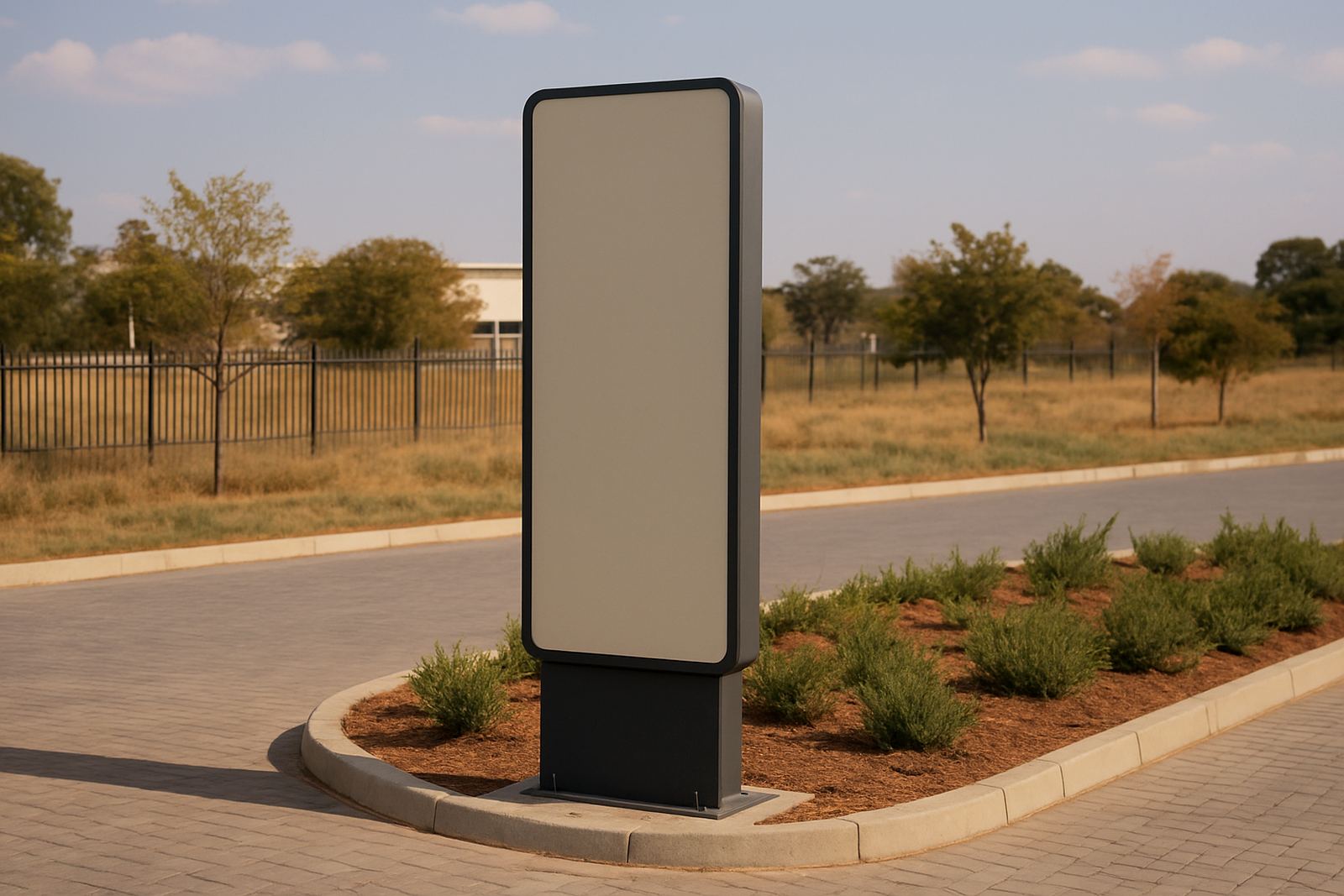
Menu boards are usually planned around the distance from the customer to the sign, and the amount of text shown on each panel. A small café counter might need a compact overhead board, while a fast food drive-through needs larger panels that stay readable from a moving car. We can specify single face boards, double sided boards, wall mounted displays, suspended frames, and weather rated drive-through units.
- Small counter boards: around 600 x 900 mm to 1200 x 900 mm for limited items and specials
- Medium menu systems: 1800 x 1200 mm to 2400 x 1200 mm for layered menu categories
- Large drive-through boards: custom built from 3000 mm wide upwards, depending on lane layout
- Digital screen modules: typically 43 inch, 49 inch, 55 inch or similar commercial sizes
- Panel materials: printed vinyl, acrylic, aluminium composite, Perspex, brass or mixed finish details
Letter height, icon size and spacing need proper planning. If the menu is too dense, customers read slower and staff spend longer explaining options. If it is too sparse, the board looks unfinished and wastes valuable counter space. We balance layout, contrast and production method so the board remains practical for daily service.
Where menu boards suit best across Gauteng and the coast
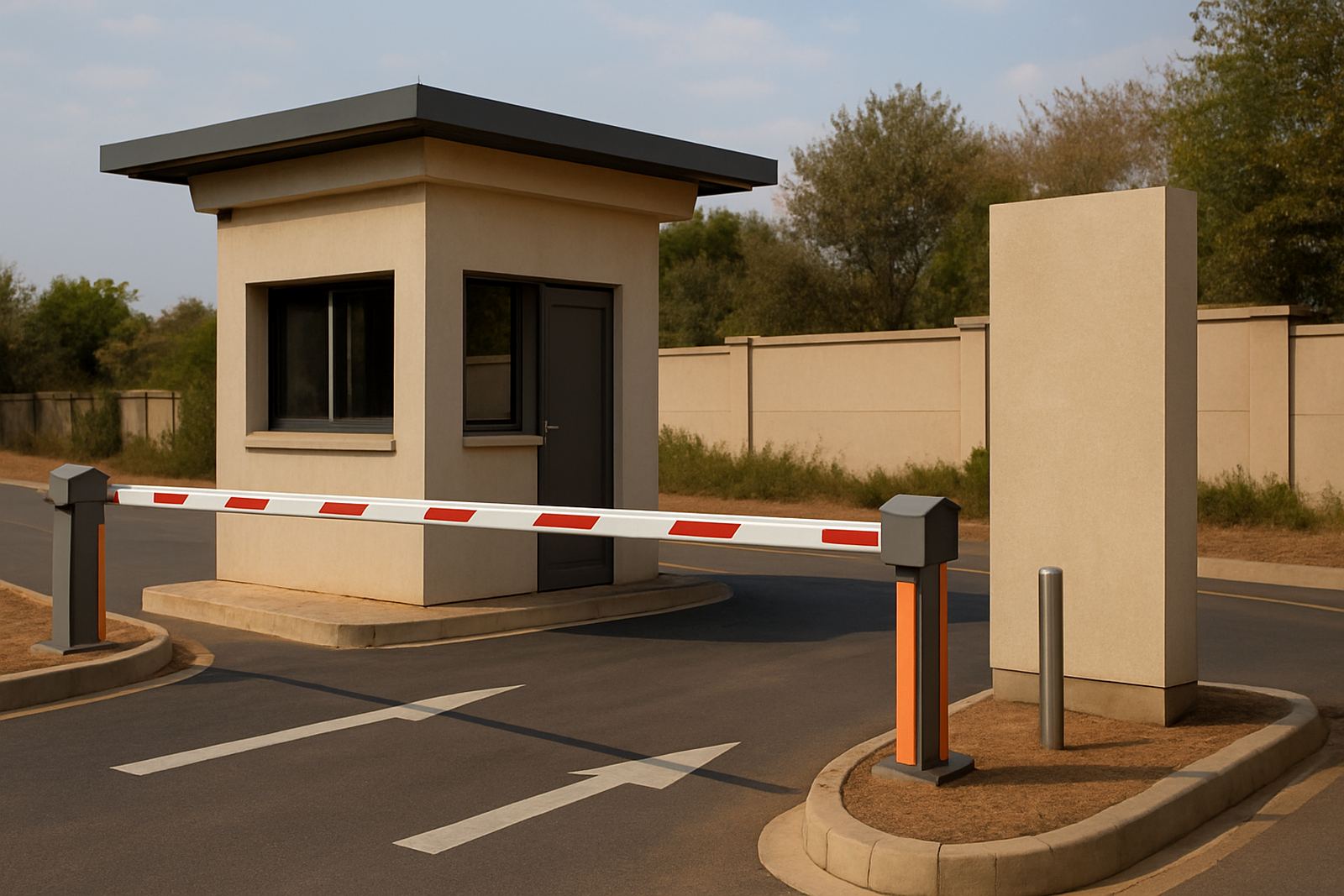
Menu boards suit quick service counters, food courts, school canteens, petrol station shops, hospital cafeterias, corporate canteens, franchise outlets and highway stops. They also work well for seasonal kiosks and pop-up food traders, where the menu needs to stay visible in busy conditions. For drive-through lanes, the board must be placed where drivers can slow down and read it without stopping awkwardly before the speaker or payment point.
In Modderfontein, Sandton, Midrand, Randburg, Germiston, Pretoria and Centurion, we often plan for indoor reflections, ceiling heights and existing service routes. In Durban, we take care with sealed housings and corrosion resistance. When the site is exposed to wind or dust, the frame and mounting points need proper engineering so the board stays steady and does not chatter in strong gusts.
- Indoor counters with standard lighting and frequent price changes
- Drive-through lanes with speaker points, payment windows and overhead canopies
- Food courts where multiple brands need consistent presentation
- High traffic forecourts that need clear menu updates and strong visibility
- Sites with load-shedding backup where screen power needs careful planning
Power, installation and integration for digital boards
Digital menu boards need a clean power plan, stable signal routing and proper heat management. Screens are generally mounted to steel or aluminium support frames, with cable routes planned behind wall linings, inside canopy structures or through service channels. We coordinate with the site team, the electrician and the shopfitter so the final result is neat and serviceable.
For a digital system, allow for mains power at each screen position, isolated circuits where needed, and backup power planning if the site must keep trading during load-shedding. Some sites also need a data connection or local media player cabinet. If the menu is changing remotely, the control point must be secure and easy for the operations team to access. For outdoor drive-through boards, weather sealing and thermal control become just as important as the face graphics.
Static boards need less electrical work, but they still need sound fixing points and a proper install sequence. We check wall strength, canopy structure, ceiling support or freestanding base framing before manufacturing starts, because a board that is too heavy for the structure creates avoidable problems later.
Care, cleaning and servicing that keeps the board readable
Menu boards work hard. Finger marks, cooking vapour, dust and cleaning chemicals can all dull the face over time. Printed panels should be cleaned with mild soap and a soft cloth. Avoid abrasive pads and strong solvents, especially on gloss acrylic or printed overlay films. Digital screens need gentle cleaning, ventilation checks and occasional brightness adjustment to keep the display even across the day.
For outdoor or semi exposed sites, we recommend regular checks on brackets, cable entries and seals. Coastal humidity can affect exposed metal parts if the finish is not specified properly. In busy sites, loose trim or failing backlighting should be attended to quickly so the menu stays legible and staff are not left explaining prices one by one at rush hour.
- Weekly wipe down of faces, bezels and visible trim
- Monthly check of fixings, cabling and screen ventilation
- Quarterly review of pricing updates, print condition and image quality
- Annual inspection of structure, support frame and any weather seals
Details to verify before ordering acrylic face signs
Before ordering menu boards, it helps to confirm exactly what must be shown, who will update it, and how often the content changes. The wrong panel count or the wrong viewing angle can make a well made board difficult to use. If the menu includes prices, combos, allergens or promo blocks, those details should be accounted for at the design stage, not after fabrication has started.
We also recommend confirming the site measurements, the available power, the mounting surface, the visibility from the queue, and whether the menu must work in daylight or after dark. If you have a drive-through lane, the position of the order speaker, payment window and collection point matters too. For a multi-site rollout, we can keep the size and layout consistent across branches while allowing for local menu differences where needed.
- Menu content, number of items and expected update frequency
- Indoor, outdoor or semi outdoor exposure
- Power points, data access and backup power needs
- Mounting surface type and structural support
- Customer viewing distance from counter or lane
- Whether the system must allow future expansion
Key facts
| Product type | Static and digital menu board systems |
|---|---|
| Typical sizes | 600 x 900 mm up to custom drive-through formats |
| Material options | Printed vinyl, acrylic, aluminium composite, Perspex and metal trim |
| Display options | Fixed graphics, backlit panels or commercial digital screens |
| Use cases | Counters, drive-through lanes, food courts and forecourts |
| Service scope | Design, fabrication, installation, power coordination and maintenance planning |