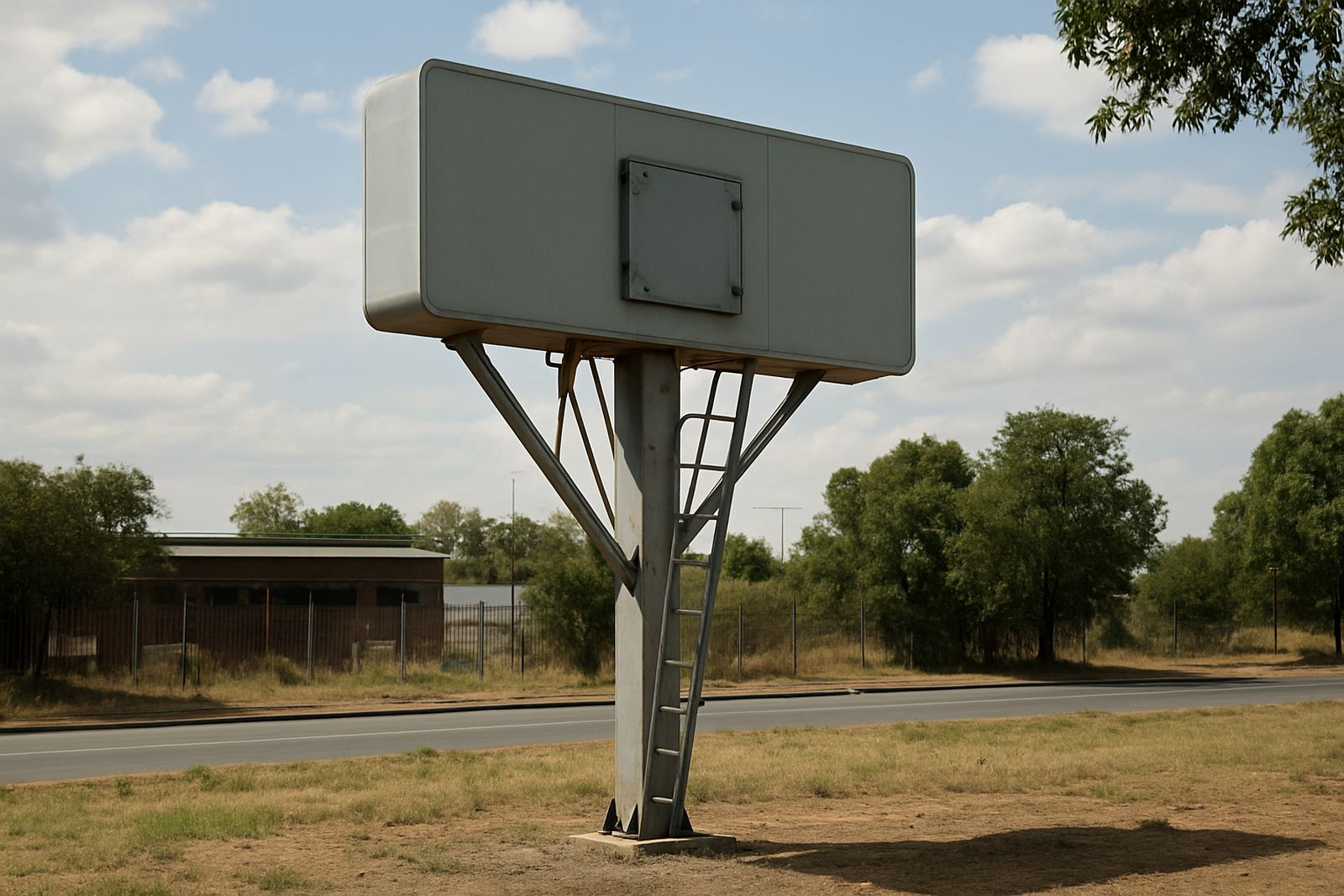
Why access should be part of the first sign brief
Maintenance access is the space, structure and method that let a technician reach lamps, drivers, cabling, fixings and control gear without unsafe climbing or unnecessary dismantling. For illuminated signs and LED video screens, this is not a small detail. It affects the design, the steelwork, the cable routes, the approvals and the time needed to do routine servicing.
In Johannesburg, Pretoria and Sandton, many signs sit above entrances, on façades, on pylons or at roof level where access is limited by traffic, planting, glass, canopies or tenant areas. In Durban and other coastal areas, salt air adds extra wear. If the access route is not planned from day one, a simple lamp change can become a full cherry picker callout, with downtime and higher labour costs.
Good access planning also helps with compliance. Municipal inspectors, landlords and site safety teams want to know how the sign will be maintained, who will access it, and how the public will be protected during servicing. The best time to answer those questions is during the design stage, not when the first fault shows up.
The access questions to answer before fabrication starts
Before any aluminium, Perspex, steel or LED module is cut, the project team should agree on how the sign will be reached, isolated and worked on. This is especially important for signs with internal lighting, side-lit fabrication or video screens with power and data equipment behind the face.
- Can the sign be reached from a roof, cat ladder, balcony, maintenance walkway or mobile platform?
- Is there enough clearance for a technician to open the face, remove modules or replace a driver?
- Will the sign need front access, rear access, or both?
- Is there a safe isolation point for power and control equipment?
- Can maintenance happen without entering tenant space or closing a public area?
- Will the access method still work after other trades add cladding, ducting or security items?
If these questions are left too late, the design often has to change after approval, which adds time and cost. A practical sign design should make room for hands, tools and safe working positions, not only for the finished look.
How to design illuminated signs so they can be serviced safely
For light boxes, fabricated 3D lettering and internally lit panels, access should be built into the body of the sign. That may mean hinged faces, removable letter backs, front opening mechanisms or service panels hidden on the rear side. It may also mean leaving enough internal space for wiring bends, drivers and ventilation so heat does not build up inside the cabinet.
Heat, dust and moisture are the main enemies of illuminated signage. In Gauteng, dust from traffic and construction can settle in joints and on fans. In coastal towns, humidity can affect terminals and seals. A maintenance access plan should allow the technician to clean, inspect and reseal the unit without damaging the finish. On larger signs, the access route should also allow for replacement of individual components, rather than forcing a full strip out.
Where signs are mounted on walls with limited rear access, front access design is usually more practical. Where the sign is on a freestanding structure, a rear door or internal platform may be better. The right answer depends on the site, the height and the frequency of servicing.
- Keep service panels large enough for safe hand access, not just visual access.
- Allow space for ladder footing, platform positioning or harness work where needed.
- Specify corrosion resistant fixings for coastal and high humidity areas.
- Provide labels for power isolation, driver locations and circuit numbers.
LED screen maintenance: what must be accessible
LED video screens need more than a visible mounting frame. They need access to power supplies, data senders, control equipment, cooling space and the rear of the screen for module replacement. If the screen is outdoors, rain ingress protection and drainage must be matched with a servicing method that does not compromise the enclosure. A screen that is awkward to reach often stays faulty for longer, which is a problem when it carries retail messages, municipal notices or event content that must stay live.
Load-shedding and local power interruptions make access even more important. When power returns, systems may need checks on communication cards, controllers and surge protection. If a screen is located in a difficult spot, a technician may need additional time on site, which can mean longer downtime. That is why access ladders, service hatches, lockable doors and safe working clearances should be part of the specification, not added later.
For larger screens, think about how a module, controller or fan will be replaced. If a service crew must remove several panels just to reach one failed component, the screen will be more expensive to maintain over its life. Good access reduces risk, shortens faults and keeps the site tidy during repairs.
A practical site survey checklist for maintenance planning
A proper site survey should do more than measure the sign face. It should record the surrounding conditions that affect maintenance access, safety and future repair times. This is one of the most useful parts of the project, because it reduces surprises once the sign is live.
- Measure the mounting height and note the best access route.
- Check for obstacles such as awnings, trees, pipes, cables, lighting and security fencing.
- Record floor loading or roof access limits where platforms may be used.
- Identify where power isolation can be done safely.
- Confirm whether the site needs night work, traffic control or municipal permission.
- Note weather exposure, especially wind, rain splash and coastal humidity.
- Check if maintenance can happen without blocking the public entrance or tenant access.
This checklist is useful for developers, municipalities and brands that manage multiple sites across Gauteng, Durban and other parts of Africa. It creates a clear record of how the sign will be kept in service, which helps with budgeting and handover.
Approval, safety and handover details that save time later
Maintenance access is also an approval issue. Some sites require proof that the sign can be serviced safely, with the right fixing details and safe working method. This may include structural coordination, method statements, site rules and traffic management where the sign sits near a road or pedestrian area. For road-facing signs and pylons, the service plan should show how the work will be done without creating danger to motorists or pedestrians.
At handover, the owner should receive clear notes on access points, isolation locations, recommended service intervals and any special tools needed. The maintenance team should know which panels open, which fixings are reusable, and which parts should be checked after storms or power interruptions. If the sign uses mixed materials such as aluminium, brass and Perspex, the care notes should also mention cleaning agents and seal inspections so the finish lasts longer.
A good handover is not only about handing over the sign. It is about making sure the next person can maintain it properly, without guessing how it was built.
What to specify in the scope so access is not forgotten
When a project brief includes maintenance access from the start, the build is more practical and the operating cost is easier to manage. This applies to one-off retail fascia signs as much as it does to large municipal screens or freeway billboards. The scope should state how access will be achieved, who is responsible for it, and what parts need to remain reachable after installation.
Include the access requirements in the same discussion as materials, lighting and structure. If the site is in Modderfontein, Midrand, Randburg, Germiston, Pretoria, Centurion or Durban, the local conditions will influence the solution. Wind, humidity, dust, security controls and service frequency all play a part. A sign that can be opened quickly, cleaned and repaired will usually stay in better condition and cost less over time.
When access is specified upfront, the result is simpler to service and easier to keep live. That is the real value. Not just a better-looking sign, but one that can be reached, checked and fixed when needed.