
What Safety Documents We Need Before Site Work Starts
For active construction sites, shopping centres, industrial yards and municipal projects, we first confirm what the principal contractor, site agent or facilities team needs from us. That usually includes access permits, a task-specific method statement, risk assessments, proof of competence and any site induction records. If the job is in Johannesburg, Pretoria, Durban or further afield, the format can differ a little, so we match the pack to the site rules rather than sending a one-size-fits-all file.
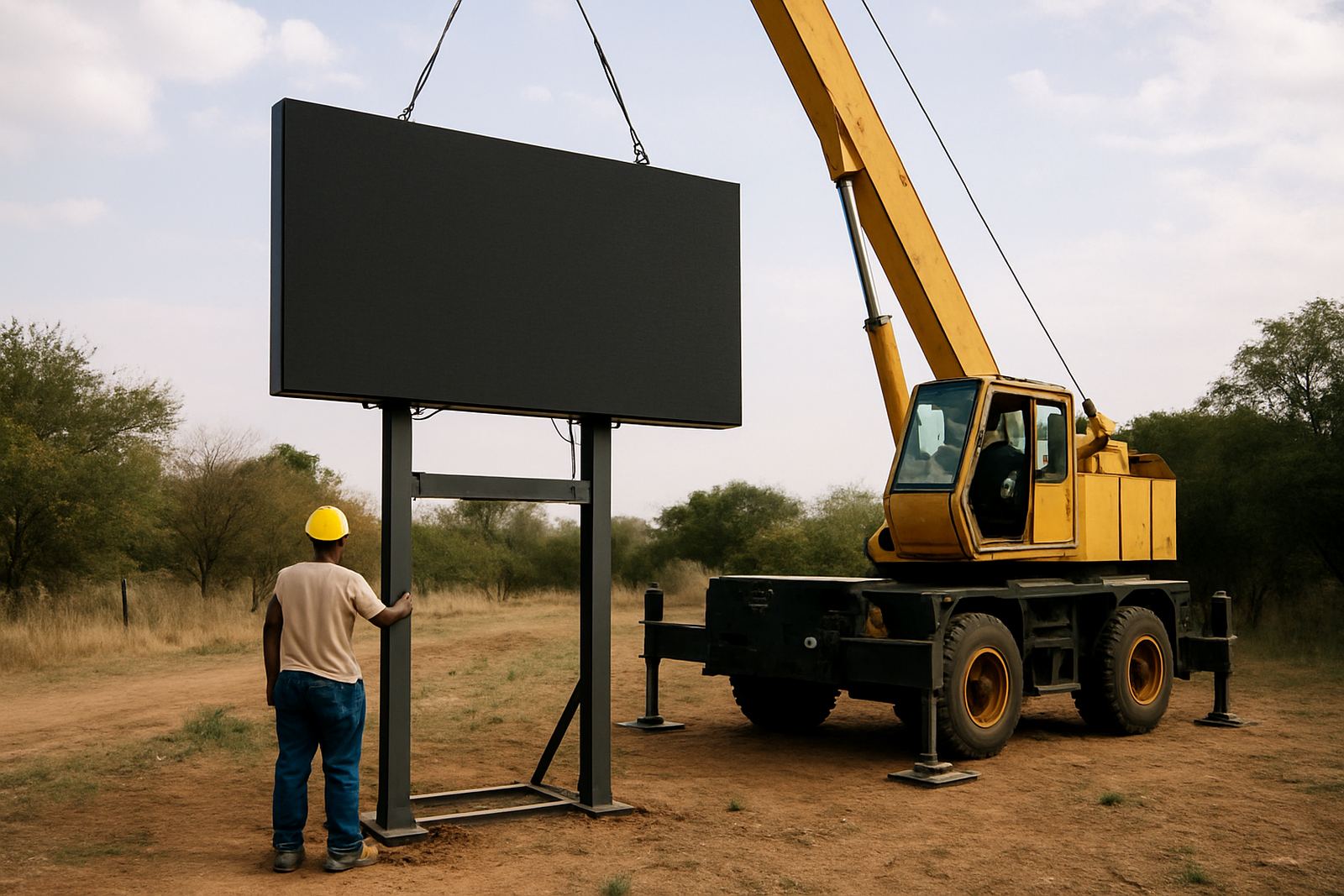
Our team checks the scope before anyone travels. If the job involves drilling into a facade, working at height, lifting a pylon section or bringing in a crane for a billboard install, the safety file must cover those activities clearly. It saves time at the gate and keeps the project moving.
- Access permits and induction requirements
- Method statements for installation or removal
- Risk assessments for lifting, working at height and electrical interfaces
- Team competency and rigging documentation
- Traffic management notes where public areas are affected
How We Prepare a Site-Specific Method Statement
A good method statement should explain the job in plain language. We set out the sequence of work, the equipment to be used, who is responsible for each step, and what happens if conditions change on the day. That may include wind limits for crane work, isolation procedures for electrical connections, and control measures for busy pedestrian routes. On a windy Highveld afternoon or during a wet coastal morning, those details matter.
We also include the practical items that sites ask about but often get missed: delivery timing, off-loading points, barricading, PPE, waste removal and the lift plan where needed. If the job includes LED screens, we add the electrical interface and access arrangement for future maintenance so there is no confusion later.
- Scope of work and sequence
- Plant, tools and access equipment
- Hazards and control measures
- Emergency response and stop-work triggers
- Sign-off points before handover
Access Permits for Factories, Malls, Municipal Sites and Developments
Different sites ask for different permits. A factory in Germiston may need vehicle clearance, fire register checks and a safety file sign-off. A retail centre in Sandton may require contractor induction, working hours approval and public-area protection. Municipal work can add local authority permissions, traffic accommodation and proof of compliance for road-facing signage. We help coordinate the paperwork so your crew arrives ready, not waiting at security.
For projects across Gauteng and into the rest of Africa, we confirm the site contact, access window and any local requirements before mobilisation. That includes identifying whether the work is inside an occupied building, on a live road reserve, or in an area with controlled loading bay access. If there is a delay we can usually resolve it early rather than on the day.
- Contractor access permits
- Vehicle and delivery approvals
- Hot work or electrical work authorisations
- After-hours or weekend access approvals
- Public protection and exclusion zone requirements
Working at Height, Lifting and Rigging Controls
Signage installation often means working off ladders, access platforms, scaffold or lifting gear. For 3D lettering, illuminated signs, road signs, pylons and billboard frames, the lifting and rigging plan must be specific. We coordinate the equipment list, lifting points, weather checks and the team structure before anyone goes up. If a screen is being installed, the same discipline applies because the panels, brackets and power connections need careful handling.
Our project engineer and site rigging coordinator check the build against the approved method so the install sequence suits the structure on site. Where a municipal road sign is involved, we also consider lane closures, pedestrian controls and clear sight lines. The aim is simple: no guesswork, no unnecessary stoppages, and no unsafe shortcuts.
What Clients Should Send Us Early
The fastest way to prepare the right pack is to send the key site details as soon as the project is confirmed. We use that information to build the documentation around the actual scope, not assumptions. If there are changes to the programme, access route or site rules, tell us before mobilisation so we can update the method statement and permit list.
- Site address and contact person
- Project scope and installation date
- Any contractor induction requirements
- Photos of the work area if available
- Special hazards such as live traffic, services or restricted access
For occupied sites, a few photographs and a sketch can make a big difference. They show where vehicles can turn, where lifting can happen, and whether the crew will need to work around tenants, residents or operations staff.
After Approval: Keeping the File Current on Site
Once the documents are approved, we keep them aligned with the job until handover. If the scope changes, the lift plan changes, or the weather forces a revised installation sequence, the file should be updated before work continues. That applies to signage maintenance as well, not only new installs. A good safety file should reflect what was actually done on site, not only what was planned on paper.
We also help with project handover records, especially where a future maintenance team will need access to a light box, LED screen, pylon or facade sign. Clear documents now can prevent delays later when the client needs repairs, inspections or a replacement component.