
Start with sightlines, not just a size on paper
When clients ask for a pylon sign, the first question is not the face size, it is where the sign will be read from. On Johannesburg roads, visibility changes fast from one approach lane to another, and a sign that works on a main arterial may be too small for a set-back site or too high for a tight entrance. We start with the actual viewing distance, traffic speed, turning radius and whether the sign must be read by cars, delivery trucks or pedestrians.
For retail parks, fuel sites, logistics yards and municipal facilities, the right pylon height usually depends on the boundary line, the street level and nearby trees, walls or overhead services. In Sandton or Midrand a sign may need extra height to clear street furniture. In coastal or windy inland areas, the structure may also need heavier steel and a deeper footing. The aim is simple: the sign must be legible before the driver passes the entrance, not after.
- Measure the distance from the kerb to the likely reading point.
- Check for trees, poles, substation equipment and building lines.
- Confirm whether the sign faces one road or two directions.
- Allow for night reading if the site operates after dark.
Choose a height that matches the road, not the ego
Pylon signs can be modest at a business park entrance or tall enough to carry several tenant names on a busy corridor. The right height is a balance between visibility, municipal rules and the look of the property. Going taller than necessary adds steel, excavation and cost, and it can create approval problems if the sign sits inside a servitude or near a road reserve. Going too low means the sign is hidden by traffic, hedge lines or parked vehicles.
As a guide, smaller sites often suit a low to mid-height pylon with a single panel or simple logo block. Larger developments may need a multi-tenant structure with separate name strips and enough space for future tenant changes. If the site is exposed to strong wind, especially on open plots around Gauteng or in high-rainfall coastal zones, the structure needs to be checked as a whole, not only for height but for sway, base plates and anchor design too.
- Low pylon: suitable for short approach distances and slower traffic.
- Mid-height pylon: common for retail parks and office entrances.
- High pylon: used where the sign must compete with busy road conditions.
- Multi-tenant pylon: planned for easy panel updates as tenants change.
Foundations and steelwork must be sized for the site conditions
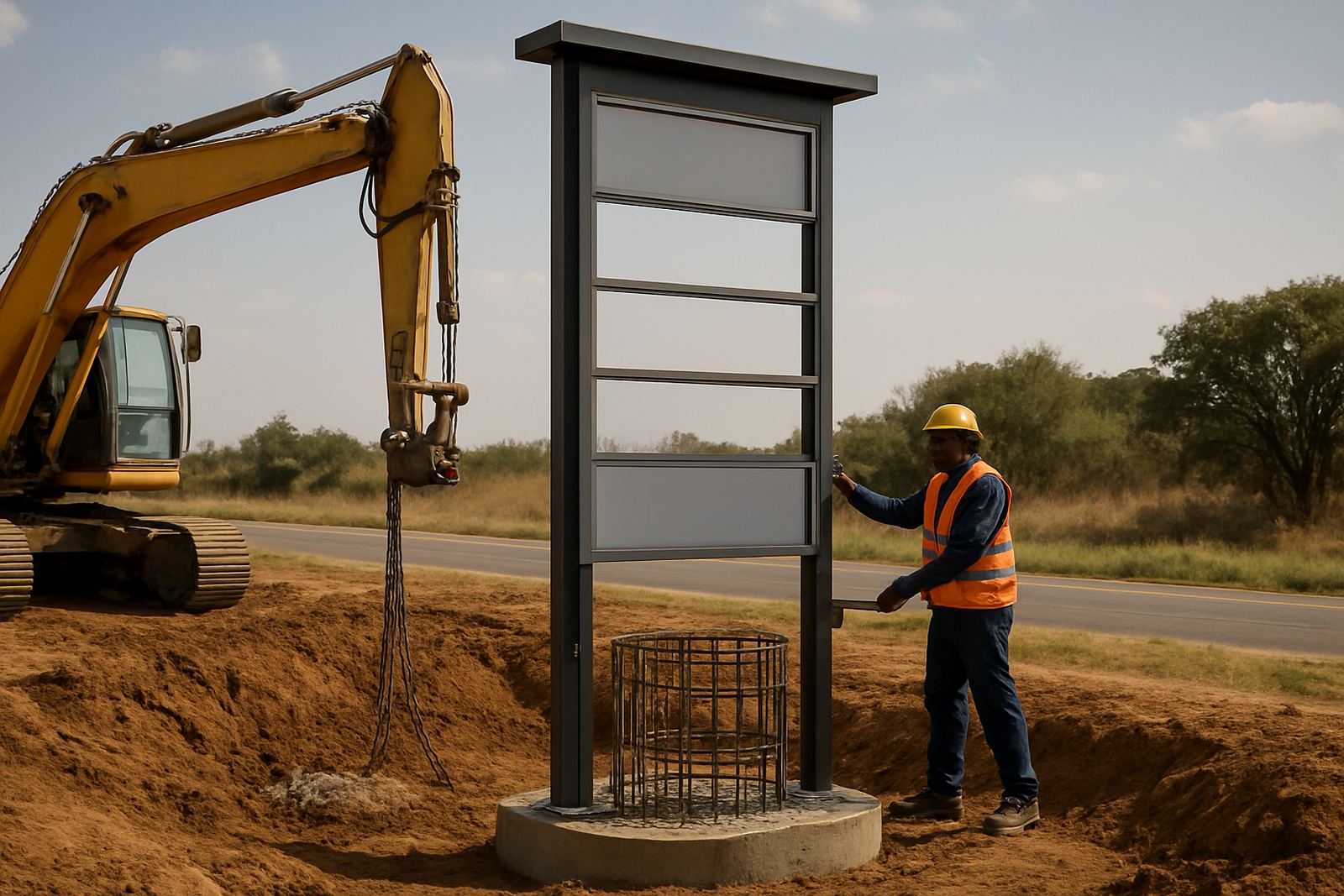
The part people do not see is often the part that keeps the sign standing. A pylon sign needs a proper structural design, footing detail and fixing schedule based on soil, wind load and the size of the cladding. In Modderfontein and surrounding areas, we often have to work around existing services, retaining walls, stormwater lines and hardstand surfaces. In older sites, the ground can also be uneven or filled in, which affects the footing depth and reinforcement.
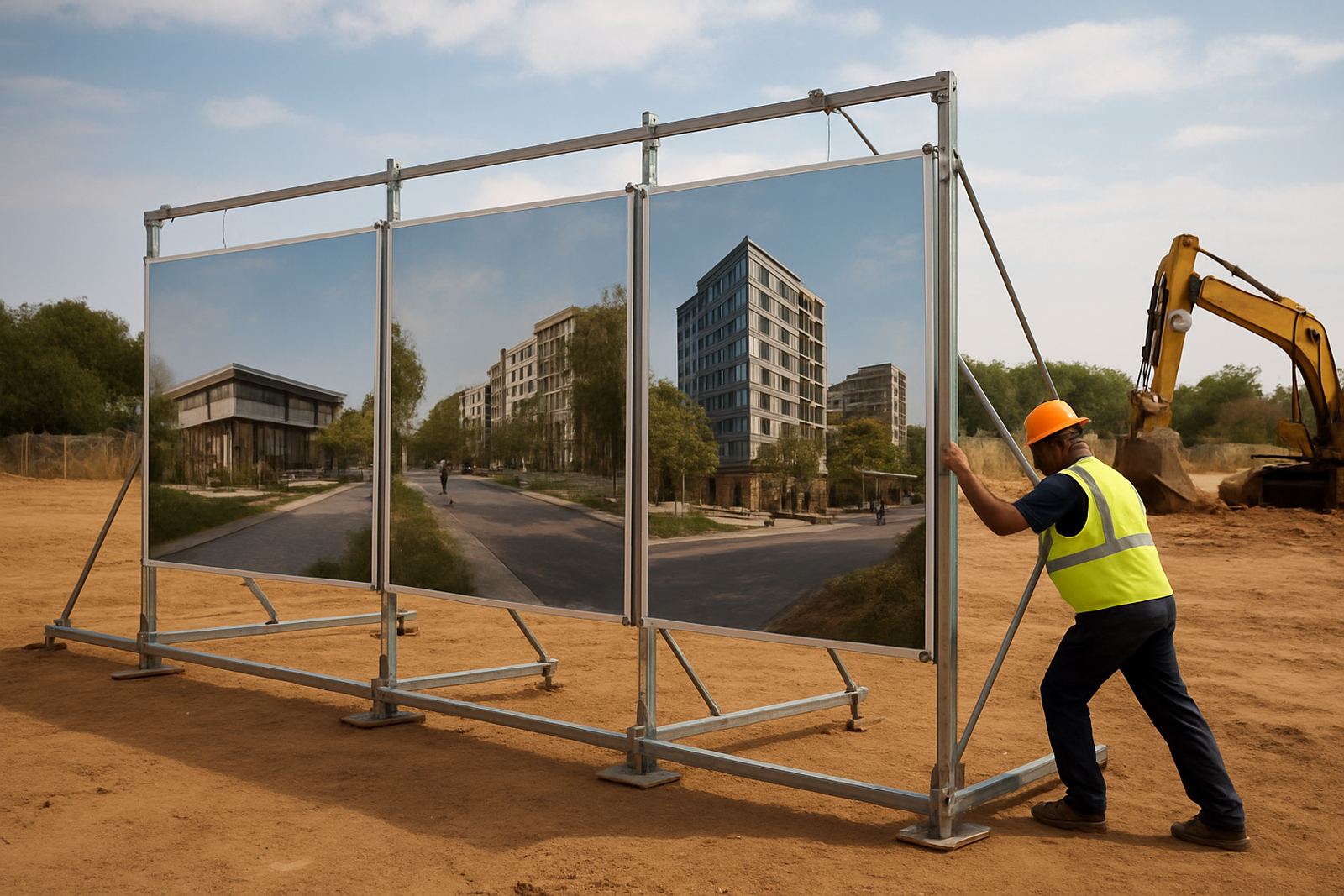
Before fabrication starts, the engineer should confirm the base design and the contractor should know how the footings will be poured, cured and tested. A rushed foundation can lead to cracking around the base, misalignment or movement over time. That becomes expensive later, especially if the site is near a busy road and repairs must be done after hours. Good planning at this stage also makes installation faster and safer.
- Confirm soil conditions before the footing is set out.
- Check underground services and any servitudes.
- Allow for anchor bolts, access panels and maintenance clearance.
- Plan drainage around the base so water does not sit against the structure.
Plan the face layout for easy tenant changes
Many pylon signs fail not because they are poorly built, but because nobody planned for the next tenant. A shopping centre, office park or industrial estate may change names and occupiers several times over the life of the sign. If the face layout is fixed too tightly, every small change turns into a costly rebuild. A better approach is to design the pylon with replaceable panels, consistent module sizes and access that allows a technician to work without dismantling the whole sign.
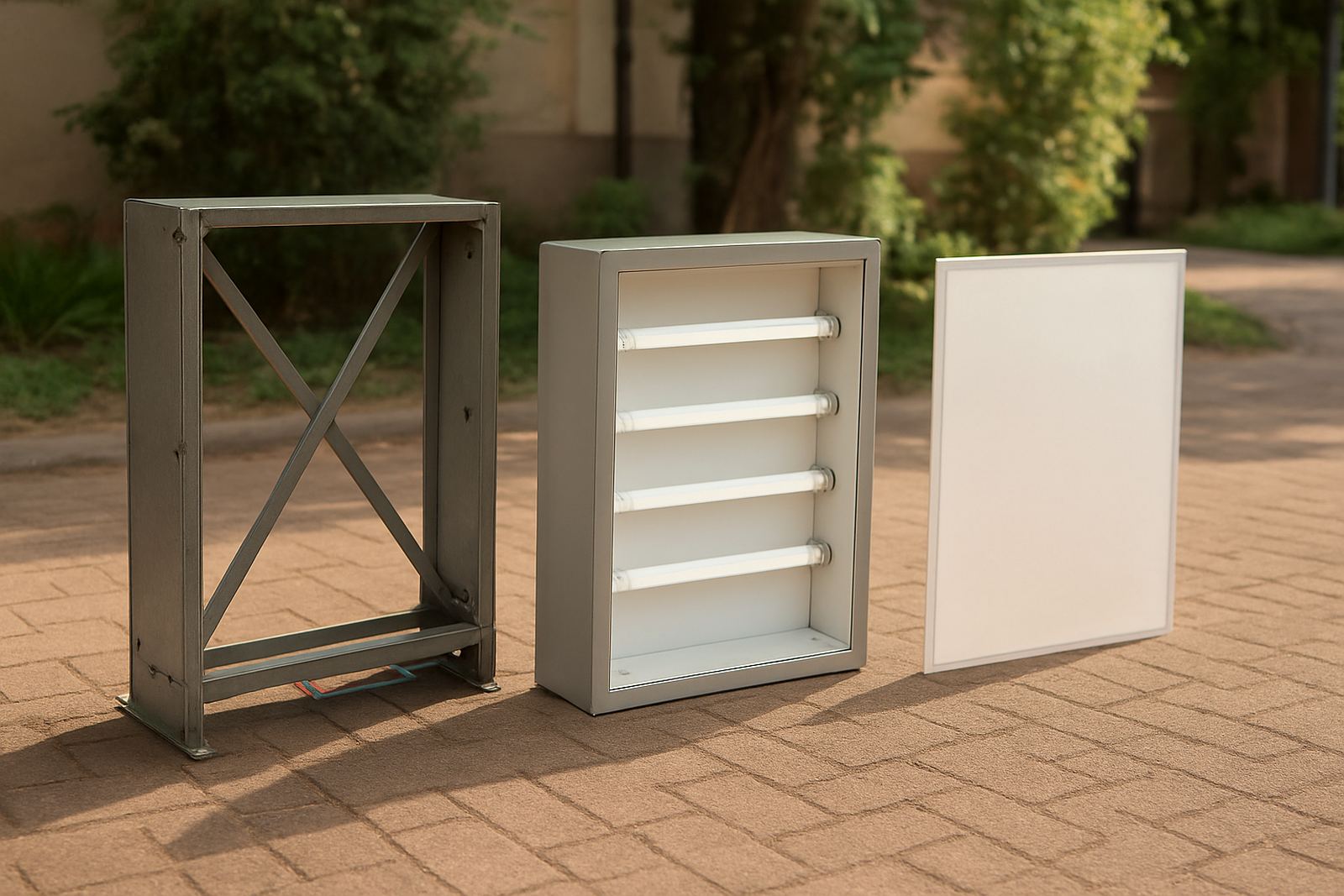
Material choice matters here. Aluminium is often used for clean, durable faces. Perspex or similar plastic panels can work for illuminated sections, while routed lettering or applied vinyl suits simpler nameplates. Brass or other metal finishes can be used where the site needs a more formal appearance. The right finish depends on the brand, the budget and how much maintenance the client is prepared to do over the years.
- Use standard panel sizes wherever possible.
- Keep tenant names easy to update without reworking the structure.
- Leave room for future logos or additional wayfinding arrows.
- Match the finish to the site, not only the head office colour.
Visibility planning for day, night and load-shedding conditions
A pylon sign must read well in sunlight, rain and low light. For illuminated signs, the internal lighting design needs to suit the panel depth and the colour of the faces. If the sign includes LEDs, the brightness should be balanced so it is visible but not harsh to drivers at night. On sites affected by load-shedding, the client must decide whether the sign should stay dark, switch to backup power or keep only essential sections lit. That decision affects wiring, control gear and operating cost.
For developers and municipalities, visibility planning also includes angle of approach, letter height and contrast. A pale logo on a pale face will disappear in midday glare. A dark face with strong lettering may work better. On roads with fast traffic, the message should be short and direct. If a site needs directional information, keep the main identity separate from the wayfinding details so the sign does not become cluttered.
- Choose strong contrast between background and lettering.
- Test the sign from both day and night viewpoints.
- Allow for backup power where the site cannot go dark.
- Keep the message brief enough to read at speed.
A practical checklist before ordering a pylon sign
Before a pylon sign goes into fabrication, the project team should have a clear brief, a surveyed location and a realistic install plan. Approval support may be needed where municipal consent, landlord consent or road-side permissions apply. If the sign sits near a public road, the setback and height should be checked carefully. If it will carry a digital element or LED screen, the electrical and structural requirements become more detailed and the maintenance plan matters even more.
From Modderfontein, our work covers Gauteng and extends further afield, including Durban and other African sites where logistics, climate and access can differ. We handle signage strategy, site surveys, wayfinding planning, material specification, structural coordination, approval support, fabrication management, installation management and handover. A pylon sign is therefore not treated as a separate item. It is planned as part of the site, the traffic flow and the long-term operation of the property.
- Site survey completed and levels confirmed.
- Height and face size approved against the viewing distance.
- Foundation design signed off by the relevant professional.
- Material and finish selected for weather and maintenance needs.
- Installation access, lifting and safety plan agreed.
- Panel update method confirmed for future tenant changes.